Your Cart is Empty


You're holding a bottle of aloe vera juice, but have you ever asked whether it's really a juice in the same sense as orange or apple juice? The answer changes how you should read the ingredient list, because aloe vera juice is primarily water-rich inner-leaf gel, with a small amount of plant solids shaped by harvesting, separation, filtration, heating, and stabilization.
That distinction matters for anyone comparing wellness drinks. A clear label can reveal whether a product is based on inner fillet, whole leaf, concentrate, added flavors, or sweeteners. It can also show whether the manufacturer pays attention to aloin control, traceability, and the preservation of aloe's naturally occurring polysaccharides.
Have you ever checked what fills a bottle of aloe vera juice? The front label may highlight flavor, bottle size, or wellness language, but the back label explains the product more clearly. Look for inner-leaf gel, added sugar or flavoring, and details about stabilization and aloin control.
Aloe vera juice is mainly water, with a small amount of material from the leaf's clear inner tissue. Raw aloe pulp contains about 98.5% water, while aloe gel contains about 99.5% water. The remaining 0.5% to 1% solids include polysaccharides, vitamins, minerals, enzymes, phenolic compounds, and organic acids, according to a review of Aloe vera gel composition.
Processing shapes that starting material much like straining, concentrating, or seasoning changes a basic food. The final bottle depends on which leaf portion enters production, how thoroughly it is separated, and whether the juice is stabilized, concentrated, or flavored. Organic sourcing and vertically integrated production can also give a maker closer control over cultivation, harvest timing, traceability, and processing decisions.
As a result, inner-leaf, whole-leaf, concentrated, and flavored products may look alike while containing different proportions of aloe material and added ingredients.
Practical rule: Read aloe vera juice as a processed plant food, not as a fruit juice with naturally concentrated fruit nutrients.
What part of an aloe leaf becomes the juice? The answer matters because the leaf contains two nearby materials with different composition, taste, and processing requirements: the clear inner gel and the bitter yellow latex beneath the rind.
The inner gel is transparent, soft, and rich in water. Its texture resembles smooth cucumber flesh, although aloe also contains its own polysaccharides and other plant compounds. The gel's small solid fraction can include glucomannans, acemannan, amino acids, lipids, sterols, vitamins, minerals, and phenolic substances. These components help explain why processing can change the texture and character of the finished juice.

The yellow latex sits closer to the outer rind. It contains anthraquinones such as aloin and aloe-emodin, compounds linked with aloe's bitter taste. For oral products, separating this layer and checking the finished material are important parts of quality control. A useful comparison is fruit preparation: the latex is closer to a concentrated layer near the peel than to the mild, watery flesh intended for juice.
Inner-leaf juice starts with clear gel after the rind and nearby latex have been removed. Whole-leaf products use more of the leaf, including material near the outer tissues, so filtration and other controls become more significant. The choice affects what enters the production line before stabilization, concentration, or flavoring.
Industry discussions describe gel-based aloe raw materials as common in drinks and supplements because producers seek to limit anthrone compounds associated with latex (industry discussion of gel-based aloe raw materials). Organic, vertically integrated sourcing can give a producer closer oversight of cultivation, harvest, separation, and traceability, making those decisions easier to document.
For shoppers, compare the stated leaf part with the product's quality information. This explanation of the difference between whole-leaf aloe and inner aloe gel provides a practical reference for reading those terms.
What is pure aloe vera juice made of once the leaf has been opened and prepared? Its foundation is simple: mostly water, with a much smaller solid fraction carrying the gel's texture, flavor, and naturally occurring compounds. Reviews place the water content of aloe gel at approximately 98.5% to 99.5%. The remaining material includes polysaccharides, vitamins, minerals, enzymes, phenolic compounds, and organic acids, as described in this composition review of Aloe vera gel.
A useful comparison is clear water holding a small collection of plant molecules. Those molecules include:

Acemannan is a high-molecular-weight polysaccharide linked with aloe's characteristic viscosity and biological activity. It is neither a vitamin nor a mineral, so a standard nutrition panel may not show how much survives filtration, heating, concentration, or other processing. This guide to what acemannan is explains its role in aloe gel.
Pure aloe vera juice is a light, water-based plant drink rather than a concentrated nutrient beverage. One nutritional reference reports that an 8-ounce serving contains about 36 calories, 0 grams of fat, 9 grams of carbohydrates, 9 grams of sugar, 19 milligrams of calcium, and 19 milligrams of sodium (chemical investigation and nutrition information for Aloe barbadensis juice). Organic, vertically integrated sourcing can help producers track cultivation, harvest, leaf separation, and processing more closely, which makes the stated composition easier to evaluate.
Two bottles can both say “pure aloe vera juice” while reaching that label through different production routes. Processing affects water content, color, sediment, texture, and the amount of high-molecular-weight polysaccharide preserved in the finished drink.
Stabilized juice generally starts with inner-leaf filleting, pulping, filtration, and a controlled preservation step. Gentle heat or pasteurization may help maintain shelf stability, while filtration removes unwanted particles. The manufacturer must balance microbial control with protection of the gel's natural structure.
Concentrated aloe has water removed before the product is stored or shipped. The concentrate may later be diluted or reconstituted. This approach can simplify transportation and formulation, but heating and evaporation can change the texture and composition of the original gel.
Chemical processing may involve charcoal filtration, enzymes, washing, or other clarification steps. These methods can help reduce unwanted compounds or improve appearance, but each intervention can alter the plant matrix. Reviews note that filtration, heating, stabilizers, and ethanol precipitation can affect sedimentation, color stability, and polysaccharide content (NCBI overview of Aloe vera processing and composition).
The production route therefore becomes part of the answer to “what is aloe vera juice made of.” A product may contain mostly water and sugars after extensive processing, or it may retain more of the original polysaccharide-rich gel structure. The purified aloe vera juice processing overview provides additional context for comparing these approaches.
Aloe gel has a mild plant taste that some people find subtle and others find challenging. Manufacturers may add ingredients to improve flavor, maintain consistency, or keep the product stable during storage. Those additions don't automatically make a drink unsuitable, but they do change what's in the bottle.
Common label entries can include natural grape flavor, natural lemon flavor, cane sugar, stevia, citric acid, potassium sorbate, xanthan gum, or fruit emulsions. Each serves a different purpose. Flavoring changes the sensory profile, sweeteners affect carbohydrate and sugar content, citric acid contributes acidity and stability, potassium sorbate helps preserve the beverage, and xanthan gum can support a uniform texture.
A phrase such as “with other natural flavors” tells you that the drink contains flavor components beyond the aloe itself. That may make the product easier to enjoy chilled or mixed into water, but it also means the flavor comes partly from formulation rather than from the plant.
Sweeteners deserve special attention. The nutrition panel can show whether a flavored drink has more sugar than you expected, while the ingredient list reveals whether cane sugar, stevia, or another sweetener is present. A product can still be aloe-based while tasting more like a flavored beverage than fresh inner-leaf gel.
Label insight: Ingredients explain what the manufacturer added. The nutrition panel shows how those additions affect the finished drink.
For a simple formula, look for aloe near the beginning of the ingredient list and compare flavored versions with an unflavored option. This lets you choose based on taste without losing sight of the product's underlying composition.
Which part of the leaf is present, how much aloe is included, what was added, and how aloin is controlled? These four questions turn a crowded label into a useful quality check.
Begin with the ingredient statement. Inner leaf, inner fillet, or “gel juice” usually identifies the clear central tissue. “Whole leaf” refers to a broader starting material, so the processing details deserve closer attention. Percentage wording also needs context. “Not less than” states a minimum declared aloe content. It does not guarantee identical texture or the same plant-compound profile in every bottle.

| Label detail | What it helps you understand |
|---|---|
| Inner leaf or inner fillet | Whether the product starts with clear gel rather than the entire leaf. |
| Aloe percentage statement | The amount of aloe declared in the formula. |
| Aloin specification | A measurable quality and safety control for oral use. |
| Processing description | Whether stabilization, filtration, or concentration is explained. |
| Added flavors or sweeteners | Whether taste and sugar come mainly from formulation. |
| Pregnancy warning | A regulatory signal requiring careful attention, particularly for products involving outer-leaf material. |
A scientific review discussing International Aloe Science Council standards reports a maximum allowable aloin level of less than 10 parts per million for oral consumption (aloin standards discussed in the scientific literature). Taiwan's food guidance also uses 10 parts per million as an aloin limit and calls for a pregnancy warning on relevant labels, as noted in regulatory reviews.
Processing language helps connect the farm material to the finished drink. Terms such as stabilized, filtered, or concentrated describe composition changes, so compare them with the ingredient list rather than treating every aloe beverage as equivalent.
Certification, testing details, and clear ingredient wording provide useful evidence. They should support your decision, not serve as decoration on the bottle.
Organic sourcing has greater value when it includes traceability. A vertically integrated producer oversees more steps between cultivation and bottling, such as harvesting, processing, formulation, and packaging. Like a chain with fewer unknown links, this model can make handling easier to document and help connect the finished ingredient statement to the original crop.
A vertically integrated aloe company may grow its own plants, process leaves at its own facility, and manufacture products instead of purchasing unidentified bulk material. AloeCure describes this farm-to-bottle model through its parent company, AGHG. The company reports USDA- and EU-certified organic farms, processing within 12 hours of harvest, and sustainable farm operations. Verify those company-specific details through current certifications and product documentation.
Organic certification addresses agricultural practices. It does not by itself explain how the juice was stabilized, clarified, concentrated, or blended. Those steps can change the material's composition, much like straining or reducing a food changes what remains in the finished product.
Check for clear information about the aloe source, processing method, added ingredients, and testing controls. A transparent label should help you understand whether the product is close to its original inner-leaf material or has been substantially reformulated.
The nutrition profile also sets realistic expectations. Pure aloe vera juice generally has a modest nutritional profile, with calories and sugars that depend on serving size and processing. It is a beverage ingredient, not a replacement for varied foods. Published chemical and nutrition information for Aloe barbadensis juice provides an example of the composition reported for aloe juice.
Quality benchmark: Organic cultivation, traceable sourcing, controlled processing, and transparent testing work together. No single front-label phrase proves the entire product is well made.
The best choice depends on what you value, but the evaluation process can stay simple. Favor a product that identifies inner-leaf gel, explains how it was stabilized, keeps unnecessary additives limited, and provides meaningful quality information. If you prefer a flavored drink, compare the sweetener and carbohydrate details rather than judging the formula by taste alone.
A useful decision sequence looks like this:
Aloe vera juice can support healthy hydration, promote everyday wellness, and help maintain normal body function as part of a balanced lifestyle. Those are structure and function descriptions, not promises about diagnosing, curing, treating, or preventing any disease. Follow the product label, and speak with a qualified healthcare professional if you're pregnant, nursing, taking prescription products, or managing a personal health concern.
These statements have not been evaluated by the Food and Drug Administration. This product is not intended to diagnose, treat, cure, or prevent any disease.
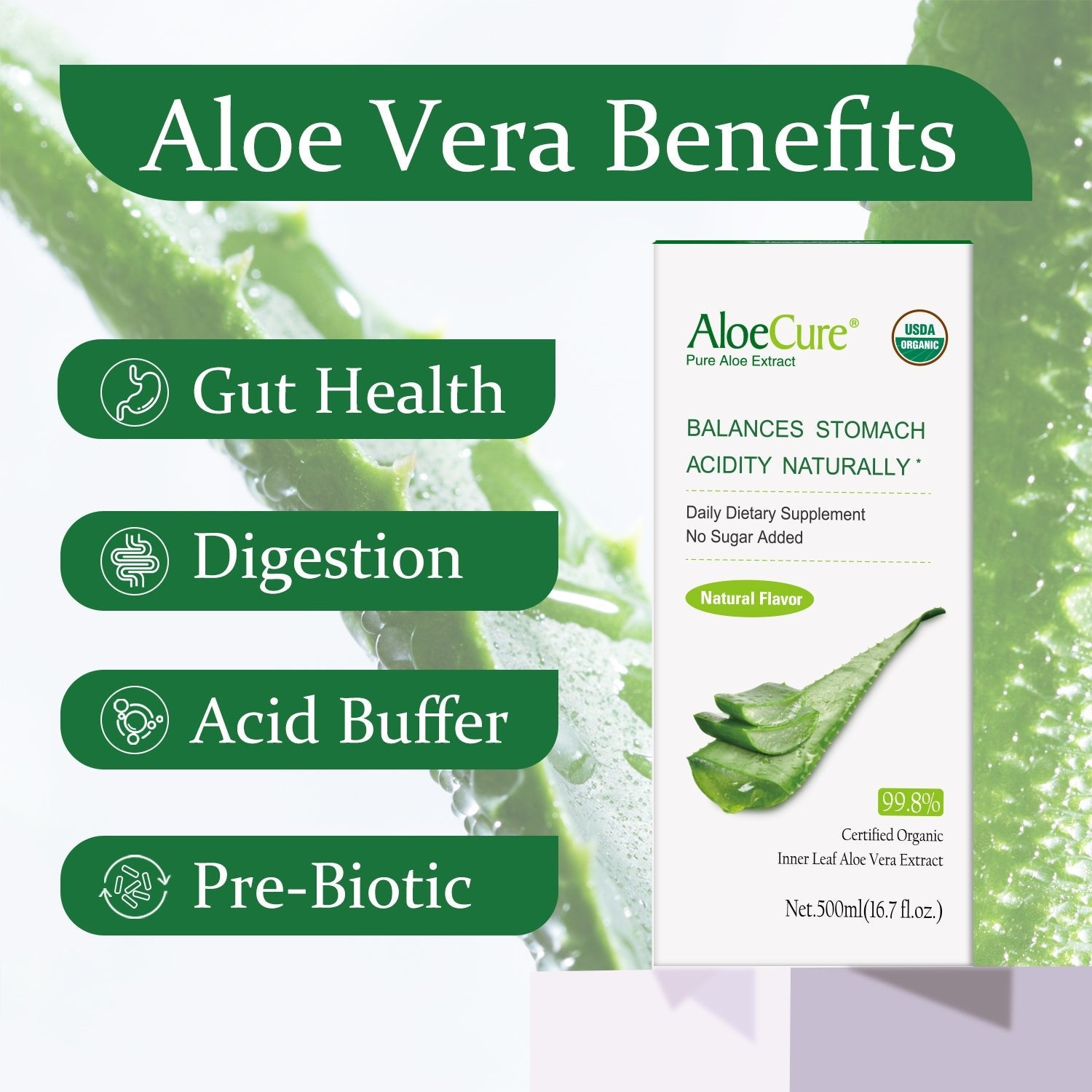
AloeCure offers certified organic aloe vera juices in natural, grape, and lemon options, along with product traceability, a 90-day guarantee, and subscription delivery with 20% off. Visit AloeCure to compare the ingredient details and choose a formula that fits your routine.
Comments will be approved before showing up.