Your Cart is Empty

You've eaten a familiar meal, gone about your day, and still don't feel quite at ease. Maybe your routine feels unpredictable, or your energy doesn't match your plans. You're not necessarily looking for a dramatic solution. You want steady, everyday digestive comfort and a wellness habit that fits real life.
A synbiotic supplement offers a simple way to think about that support. Instead of supplying beneficial microorganisms alone, it combines probiotics with prebiotics, the substrates that selected microorganisms can use. The result is a seed-and-soil approach, one that considers both the microbes introduced and the environment that supports them.
Daily wellness often depends on small, ordinary experiences. You want to enjoy meals without constantly thinking about how they'll feel later. You want regular energy, a comfortable stomach, and a routine that doesn't require a complicated collection of products.
Consider two people starting a probiotic capsule. One takes a formula containing live microorganisms but pays little attention to fiber-rich foods or the prebiotic content of the product. The other chooses a combined formula and also includes plants such as fruits, vegetables, and whole grains. Both may be making a positive choice, but the second routine pays attention to the wider internal ecosystem.
That distinction matters because probiotics and prebiotics have different jobs. Probiotics provide live microorganisms. Prebiotics provide substrates that host microorganisms can selectively use. A synbiotic brings those roles together in one approach. For a clear comparison of the two components, explore the difference between prebiotics and probiotics.
A garden offers a useful comparison. Planting seeds doesn't guarantee a thriving garden if the soil lacks the conditions those seeds need. In the same way, adding a probiotic doesn't mean every introduced microorganism will produce the same result for every person. The specific strain, the accompanying substrate, the product's quality, and an individual's existing microbial community all matter.
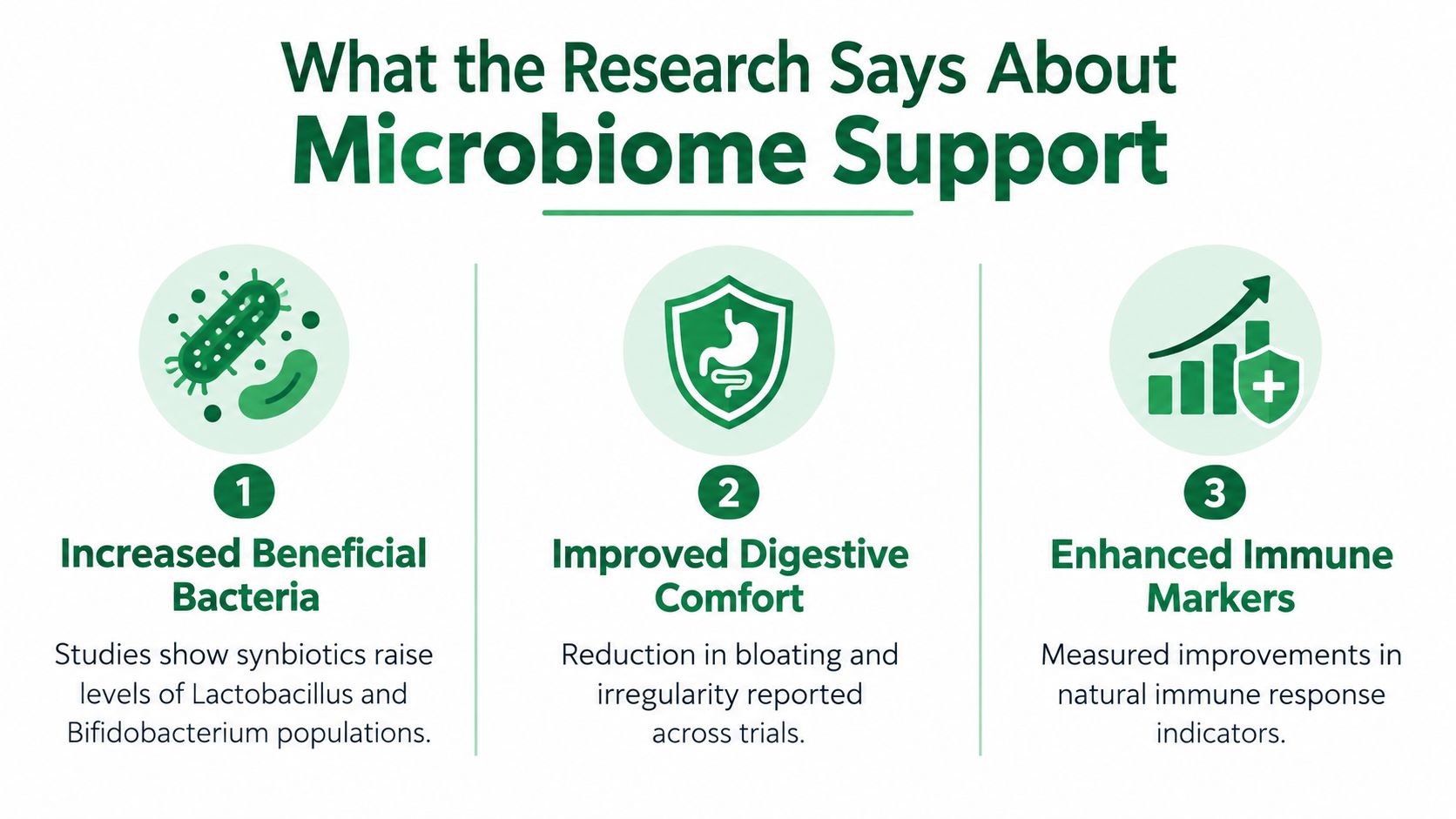
The evidence supports a measured perspective. A 2024 systematic review and meta-analysis of randomized trials in healthy adults found that oral synbiotic supplementation may increase Lactobacillus abundance and propionate concentration, while several other measured endpoints showed no significant change in the review. That finding doesn't make synbiotics unhelpful. It shows that a synbiotic is a targeted wellness tool, not a universal “reset.”
A thoughtfully designed formula can support healthy digestive function, promote a balanced internal environment, and help maintain normal body processes. The goal is consistency and informed selection, not exaggerated promises.
The easiest way to understand a synbiotic supplement is to separate its two working parts.
The International Scientific Association for Probiotics and Prebiotics defines a synbiotic as a mixture of live microorganisms and substrate or substrates selectively utilized by host microorganisms that confers a health benefit on the host, as described in the 2020 consensus paper.
Not every combined product uses the same relationship between its ingredients.
A complementary synbiotic combines a probiotic and a prebiotic, with both components independently meeting their category criteria. Think of this as planting a suitable seed while improving the general quality of the soil. The ingredients work in the same formula, but the prebiotic doesn't necessarily serve as the selected food source for the included microorganism.
A synergistic synbiotic takes a more specific approach. The live microorganism is selected for its ability to use the coadministered substrate, and the combination must provide a documented health benefit. This resembles choosing a seed and soil because they're suited to one another, rather than placing unrelated materials in the same container. The World Gastroenterology Organisation describes these distinctions in its guidance on probiotics and prebiotics.
Practical rule: Look beyond the words “probiotic” and “prebiotic” on the front label. Check whether the formula identifies its microorganisms and explains the purpose of its substrate.
A daily food routine can reinforce the soil side of the analogy. If you want help planning meals around plant variety and fiber-rich ingredients, you can find your gut-friendly meals through AI Meal Planner.
Synbiotic research is most useful when it answers a defined question. For healthy adults, the clearest findings concern selected microorganisms and metabolic markers, not every measure of digestive wellness.
A 2024 systematic review and meta-analysis of randomized trials found that synbiotic supplementation significantly increased Lactobacillus abundance, with a standardized mean difference of 0.74, a 95% confidence interval of 0.15 to 1.33, and P=0.01. The analysis also found a significant increase in propionate concentration, with a standardized mean difference of 0.22, a 95% confidence interval of 0.02 to 0.43, and P=0.03 in the published analysis.
The seed and soil analogy helps explain these results. A suitable probiotic strain is the seed, while the prebiotic provides part of the soil that can support its activity. A compatible pairing may influence a particular microbial group or fermentation pathway, but that does not mean every synbiotic formula will produce the same response.

The review found no significant changes in alpha-diversity, acetate, butyrate, IL-6, CRP, zonulin, or endotoxin levels. These results set a useful boundary for interpreting product claims. An increase in one bacterial group does not automatically represent a broad change throughout the microbial community.
The earlier 2024 review of randomized trials in healthy adults reached a similar practical conclusion. Synbiotic supplementation may increase Lactobacillus abundance and propionate concentration, while showing no significant effect on zonulin, Shannon diversity, acetate, butyrate, IL-6, CRP, or endotoxin levels according to the review.
A careful interpretation uses three ideas:
A 2023 umbrella meta-analysis pooled 17 meta-analyses and 7,772 participants. It reported statistically significant but modest improvements in triglycerides, total cholesterol, LDL-C, body weight, BMI, and waist circumference. HDL-C did not change meaningfully in the published report. These findings support describing synbiotics as an adjunct to metabolic support, rather than as a stand-alone approach to body composition.
Market estimates also vary by scope. One 2024 industry estimate valued the global synbiotic product market at USD 1.02 billion and projected USD 1.68 billion by 2030, with an 8.3% compound annual growth rate from 2025 to 2030. A narrower estimate placed the category at USD 986.09 million in 2025 and forecast USD 1.717 billion by 2033, implying a 7.18% CAGR over that forecast period in the market review. The different baselines reflect different market definitions. Growth shows consumer interest, not equal effectiveness across formulas.
For readers comparing specific strains, this overview of Bifidobacterium longum offers background that can help with label evaluation. A vertically integrated, chemical-free sourcing approach may also help protect ingredient quality and bioactivity, but the formula's strain identity, substrate, processing, and evidence still deserve separate review.
A standalone probiotic may suit someone who wants to add a specific live microorganism without changing the rest of a supplement routine. A separate prebiotic may suit someone who already knows which fiber source fits their meals. A synbiotic supplement can simplify the process by placing both components in one product.
The right choice depends on your habits, preferences, and tolerance for managing multiple labels. A combined formula isn't automatically superior, and a standalone product isn't automatically incomplete. The meaningful question is whether the ingredients have clear identities and a sensible relationship.
| Feature | Standalone Supplements | Combined Synbiotic Formula |
|---|---|---|
| Routine | Requires separate decisions for microorganisms and substrates | Combines both roles in one product |
| Customization | Makes it easier to adjust each component independently | Offers a fixed pairing selected by the manufacturer |
| Ingredient matching | You must evaluate whether the products complement each other | The formula may be designed around a defined combination |
| Convenience | Can mean multiple containers or schedules | Streamlines daily use |
| Dietary flexibility | Works well when meals already provide preferred prebiotic sources | Adds a measured substrate alongside the probiotic |
| Evaluation | Lets you change one variable at a time | Makes the complete formula the main unit of evaluation |
Choose separate products if you enjoy building your routine gradually, already eat a varied selection of plant foods, or want to assess one ingredient at a time. Choose a combined formula if remembering multiple products creates friction or if you want the probiotic and prebiotic considered together.
Cost also deserves a closer look. A lower-priced capsule isn't necessarily a better value if you need another product to provide the missing component. On the other hand, a premium synbiotic isn't automatically worth the added cost unless the label explains the strains, substrate, storage, and quality controls clearly.
For another perspective on evaluating combined formulas, readers can review Peak Performance's top synbiotic. Use outside guides as comparison material, then return to the actual product label and manufacturing information before buying.
A useful question: Would this formula make your routine easier to follow without asking you to make stronger claims about the results than the evidence supports?
A supplement's ingredients matter, but so does the path those ingredients take from cultivation to capsule. Quality control should protect identity, purity, strength, composition, and consistency. The FDA's dietary supplement guidance states that manufacturers, packers, labelers, and holders must follow current good manufacturing practices designed to support those qualities and help prevent contamination with harmful or undesirable substances, including pesticides, heavy metals, and other impurities.
That regulatory baseline is different from a brand's sourcing philosophy. A vertically integrated company controls more stages directly, which can make traceability easier to document and can reduce dependence on unknown intermediaries.
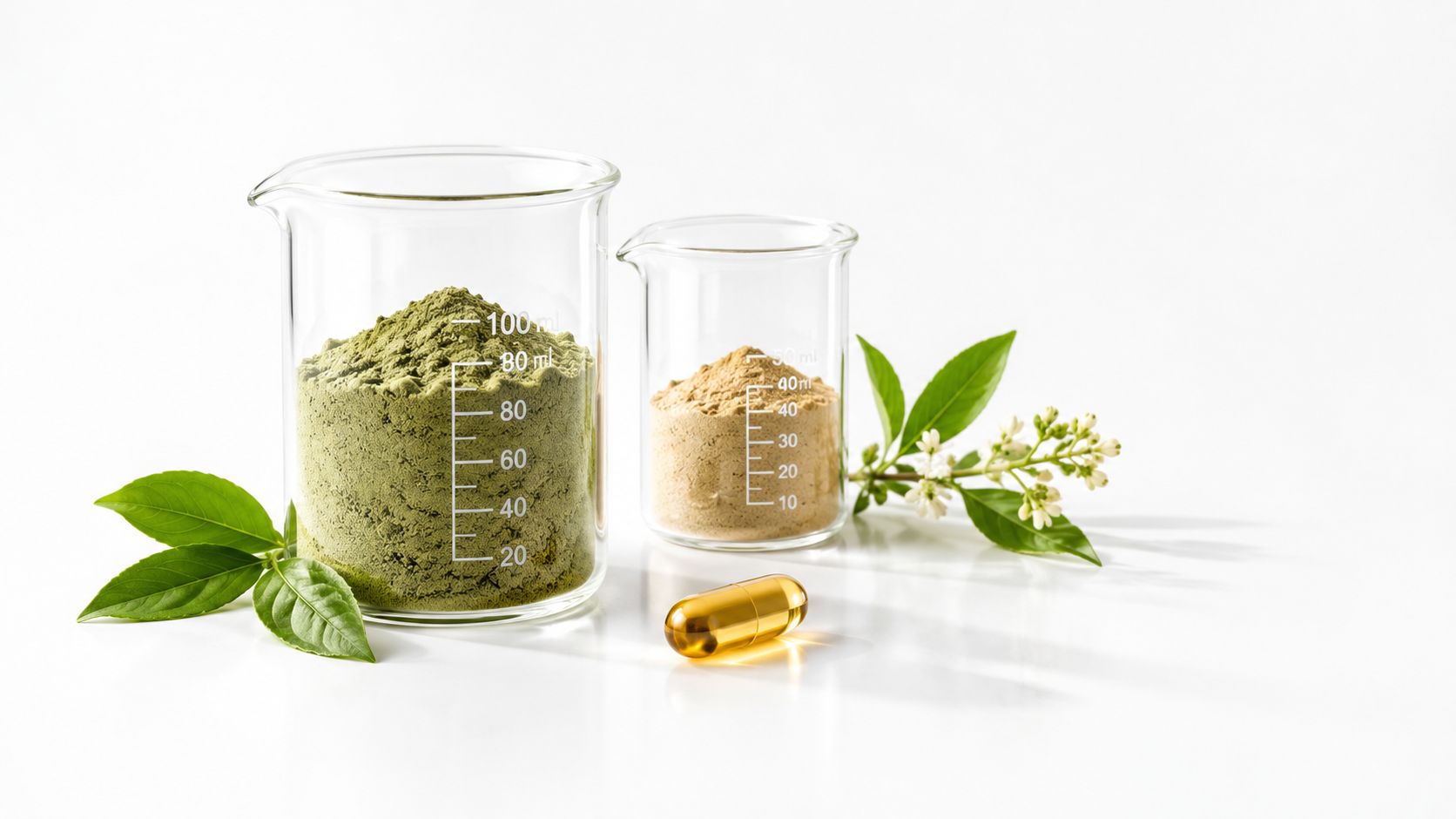
AloeCure's parent company, AGHG, owns and operates its aloe farms, hand-harvests USDA- and EU-certified organic aloe, and processes it on-site within 12 hours of harvest, according to the publisher information for this article. The company says its farms are certified sustainable and operate as agro-tourismos, welcoming more than 250,000 people every year, also according to the publisher information.
The brand describes its processing method as proprietary, patented, and natural. It says it avoids chemicals, enzymes, concentrates, and charcoal filtration in its aloe processing, with the aim of preserving the plant's natural composition. It also describes an 8-step traceability promise, third-party certifications, and testing. Those are manufacturing attributes to evaluate, not guarantees that a supplement will produce a particular personal outcome.
A careful shopper can look for:
The FDA's CGMP guidance also addresses batch control and traceability. Reserve samples must be identified with a batch, lot, or control number, and the rules cover manufacturing, packaging, labeling, and holding operations in the FDA compliance guide.
A synbiotic works best as part of a repeatable routine, not as an occasional response to an uncomfortable day. Start with the product label, follow its serving directions, and choose a time you can remember without effort.

Prebiotic ingredients can change fermentation activity, so some people may notice temporary gas, rumbling, or changes in bowel movements when introducing a new formula. Starting according to the product's directions and avoiding extra servings can make the adjustment more manageable.
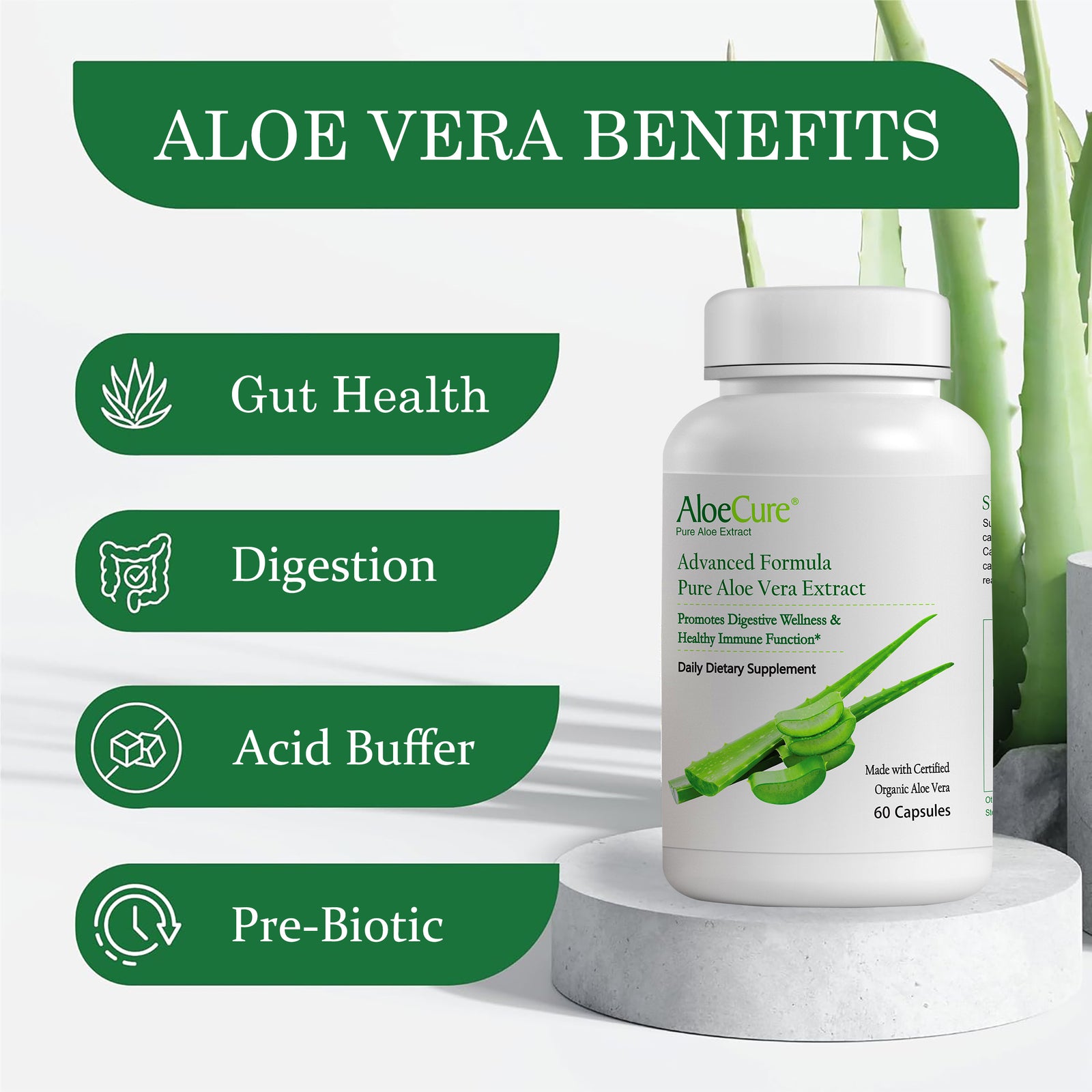
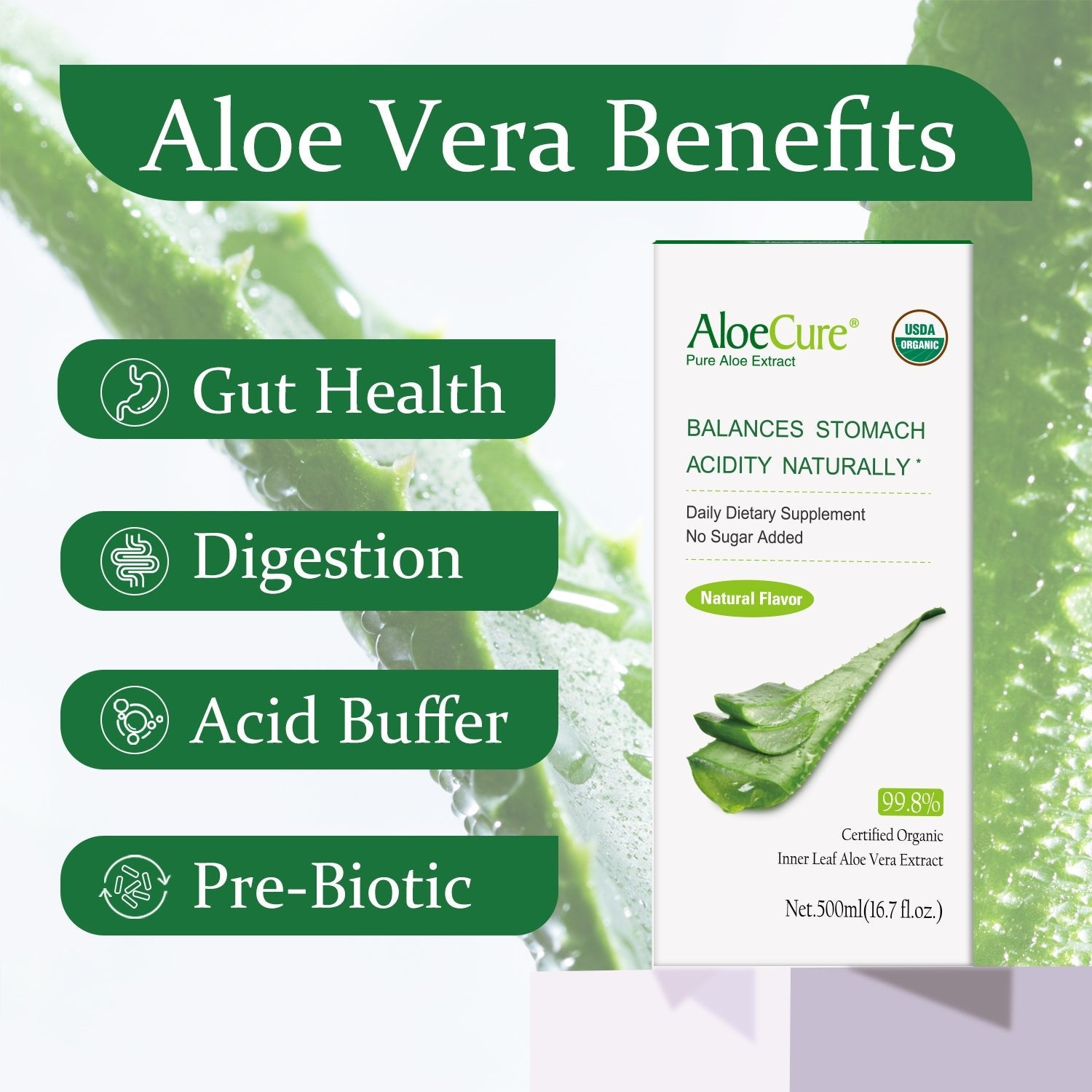
Pure organic aloe vera juice can fit alongside a synbiotic routine for people who already enjoy aloe as part of their plant-based wellness habits. It shouldn't be treated as a substitute for a varied diet, professional guidance, or the product's own directions. If you're pregnant, nursing, managing a health concern, or taking medication, speak with a qualified healthcare professional before starting a new supplement.
Consistency beats complexity: One clearly understood routine is easier to maintain than a crowded schedule of products you rarely remember to take.
A synbiotic supplement brings together two sides of microbiome support. The probiotic supplies selected live microorganisms, while the prebiotic provides a substrate that may support microbial activity. The seed-and-soil analogy keeps the idea practical: the identity of the seed matters, and so does the environment around it.
The research supports realistic expectations. Some randomized-trial reviews report increased Lactobacillus abundance and propionate concentration, while other measured endpoints remain unchanged. That's why product selection should focus on transparent formulation details, responsible structure and function language, manufacturing controls, and a routine you can follow.
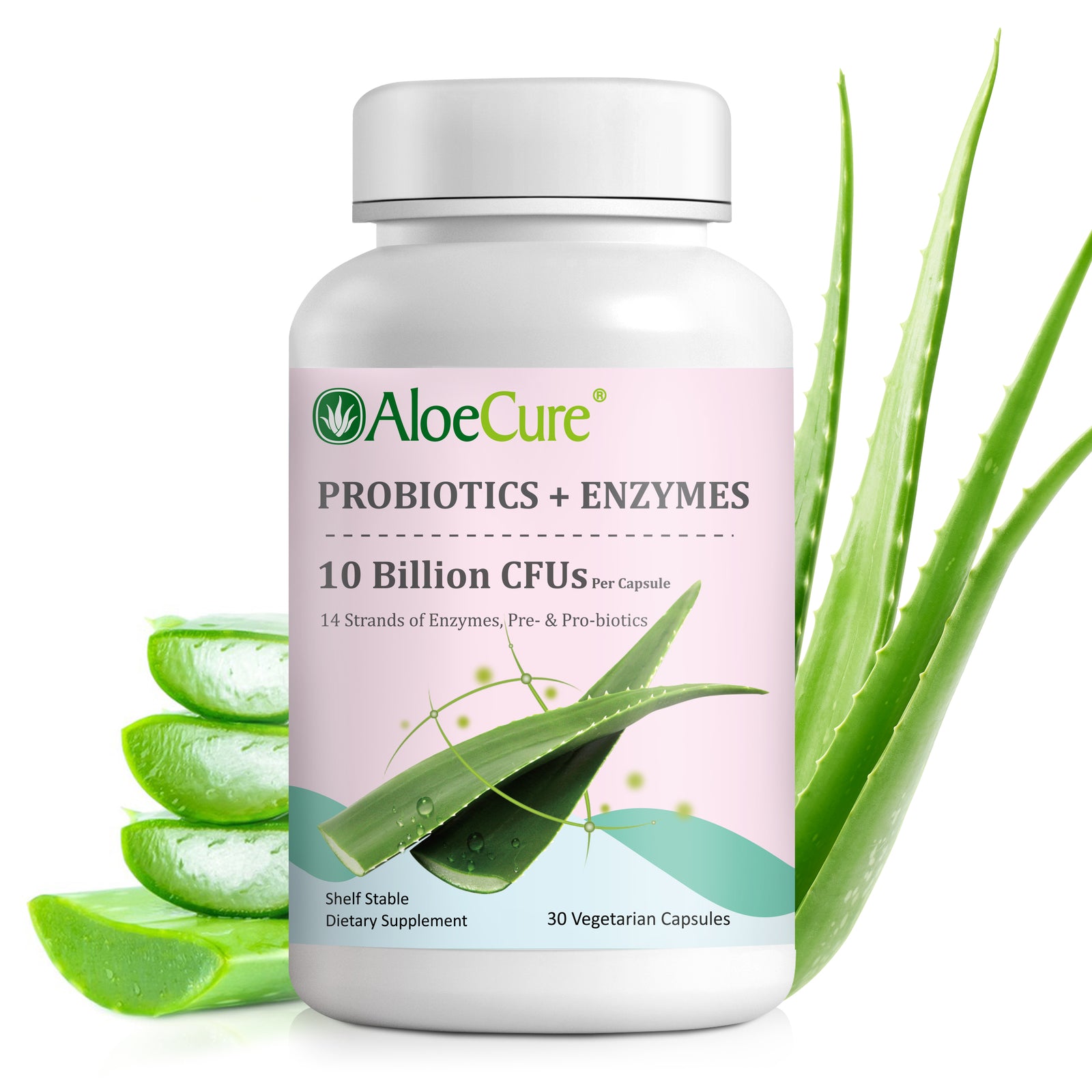
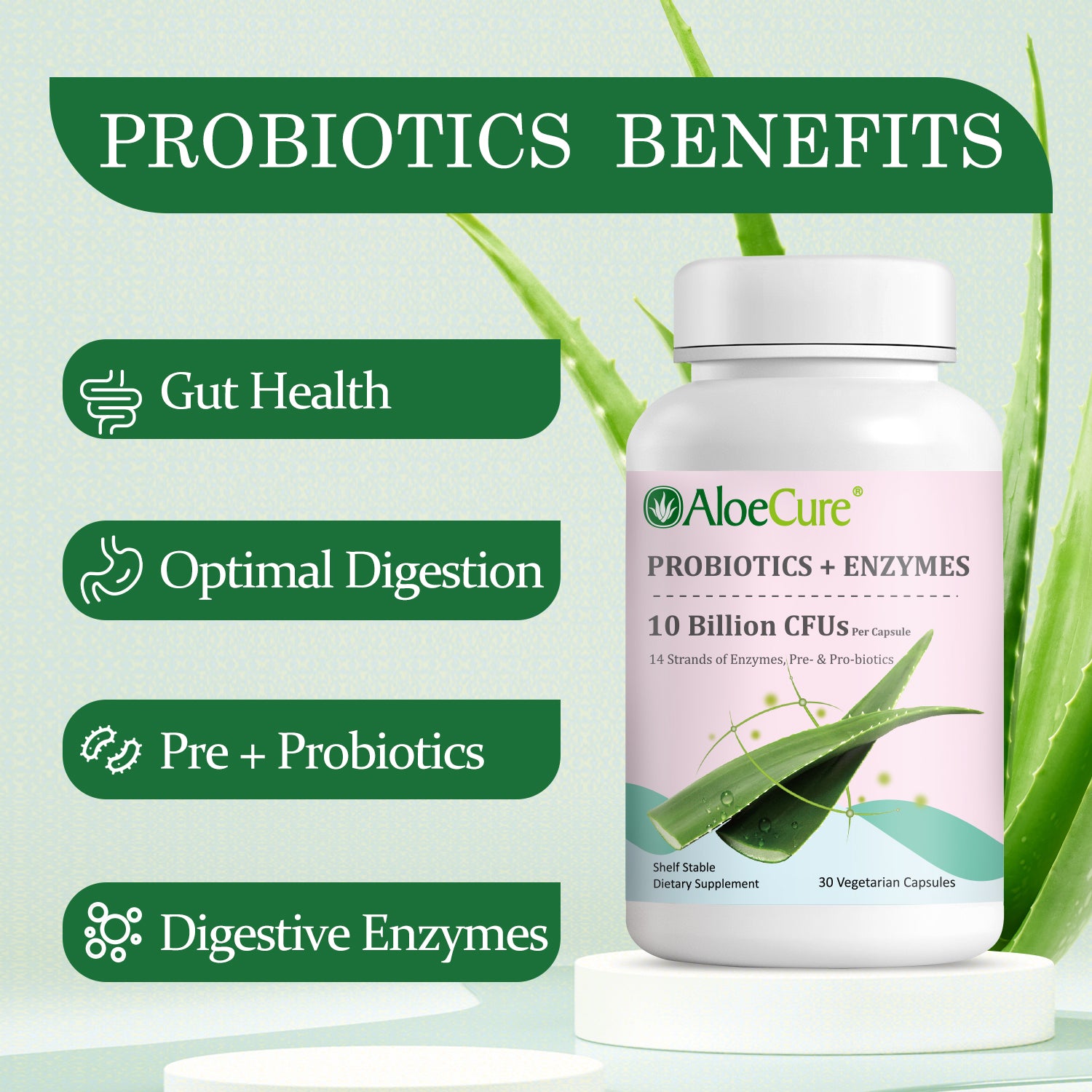
AloeCure offers a Pre+Probiotic & Digestive Enzyme Capsules formula within its plant-based supplement range. The publisher describes AloeCure as a vertically integrated brand that farms and processes its own aloe, avoids chemicals, enzymes, concentrates, and charcoal filtration in its aloe processing, and supports its products with traceability and testing information. The company also offers a 90-day money-back guarantee and a Subscribe & Save option with 20% off and flexible delivery, according to the publisher information.
These statements have not been evaluated by the Food and Drug Administration. This product is not intended to diagnose, treat, cure, or prevent any disease.
AloeCure offers plant-based prebiotic and probiotic support alongside its vertically integrated aloe products, with sourcing and processing information available for shoppers who value traceability. Visit AloeCure to review the Pre+Probiotic & Digestive Enzyme Capsules, explore Subscribe & Save with 20% off, and choose a routine that fits your daily wellness goals.
Comments will be approved before showing up.