Your Cart is Empty


When selecting a probiotic, the focus often rests on the biggest number on the label. But that misses a more important question. What is the strain known for, and will it still be viable in the formula you take every day?
That’s where lactobacillus salivarius benefits get interesting.
This probiotic isn’t just another name in a long list of Latin species. It’s a naturally occurring bacterium that shows up in places where your body meets the outside world, especially the mouth and the digestive system. In plain terms, that means it may matter for everyday balance in some of the most sensitive, active parts of the body.
And like many probiotics, it’s easy to misunderstand. People often assume all strains do the same thing, all capsules work the same way, and all “clean” products are equally clean. They don’t. With probiotics, strain choice, manufacturing quality, and ingredient purity all shape the experience.
Lactobacillus salivarius is a probiotic species in the lactobacillus family. If that sounds technical, think of it as one member of a larger group of beneficial bacteria often associated with fermentation and microbial balance.
It’s called “salivarius” because it’s commonly found in saliva, but it doesn’t stop there. It can also live in the digestive system and other mucosal surfaces.
Where a probiotic lives often hints at what it may help support.
Because this species is found in the mouth and digestive system, researchers have been interested in how it may support:
That doesn’t mean every product containing L. salivarius will do all of that. It means the species is relevant in those areas, and specific strains have been studied for them.
Your body is less like a sterile machine and more like a managed ecosystem. Helpful microbes don’t “do everything.” They help create conditions that favor balance.
L. salivarius appears to work that way. It helps shape the environment around it, rather than acting like a switch that flips one symptom off.
Practical rule: When you read about probiotic benefits, ask two questions. Which strain was studied, and what environment is it meant to support?
The science sounds complicated, but the basic idea is simple. L. salivarius helps beneficial microbes compete well.
Instead of overpowering the body, it supports normal microbial balance through several natural actions.
Research describes L. salivarius as a producer of organic acids and bacteriocins. Those are useful because they can help make the local environment less friendly to unwanted microbes.
It's comparable to tending a garden. You can’t force good plants to grow by yelling at weeds. But you can improve the soil, water, and light conditions so the plants you want have the advantage.
That’s one of the key ways probiotics may support wellness.
Microbes need room to attach and thrive. A helpful strain that can stick around on mucosal surfaces may support a more balanced ecosystem by competing for those same spaces.
This is one reason strain-specific research matters. Some strains are better at surviving, adhering, and remaining active in certain environments than others.
Animal research has shown that L. salivarius supplementation increased levels of tight junction proteins including Claudin-1, Occludin, and ZO-1, suggesting support for barrier integrity in intestinal tissue in that model, according to the published animal research on L. salivarius in piglets.
That same study also described higher levels of protective antioxidant enzymes and lower malondialdehyde in the supplemented animals, which points to support for normal responses to environmental stress in that setting.
A lot of supplement content jumps from “interesting mechanism” straight to “guaranteed result.” That’s not how good education works.
A better takeaway is this:
If you’ve been searching for lactobacillus salivarius benefits, you’ve probably seen a mix of oral health claims, digestive claims, and heart-health language. Some of that is grounded in real early research. Some of it gets overstated.
Here’s the cleaner, more practical version.
Because L. salivarius is naturally present in saliva, it’s often discussed as a probiotic that may support a balanced oral environment.
The research summary provided in your background materials describes early work linking some strains to plaque and breath-related measures. Those findings are best treated as promising and strain-specific, not universal.
For readers, the practical point is straightforward. A probiotic that belongs naturally in the mouth may be especially relevant if you care about whole-body microbial balance, not just digestion.
This is one of the most useful areas to understand.
In a clinical pilot study of people with mildly active digestive symptoms, Lactobacillus salivarius UCC118 given in yogurt for 6 weeks to 21 patients was associated with a drop in activity scores from 208 ± 10 to 147 ± 17.5, or about a 29% reduction, according to the Metagenics Institute summary of L. salivarius UCC118 research.
That same summary notes that 11 of the 21 patients, or 52%, were able to avoid corticosteroid use for 2 months or more after stopping the probiotic, and a separate quality improvement trial involving 29 patients reported a statistically significant reduction in diarrhea after 90 days of supplementation.
Because supplement education has to stay compliant, the safest way to interpret those findings is this: certain L. salivarius strains have shown measurable support for digestive wellness and microbial balance in human settings.
Some early human work described in your verified data suggests that L. salivarius combined with fructooligosaccharide was associated over six weeks with lower total cholesterol, LDL, and triglycerides, along with higher HDL, according to the verified data provided from the Balance One article.
That’s interesting, but it’s also a good place to stay careful. The findings are specific to a certain combination and context. They don’t mean every L. salivarius product should be expected to affect lipid markers the same way.
Some probiotic benefits are broad, like supporting microbial balance. Others are highly strain-specific and formula-specific. Mixing those up is where most supplement confusion starts.
A good wellness educator should tell you two things at once. The research is promising. The research is also narrower than marketing often makes it sound.
This is probably the biggest misunderstanding in probiotic shopping.
When you see a study on L. salivarius UCC118, that doesn’t automatically mean every product labeled “L. salivarius” will behave the same way. Strains within the same species can differ in stability, survivability, and activity.
That’s why brand transparency matters. If a company lists a species but says almost nothing about viability, handling, storage, or formulation, you’re missing a big part of the picture.
The strongest material in your verified data includes actual human use settings. That’s more useful than broad claims based only on theory.
Here’s a simple way to sort the evidence:
| Type of evidence | What it can tell you | What it can’t tell you |
|---|---|---|
| Mechanism research | How a strain may work | Whether you’ll notice a practical effect |
| Animal research | How the body may respond in a model | Whether humans respond the same way |
| Human clinical use | Whether a specific strain showed measurable outcomes in people | Whether every supplement version will perform the same way |
That last column matters. A promising probiotic still needs a sound formula and careful manufacturing.
A probiotic isn’t just a species name. It’s a finished product.
That finished product includes:
If any of those go wrong, the label may still look impressive while the experience falls short.
People often think purity only matters for herbs or juices. It matters for probiotics too.
A probiotic is a living ingredient. That means quality isn’t only about what’s included. It’s also about what weakens it before you ever open the bottle.
A formula can look good on paper and still disappoint in real life.
Common problems include:
If you’re using a probiotic to support everyday digestive balance, the entire formula should make that easier, not noisier.
For a wellness brand, purity should mean that ingredient sourcing, processing, and finished-product standards are all aligned.
That idea connects naturally to AloeCure’s philosophy. The company talks openly about vertical integration, farming its own aloe, processing it on-site, and avoiding chemical-heavy shortcuts in aloe handling. That same mindset matters when evaluating any supplement formula, including a probiotic blend.
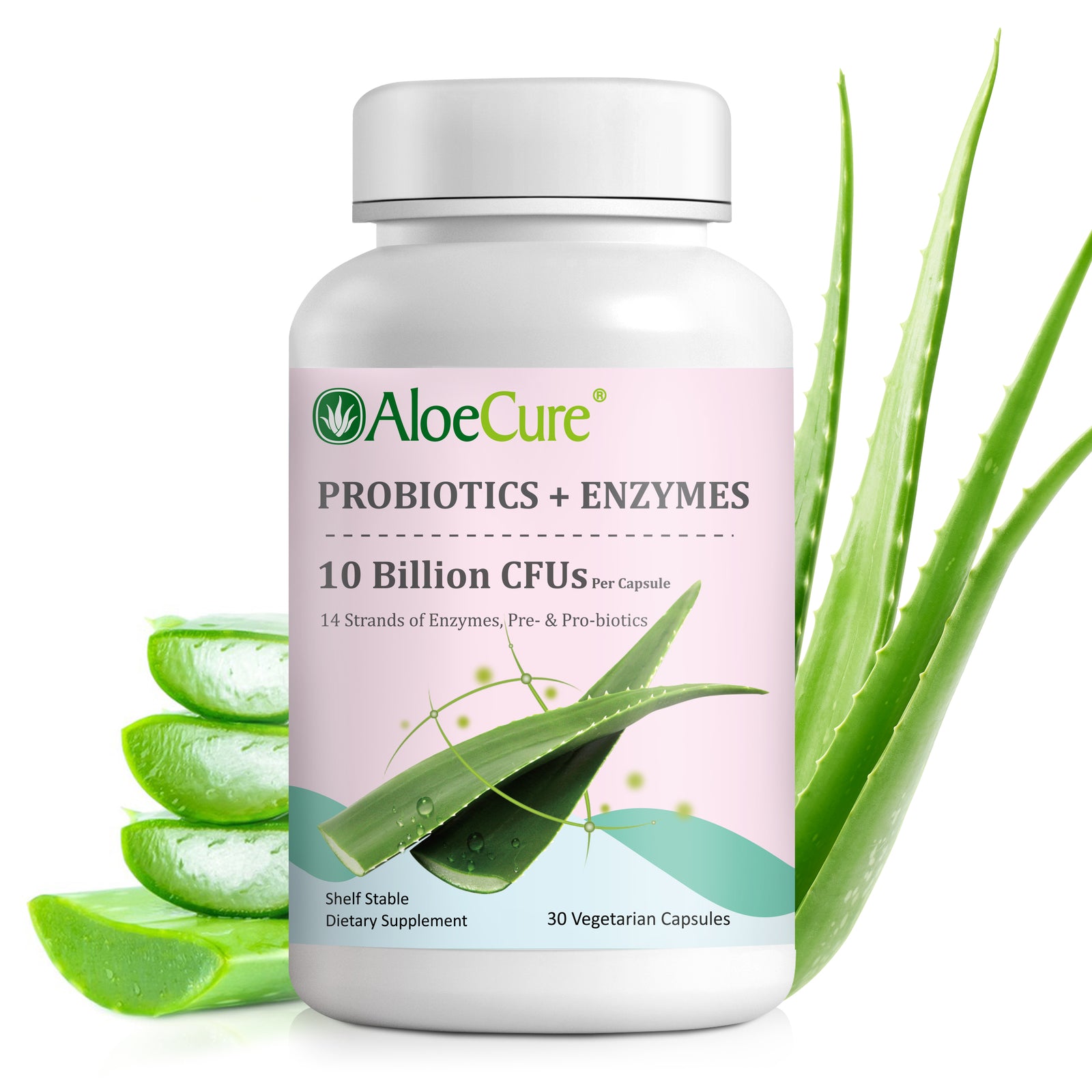
A product like AloeCure Pre+Probiotic & Digestive Enzyme Capsules is relevant here because it’s positioned for daily digestive and microbial balance support, not as a drug-style solution. That’s the right frame for supplements.
A useful filter: If a company is careful about raw ingredients, processing, traceability, and testing, that usually tells you more than a flashy front label does.
When a company controls more of the process, it can usually monitor quality more closely. That doesn’t guarantee perfection, but it supports consistency.
For consumers, consistency matters because probiotics work best when used as part of a routine. You want to know the product you buy this month is made to the same standards as the product you buy next month.
There’s no need to overcomplicate this. A few practical checks can help you avoid most low-quality options.
A trustworthy label usually tells you enough to understand what you’re taking.
Check for:
If the formula also combines prebiotics or digestive support ingredients, think about whether that matches your goal.
Different people want different things from a probiotic.
Some are focused on:
If your goal is broad daily support, a multi-strain formula may make sense. If you’re trying to use the findings from a very specific strain study as your guide, then strain transparency becomes even more important.
A probiotic isn’t a switch. It’s more like a daily nudge.
You may notice subtle changes first, such as feeling more stable in your routine, more comfortable after meals, or generally better supported when your diet and schedule aren’t perfect. Those are the kinds of day-to-day outcomes many people are looking for.
Supplements aren’t the only piece of the picture.
Food and lifestyle shape the environment that beneficial bacteria live in. If you ignore that part, even a well-made supplement may have a harder time fitting into your routine.
Fermented foods can be useful, though they won’t always contain L. salivarius specifically. They still contribute to a more microbe-friendly diet.
Helpful categories include:
Prebiotic fibers matter because beneficial bacteria need fuel. Without that support, probiotics are more like visitors than long-term contributors.
The basics still count.
A steady routine tends to support digestive wellness better than extremes. That includes:
| Habit | Why it matters |
|---|---|
| Regular meals | Helps support a more predictable digestive rhythm |
| Hydration | Supports normal digestion and overall comfort |
| Sleep | Helps the body maintain normal regulatory functions |
| Stress management | Supports the body’s ability to stay balanced day to day |
You don’t need a perfect routine. You need a repeatable one.
People usually don’t get stuck on the science first. They get stuck on the practical questions.
No. It belongs to the same broader family, but it’s still its own species.
That matters because different species, and even different strains within the same species, can have different strengths.
For most wellness goals, consistency matters more than chasing quick changes.
A daily routine tends to make more sense than taking a probiotic randomly. Many people use probiotics as ongoing support for microbial balance, especially when their diet, travel schedule, or stress levels are less than ideal.
Sometimes, but not reliably.
Certain cultured foods may contain helpful microbes, yet they don’t always include this exact species, and they don’t give the same consistency as a labeled supplement.
Not necessarily.
With probiotics, “better” depends on the strain, the formula, and whether the organisms remain viable through the product’s shelf life. A giant front-label number can distract from that.
If a probiotic label tells you how much is included but not how carefully the product is made, you still don’t know enough.
Not everyone needs the same supplement routine. But L. salivarius may be a sensible option for adults who want support for daily microbial balance and digestive wellness as part of a broader routine.
It may also appeal to people who:
That last point matters more than it sounds.
A probiotic can only do its job if the finished product protects what’s inside it. The species name matters. The strain matters. The manufacturing philosophy matters too.
The most useful way to think about lactobacillus salivarius benefits is this. It’s a promising probiotic species associated with microbial balance, digestive wellness support, barrier support, and select metabolic benefits in certain research settings.
The human data in your verified materials is encouraging, especially for specific strains. The animal data adds helpful insight into barrier and oxidative stress markers. But none of that means every product on the shelf is equal.
If you’re considering L. salivarius, focus on the complete picture:
That’s usually where the difference is between a thoughtful wellness tool and a bottle that mostly sells a label.
If you’re comparing probiotic options, pay attention to ingredient transparency, handling standards, and whether the formula fits your daily wellness goals. If you prefer a routine built around clean, carefully processed supplements, you can also look for subscription options that make consistency easier over time.
These statements have not been evaluated by the Food and Drug Administration. This product is not intended to diagnose, treat, cure, or prevent any disease.
Comments will be approved before showing up.