Your Cart is Empty


A digestive enzyme capsule won't melt body fat because it helps break down a meal. That popular idea sounds intuitive, better digestion should mean better body composition, but the science draws a much sharper line. Digestive enzyme supplements and digestive enzyme inhibitors work in opposite directions, and the weight-related evidence belongs mainly to the inhibitors, not to ordinary enzyme blends.
That doesn't make digestive support irrelevant. Enzymes may help the body process food and support digestive comfort for people who need targeted assistance. The important question is what you're buying, what it's designed to do, and whether your expectations match the evidence. The phrase digestive enzymes benefits weight loss often combines two separate conversations that should be kept apart.
Digestive enzymes do not directly cause weight loss by breaking down a meal. The idea often comes from supplement marketing, before-and-after testimonials, and the appealing assumption that easier digestion must produce a leaner body. Yet breaking food into absorbable nutrients is different from using stored body fat. Better nutrient absorption may support nourishment rather than create a calorie shortage.
The key distinction is between the tools involved. Digestive enzymes assist digestion, while enzyme inhibitors limit the action of particular digestive enzymes. Enzymes help make nutrients available. Inhibitors can reduce the amount of a nutrient that gets absorbed. The weight-loss discussion associated with enzyme activity largely concerns inhibitors, not ordinary digestive enzyme supplements.
A closer look at whether digestive enzyme supplements really work can help shoppers assess these claims. Labels may list amylase, lipase, protease, or lactase, but those names identify the nutrients the enzymes act on. They do not show that a product raises energy expenditure or reduces stored fat.
The practical distinction: Digestive support can improve how food is processed, but it does not establish direct weight loss.
Plant-based digestive support can still fit a weight-management routine when the goal is digestive comfort or targeted assistance. Its role is closer to helping the kitchen process ingredients than turning up the body's fat-burning machinery. Weight management still depends on the broader pattern of eating, activity, and daily habits, rather than on an enzyme blend acting as a standalone slimming product.
Digestion relies on several specialized enzymes, each working on a different food component. Amylase breaks down carbohydrates, lipase helps break down fats, protease acts on proteins, and lactase splits lactose, the milk sugar in dairy products. These actions reduce food into smaller components that the body can absorb.
The body produces digestive enzymes in several locations. Salivary glands begin carbohydrate digestion in the mouth. The stomach contributes to early digestion, while the pancreas releases enzymes that act on carbohydrates, fats, and proteins. Enzymes along the small intestine's brush border complete parts of the process before nutrients enter circulation. A Cartwright Fitness pancreas model resource offers a visual anatomy refresher on the organ's role in normal digestion.
Enzyme activity depends on the surrounding conditions. Stomach acidity changes the food mixture, bile disperses fats into smaller droplets, and meal timing affects when a supplement meets its intended substrate. A supplement taken with food may assist macronutrient breakdown in the digestive tract. It does not become a metabolic accelerator or a fat burner.

A plant-focused guide to plant-based digestive enzymes can help clarify what different enzyme types are intended to support. The appropriate description is functional: enzymes support healthy digestive function and assist the body in breaking food into smaller components. Better processing of a meal does not directly determine how much body fat a person stores.
The distinction also prevents a common mix-up. Digestive enzymes help break food down, whereas enzyme inhibitors restrict particular enzyme actions. Weight-related claims associated with inhibition should not be transferred to ordinary digestive enzyme supplements.
Ordinary digestive enzyme supplements do not have reliable clinical evidence for reducing body weight in healthy adults. The weight-related findings often discussed in this topic involve enzyme inhibitors, especially compounds that restrict carbohydrate digestion. That mechanism differs from supplying amylase, lipase, or protease to help process a meal.
A 2010 review examined human research on inhibitors such as acarbose and phaseolamine, while noting that several other products were still experimental. The distinction matters: evidence about blocking the breakdown or absorption of a nutrient cannot be transferred to a conventional digestive enzyme blend. The PubMed review provides that background.
One randomized, double-blind, placebo-controlled trial gave 50 obese adults 1,500 mg twice daily of Phase 2 for 8 weeks. Only 27 people completed the study. Average weight loss was 3.79 lb with Phase 2 and 1.65 lb with placebo, a reported difference of 129%. The result was not statistically significant, with p=0.35. The small completion group, short duration, and non-significant finding support a cautious interpretation rather than a strong product claim.
The practical reading is straightforward. Weight-related signals from an inhibitor study describe a different intervention from a supplement that adds digestive enzymes. They do not show that improving food breakdown directly reduces stored body fat.
A McGill University review summarized by Healthline describes digestive enzymes as potentially useful for digestive symptoms, not as a direct way to increase weight loss. HealthCentral's discussion also raises a relevant point: more complete food breakdown could, in some circumstances, increase calorie absorption rather than reduce it.
| Intervention | Study Type | Primary Endpoint | Weight Outcome |
|---|---|---|---|
| Phase 2, a carbohydrate-enzyme inhibitor | Randomized, double-blind, placebo-controlled trial | Weight-related and digestive outcomes | 3.79 lb versus 1.65 lb over 8 weeks, not statistically significant |
| Ordinary digestive enzyme supplements | Expert evidence summaries | Digestive function and symptom support | No reliable direct weight-loss effect in healthy adults |
| Enzyme inhibitors | Broader enzyme-inhibition research | Reduced macronutrient digestion or absorption | Findings require separate interpretation and should not be generalized to enzyme blends, technical review |
The evidence supports digestive comfort and nutrient processing more clearly than movement on the scale. Healthy weight management still rests on overall food intake, food quality, activity, and consistency.
Similar wording on a label can hide opposite mechanisms. A digestive enzyme supplement adds enzymes such as amylase, lipase, or protease to support food breakdown. An enzyme inhibitor reduces the activity of a selected enzyme, which may limit digestion or absorption of a particular nutrient. Pancreatic enzyme replacement supplies enzymes when a qualified clinician has identified inadequate pancreatic function.
The purpose of pancreatic replacement is to restore digestion and nutrient absorption. It is not a calorie-blocking or slimming product. As noted earlier, better absorption can support weight gain rather than weight loss when someone has been unable to absorb nutrients properly. That medical use belongs in a different category from an ordinary digestive supplement.
Enzyme inhibitors work in the opposite direction. They target part of the digestive process, such as the breakdown of carbohydrates, and may reduce absorption of that nutrient. Research on inhibitors has produced findings that require separate interpretation. The Phase 2 results discussed in the previous section illustrate why those findings should not be transferred to standard digestive enzyme blends.
The technical review cited earlier also separates enzyme inhibition from enzyme supplementation. The distinction is simple: one adds digestive capacity, while the other limits a selected pathway.
| Category | Primary Purpose | Effect on Calorie Absorption | Regulatory Status | Typical User |
|---|---|---|---|---|
| Digestive enzyme supplement | Supports normal food breakdown | Usually intended to assist digestion, not restrict absorption | Dietary supplement | People seeking targeted digestive support |
| Enzyme inhibitor | Limits a selected digestive pathway | May reduce absorption of a targeted macronutrient | Depends on the specific product and claim | Users following a clearly defined product purpose |
| Pancreatic replacement | Restores digestive enzyme activity | Supports nutrient absorption | Prescription medical product | People with clinically identified enzyme insufficiency |
Read the mechanism before the marketing: “enzyme” doesn't tell you whether a product adds digestive capacity or blocks it.
A label's category matters more than the shared word “enzyme.” Match the product's intended function to the goal, and do not treat inhibitor research as evidence that a digestive enzyme blend directly causes weight loss.
Myth one, enzymes burn fat. Digestive enzymes act on food in the digestive tract. They help divide carbohydrates, fats, or proteins into smaller units that the body can process. They don't directly attack stored adipose tissue, and a label that supports digestion shouldn't imply otherwise.
Myth two, less bloating equals less body fat. A person may feel physically more comfortable when a meal is processed more efficiently. A temporary change in abdominal fullness, gas, or stool volume doesn't demonstrate a change in body composition. Comfort and fat loss are different outcomes.
Myth three, more enzymes always produce better digestion. The body already regulates its own digestive processes. Taking a broader or stronger blend isn't automatically better, and an unsuitable product may contribute to digestive upset. The right question is whether the formula matches a specific digestive need and whether the label provides clear, truthful structure-and-function information.
Plant-based enzymes also aren't identical to human pancreatic enzymes. Different enzymes have different substrate preferences and may respond differently to acidity, meal composition, and the digestive environment. “Plant-based” describes the source, not a guarantee that every enzyme behaves the same way in the body.
Finally, enzymes don't create permission for unlimited calorie intake. Even if a product supports digestion, overall energy intake still matters for body-weight change. A supplement can fit alongside balanced meals, but it can't replace portion awareness, adequate protein, regular movement, or a sustainable routine.
A weight-management routine works best when it starts with food and behavior rather than a capsule. Meals built around vegetables, fruit, whole grains, lean proteins, and unsaturated fats provide structure, fiber, and satiety. Portion awareness matters because even nutrient-dense foods contribute energy, and consistent choices are easier to maintain than an extreme short-term plan.
Movement adds another durable foundation. Resistance training supports the maintenance of lean tissue, while walking, cycling, and other aerobic activities support daily energy expenditure. You don't need to turn every session into a test of willpower. A routine you can repeat has more practical value than an ambitious schedule you abandon.

Readers who want more practical habits can explore our gut health guide from Pep Tea for additional wellness context. A separate guide on how to improve nutrient absorption can also help connect meal quality with normal digestive function.
No supplement substitutes for consistent energy control, sufficient protein, nourishing foods, and regular activity. Digestive enzymes may complement those foundations when they address a genuine comfort or digestion concern, but they shouldn't carry the weight-management plan.
Dietary supplements can describe how an ingredient supports the normal structure or function of the body, but those statements must be truthful, not misleading, and supported by substantiation. FDA guidance allows structure/function language such as supporting normal digestion or helping maintain regular body function, while disease claims fall outside that boundary. FDA's compliance guide explains that qualifying claims require notification to FDA and the standard disclaimer.
FDA gives examples such as calcium supporting strong bones, fiber maintaining bowel regularity, and antioxidants maintaining cell integrity. The wording focuses on normal function rather than diagnosing, preventing, or addressing a named condition. FDA's structure/function guidance provides those examples and explains the distinction.
Manufacturers also need substantiation for specific performance statements. FDA uses a label claiming that laboratory tests show enzymes can digest up to 20 grams of protein and 15 grams of dietary fat as an example of a quantifiable claim that requires appropriate support. FDA's substantiation guidance shows why precise label language is preferable to vague promises.
| Consideration | Who It Affects | Recommended Action |
|---|---|---|
| Formula ingredients | Anyone with sensitivities | Read the full label and avoid known allergens |
| Broad-spectrum blends | People unsure which enzyme they need | Start cautiously and follow the product directions |
| Single-enzyme products | People seeking targeted support | Match the enzyme to the food component in question |
| Ongoing or severe symptoms | Anyone with persistent digestive changes | Seek qualified professional guidance rather than self-managing indefinitely |
| Pregnancy, nursing, or childhood | These groups require extra care | Ask a qualified practitioner before use |
| Prescription products or complex health needs | People using regular medicines or managing a diagnosed condition | Review the product with a qualified clinician or pharmacist |
Possible unwanted effects include nausea, gas, diarrhea, or other digestive changes. Allergies are also possible, especially when a formula contains plant, animal, or fermentation-derived ingredients. Stop using a product that causes concerning symptoms and seek appropriate advice.
FDA's required disclaimer is: “These statements have not been evaluated by the Food and Drug Administration. This product is not intended to diagnose, treat, cure, or prevent any disease.”
Digestive support makes the most sense as a small part of a repeatable routine. Take a product according to its label, usually in relation to a meal when the enzymes can encounter food, and judge it by digestive comfort and consistency rather than by a rapid change on the scale. A clean, plant-based formula can sit alongside balanced meals, hydration, movement, and a steady sleep schedule.
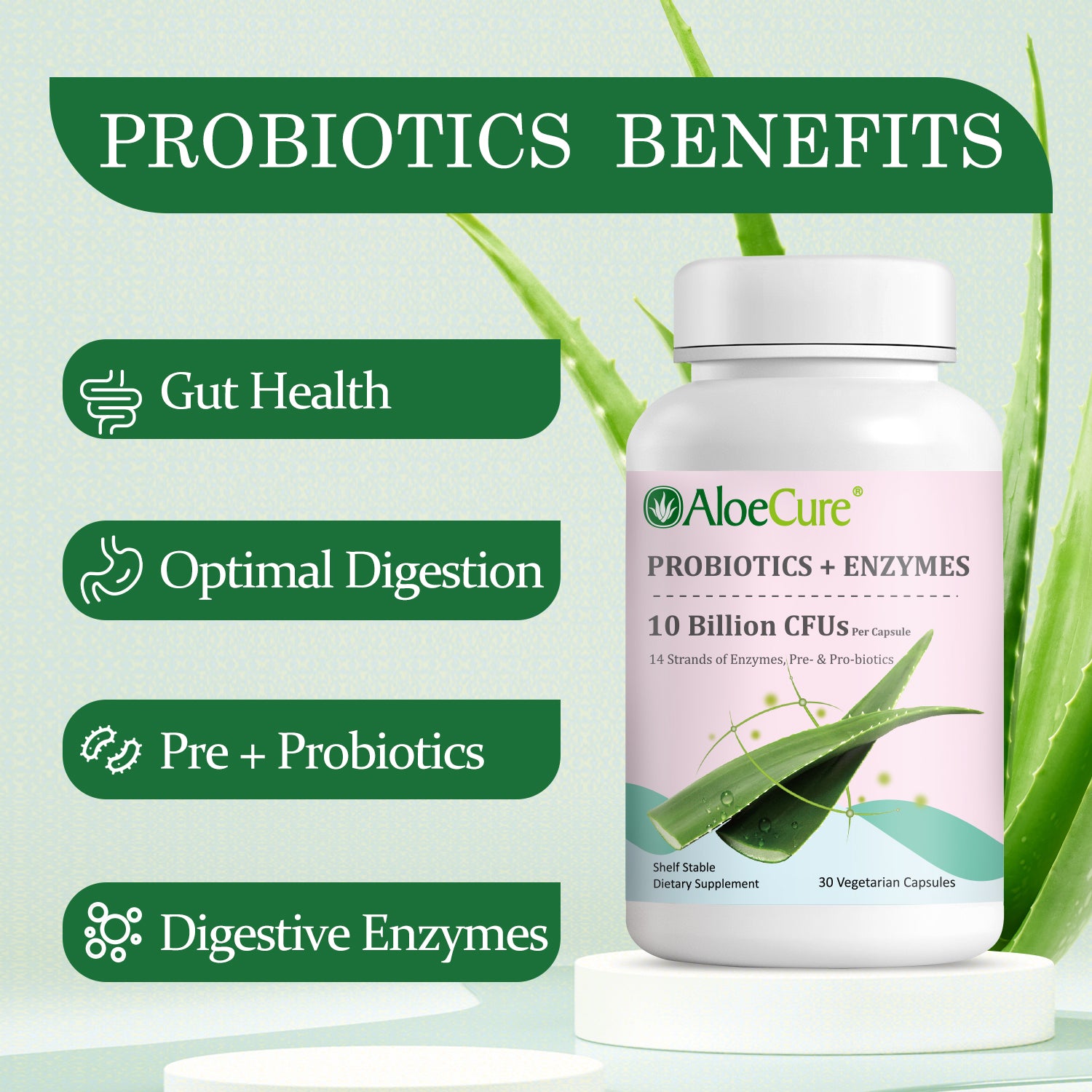
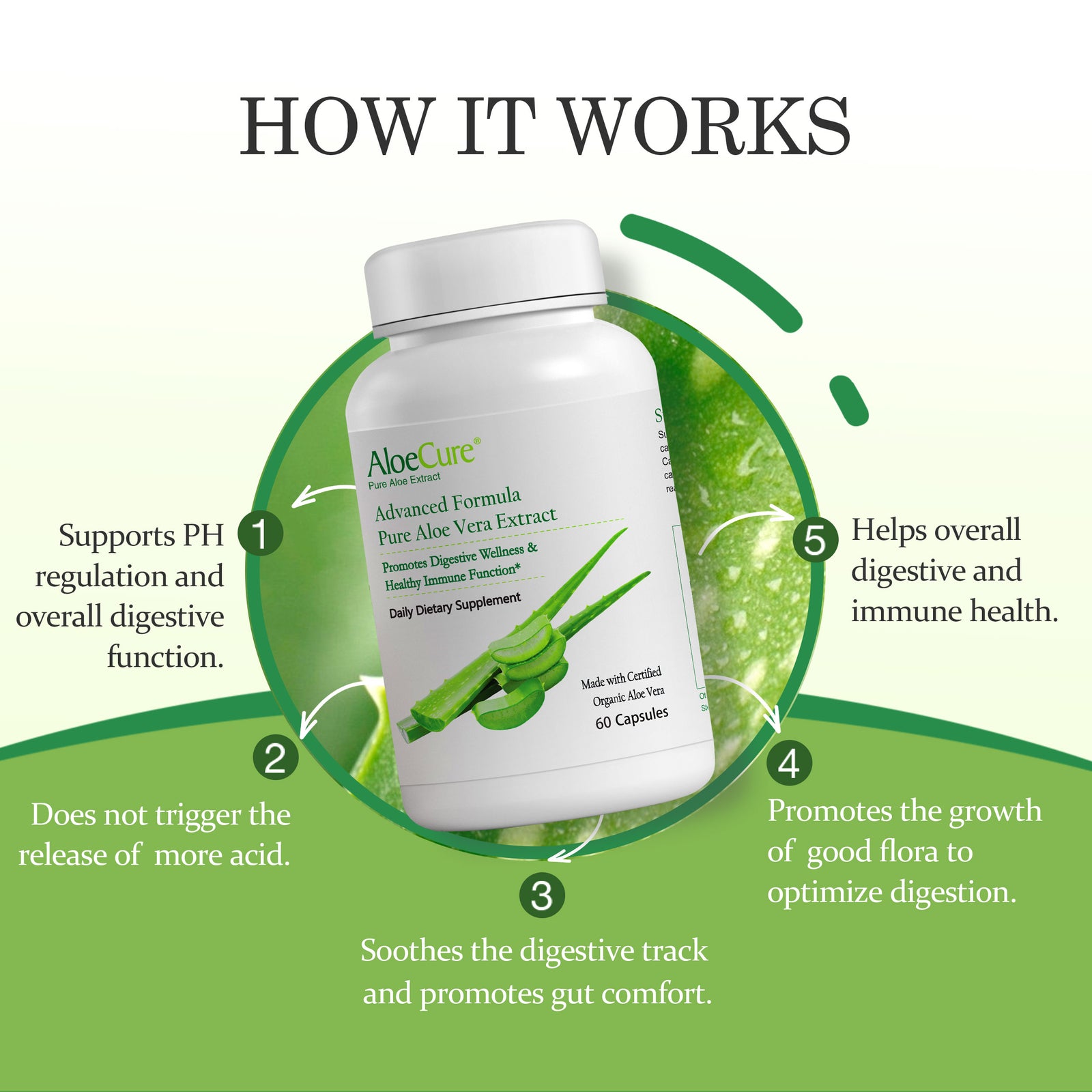
AloeCure offers a Pre+Probiotic & Digestive Enzyme formula with enzymes such as amylase and lipase, intended to support the breakdown of food components. The company says its aloe operation is vertically integrated, meaning it farms, processes, and produces its own aloe products. Its stated processing approach avoids chemicals, concentrates, enzymes, and charcoal filtration, with third-party certifications and testing used as part of its quality process.
That product is one option for people seeking plant-based digestive support, not a direct weight-loss agent. The relevant expectation is support for normal digestion and everyday comfort. If your primary goal is weight management, the product should complement, rather than replace, the food and activity habits described above.

If you're comparing digestive enzymes with enzyme inhibitors, remember the direction of action. Enzymes support food breakdown. Inhibitors limit selected digestive activity. That difference should guide both your product choice and your expectations.
These statements have not been evaluated by the Food and Drug Administration. This product is not intended to diagnose, treat, cure, or prevent any disease.
If you're looking for plant-based digestive support that fits a balanced wellness routine, visit AloeCure to explore its Pre+Probiotic & Digestive Enzyme formula and aloe-based options. You can also review subscription choices, including Subscribe & Save, before choosing the format that best fits your daily habits.
Comments will be approved before showing up.