Your Cart is Empty

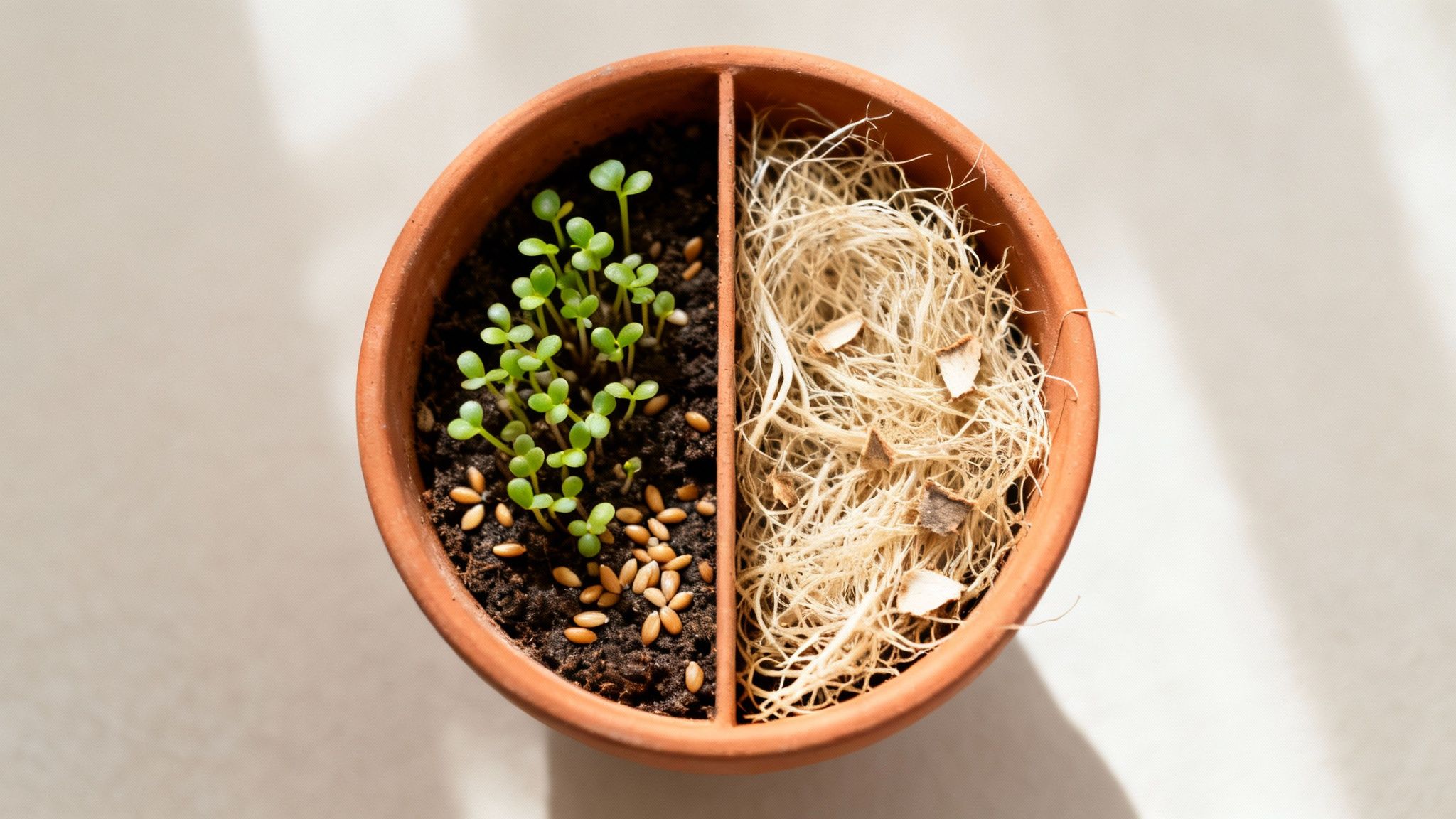
If you've ever felt confused about the difference between probiotics and prebiotics, you're not alone. The simplest way I've found to explain it is by thinking of your gut as a garden.
Probiotics are the new seeds you plant—they are live, beneficial microorganisms that add to your gut's population. Prebiotics, on the other hand, are the fertilizer. They’re specialized fibers that nourish the good seeds already living there, helping them grow strong and flourish.
While both are crucial for a happy digestive system, they do completely different jobs. Probiotics introduce good organisms directly into your gut. Prebiotics are essentially food for the friendly microbes you already have, encouraging them to multiply and thrive.
Grasping this fundamental difference is the first step to making smart choices for your digestive wellness. It's common for people to focus only on adding probiotics, but without enough fuel from prebiotics, these beneficial organisms can struggle to really take root and make a difference. A balanced approach that includes both is often the key to maintaining a healthy internal ecosystem.
Let's break down their unique roles even further. Probiotics are live cultures, just like the active cultures you find in yogurt or kefir. When you consume them, you're directly increasing the number of good guys in your system.
Prebiotics, however, are non-digestible compounds found in foods like garlic, onions, and chicory root. Your body can't break them down, so they travel to your colon where they become a selective food source for your beneficial bacteria.
This chart really drives home their distinct roles:
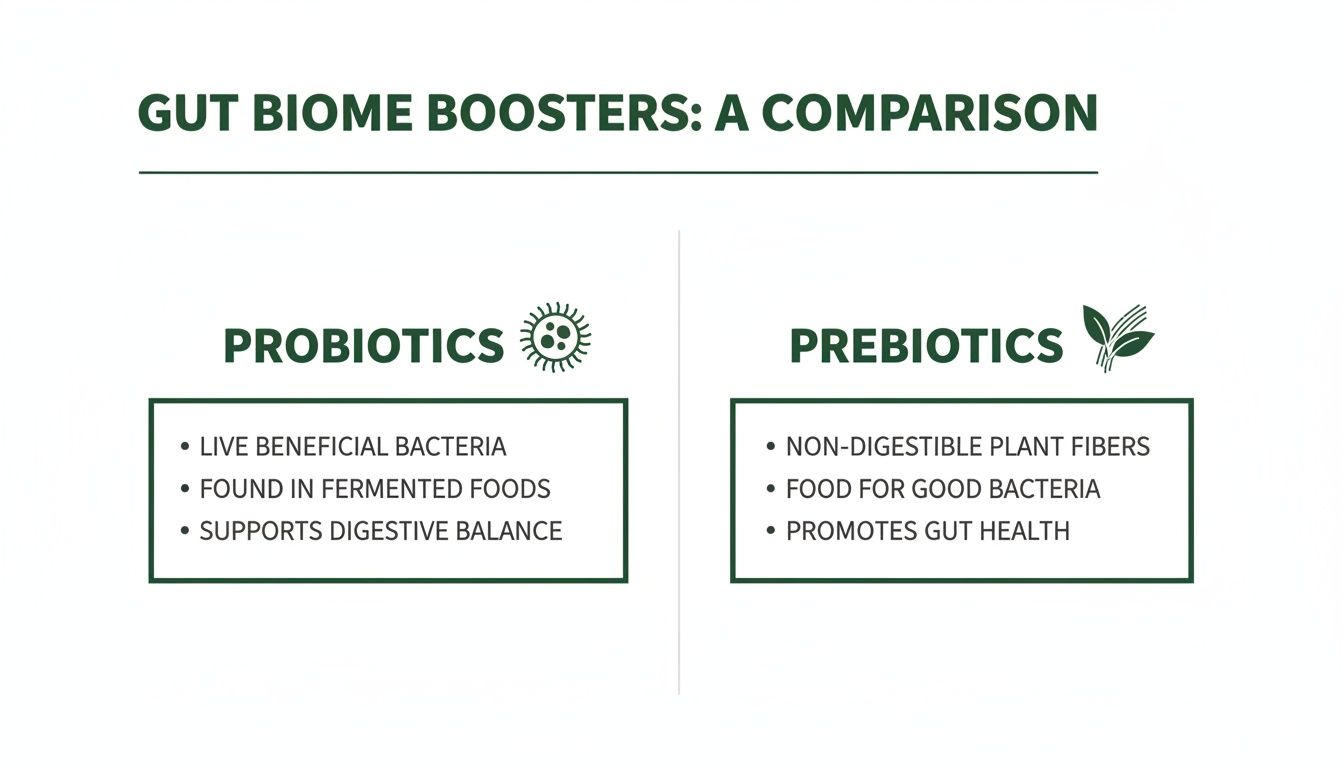
As you can see, one is the organism, and the other is its food. This simple but powerful relationship is why they work so well together. For a really thorough breakdown of how each one contributes to your digestive system, check out this excellent guide: Prebiotic vs. Probiotic: Your Guide to a Happier Gut.
To make things even clearer, here's a quick side-by-side comparison.
This table offers a direct comparison of the fundamental characteristics of probiotics and prebiotics.
| Characteristic | Probiotics | Prebiotics |
|---|---|---|
| Primary Role | Adds live, beneficial microorganisms to your system. | Serves as a food source for existing beneficial microorganisms. |
| What They Are | Living bacteria and yeasts. | Specialized plant fibers and non-digestible carbohydrates. |
| Common Sources | Yogurt, kefir, kombucha, kimchi, high-quality supplements. | Chicory root, garlic, onions, bananas, whole grains. |
| Mechanism | Directly populates the digestive system with helpful cultures. | Nourishes and encourages the growth of resident good bacteria. |
Ultimately, choosing between probiotics and prebiotics—or using both—comes down to your specific wellness goals and what your body needs. In the rest of this guide, we’ll explore each one in more detail to help you figure out the best approach for supporting your body's natural balance.
Probiotics are the "good" live microorganisms—think beneficial bacteria and yeasts—that help support your body's natural balance. You can picture them as friendly reinforcements arriving to help out the complex community of microbes already living in your digestive system. When you consume probiotics, you're directly adding these helpful organisms.
Their main job is to maintain the delicate equilibrium within your microbial ecosystem. They work by joining the existing community, contributing to a diverse and harmonious environment. This is the crucial difference between probiotics and prebiotics: probiotics add new members to the team, while prebiotics feed the team that's already there.
This growing focus on digestive wellness is impossible to ignore. In 2025, the global probiotics market is valued at a massive USD 114.10 billion, surging from USD 72.1 billion in 2024. Projections show it could skyrocket to USD 417.09 billion by 2035, growing at a blistering 13.84% CAGR. This boom is driven by people like you seeking better digestive and immune support, with the food and beverage segment dominating at 62% market share in 2025 as yogurts, drinks, and supplements become daily staples. You can learn more about these market projections here.
Not all probiotics are created equal; different strains offer different benefits. Two of the most common groups are Lactobacillus and Bifidobacterium. Each group contains numerous species and strains that have been studied for their role in supporting health.
You can find these beneficial organisms in a wide variety of fermented foods. These traditional foods have been part of human diets for centuries and are still a fantastic way to introduce live cultures into your system.
Yogurt: Always check the label for "live and active cultures" to make sure you're getting the good stuff.
Kefir: A fermented milk drink, it's similar to yogurt but often contains a wider variety of beneficial bacterial strains.
Kimchi: A staple in Korean cuisine, this fermented cabbage dish is packed with live cultures.
Kombucha: This fermented tea has become incredibly popular for its unique taste and microbial content.
While dietary sources are excellent, the specific strains and their amounts can be inconsistent. Supplements offer a more direct and standardized way to get specific, well-researched probiotic strains into your system.
When you're choosing a supplement, quality and potency are everything. A supplement is only effective if the live organisms it contains are actually viable. For a deeper look into how these blends work, you might be interested in our article on the benefits of a probiotic and enzyme blend. This is where a company's commitment to excellence really comes into play.
At AloeCure, we are fully vertically integrated. That means we control every single step of the process—from farming our own organic aloe to processing it and producing the final products. This farm-to-bottle approach guarantees our supplements are made with the highest quality ingredients, delivering potent and reliable support. By avoiding the harsh processing methods used by many competitors, we preserve the purity and power of our formulas. You get a product designed for optimal support of your body's natural systems.
If you think of probiotics as the new seeds you plant in your garden, then prebiotics are the specialized fertilizer that helps everything already growing there flourish. Simply put, these are unique, non-digestible plant fibers that act as a crucial food source for the beneficial bacteria living in your digestive system. They provide the exact nourishment your internal ecosystem needs to thrive.
The real difference here is the mechanism. Probiotics introduce new, helpful organisms, while prebiotics selectively feed the good guys you already have. Your body can't actually digest these fibers, so they travel through the small intestine completely intact. Once they arrive in the colon, they become a feast for your beneficial microbes, encouraging them to multiply and helping you maintain a balanced, harmonious internal environment.
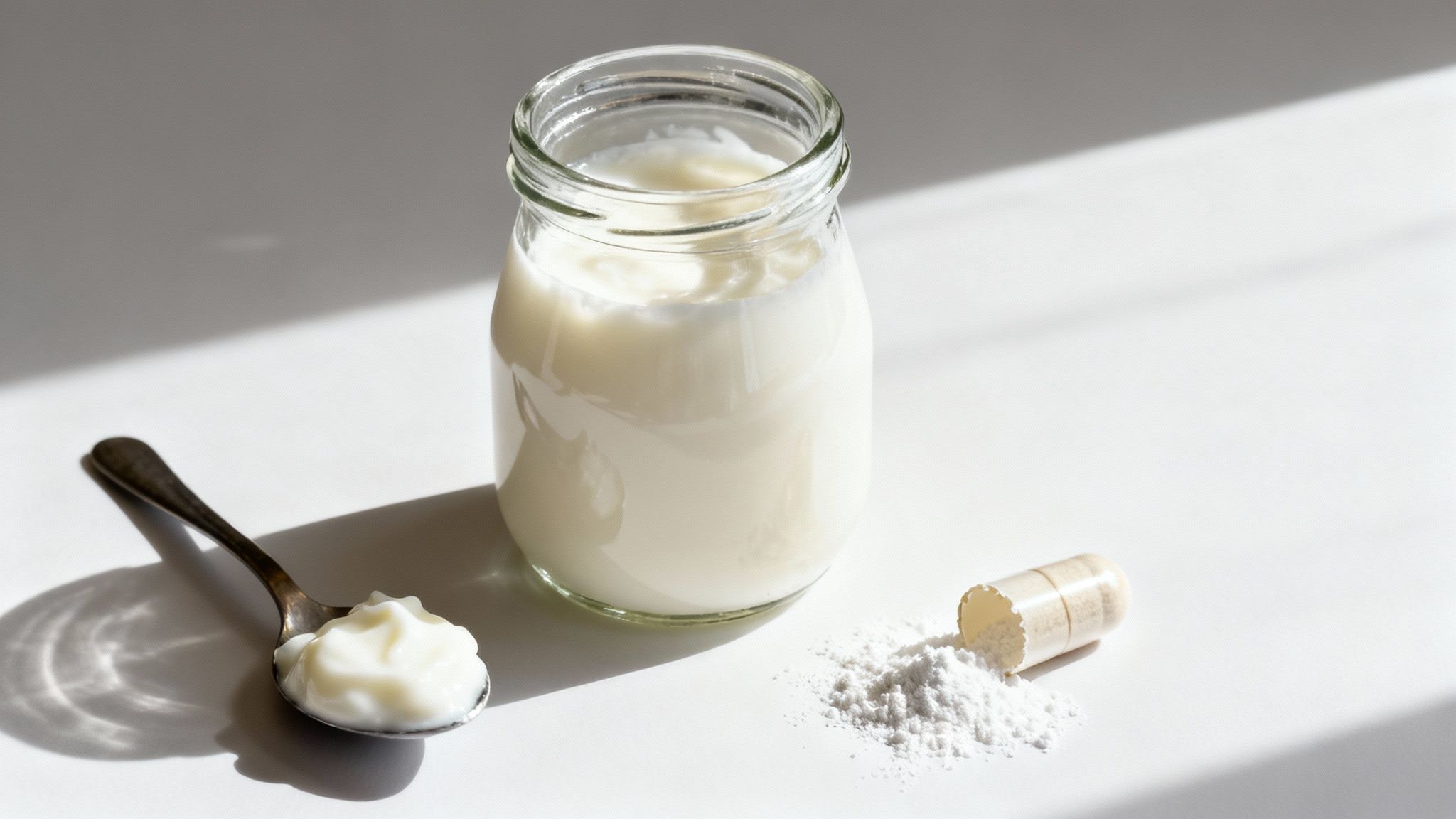
This nurturing role is what makes prebiotics a true cornerstone of long-term digestive wellness. Instead of just adding reinforcements, you’re strengthening your native population of beneficial bacteria, empowering your body’s natural ability to maintain its own balance.
Prebiotics are found naturally in a lot of plant-based foods, especially those high in specific types of fiber. Getting more of these foods into your diet is an excellent way to support your microbes. Some of the most well-known types of prebiotic fibers are Fructo-oligosaccharides (FOS) and galactooligosaccharides (GOS).
You can easily find these powerful fibers in everyday foods. Here are a few great sources to start with:
Chicory Root: This is one of the most concentrated sources of prebiotic fiber out there and is often used in coffee alternatives.
Garlic and Onions: These kitchen staples do more than add flavor; they're packed with beneficial fibers.
Asparagus: This green vegetable is another fantastic source of fuel for your gut.
Bananas: Bananas, especially when they're still a bit green, contain resistant starch that functions as a prebiotic.
Whole Grains: Foods like oats, barley, and wheat bran are rich in beta-glucans, a type of prebiotic fiber.
By consistently including these foods in your meals, you provide a steady supply of fuel for your beneficial bacteria. This ongoing nourishment is fundamental to supporting a robust and resilient internal ecosystem.
Market trends really highlight the different roles of probiotics and prebiotics. While the global probiotics market is projected to hit USD 114.31 billion in 2025, the prebiotics market is on a rapid ascent of its own. It's expected to climb from USD 6.05 billion in 2021 to USD 21.2 billion by 2030, growing at a strong 14.9% CAGR. In 2025 alone, the prebiotics market is set to hit USD 6.81 billion, with FOS-based products leading the charge. You can discover more insights about these market trends here.
This growth shows a rising awareness that it’s not just about introducing good bacteria, but also about nourishing them effectively. For those seeking consistent support, high-quality supplements can provide prebiotic fibers in concentrated amounts. At AloeCure, our commitment to quality is unwavering. We are fully vertically integrated, which means we farm our own aloe, process it, and create our own products. This ensures you get a pure, potent supplement designed to support your body’s natural harmony, free from the harsh processing techniques many competitors use.
Understanding the difference between probiotics and prebiotics is the first step, but the real magic happens when you bring them together. They have a powerful relationship; when combined, they support your digestive system more effectively than either could alone. This dynamic duo creates the perfect environment for beneficial bacteria to truly thrive.
Think back to our garden analogy: if probiotics are the seeds and prebiotics are the fertilizer, combining them ensures the seeds not only get planted but also get the nutrients they need to grow strong and multiply. This combination fosters a more robust and resilient internal ecosystem, promoting overall digestive comfort and function.
This concept of combining these two powerhouses is known as synbiotics. The term refers to a mixture of live beneficial microorganisms and the specific fuel they use that benefits the host (you!). It’s a strategic approach to digestive wellness that ensures you're both populating and feeding your beneficial microbes at the same time.
The synbiotic effect is all about teamwork. By giving probiotics their preferred food source (prebiotics) right away, you give them a big advantage. This helps the newly introduced beneficial bacteria establish themselves more effectively within the complex community of your digestive system.
This combination supports a balanced microbiota in several key ways:
Improved Survival: Prebiotics can help the probiotics as they travel through the harsh, acidic environment of the stomach, increasing the chances that more of them will arrive in the colon alive and ready to get to work.
Enhanced Growth: Once in the colon, the prebiotic fibers provide immediate nourishment, encouraging the probiotic organisms to multiply and become a more significant part of your microbial community.
Support for Native Bacteria: The benefits aren't just for the new arrivals. The prebiotic fibers also feed the existing beneficial bacteria that are already native to your system, helping them thrive as well.
This cooperative action leads to a more diverse and balanced microbial environment. When your beneficial bacteria are well-fed and plentiful, they can better perform their essential functions, which supports your body’s natural processes for maintaining digestive health and overall wellness.
A synbiotic approach moves beyond simply adding good bacteria; it focuses on creating a sustainable, nurturing environment where a healthy internal ecosystem can maintain itself. It is a more complete strategy for long-term digestive balance.
Incorporating both probiotics and prebiotics into your daily routine doesn’t have to be complicated. You can create a synbiotic effect by pairing probiotic-rich foods with prebiotic-rich ones—for example, having yogurt (probiotic) topped with sliced bananas (prebiotic). However, getting a consistent and potent dose through diet alone can be a challenge.
For those looking for a convenient and reliable way to harness this synergy, an all-in-one supplement is an excellent option. This is where a high-quality, thoughtfully formulated product makes a real difference. You can explore a deeper dive into how these components work together in our guide on the roles of prebiotics, probiotics, and enzymes in gut health.
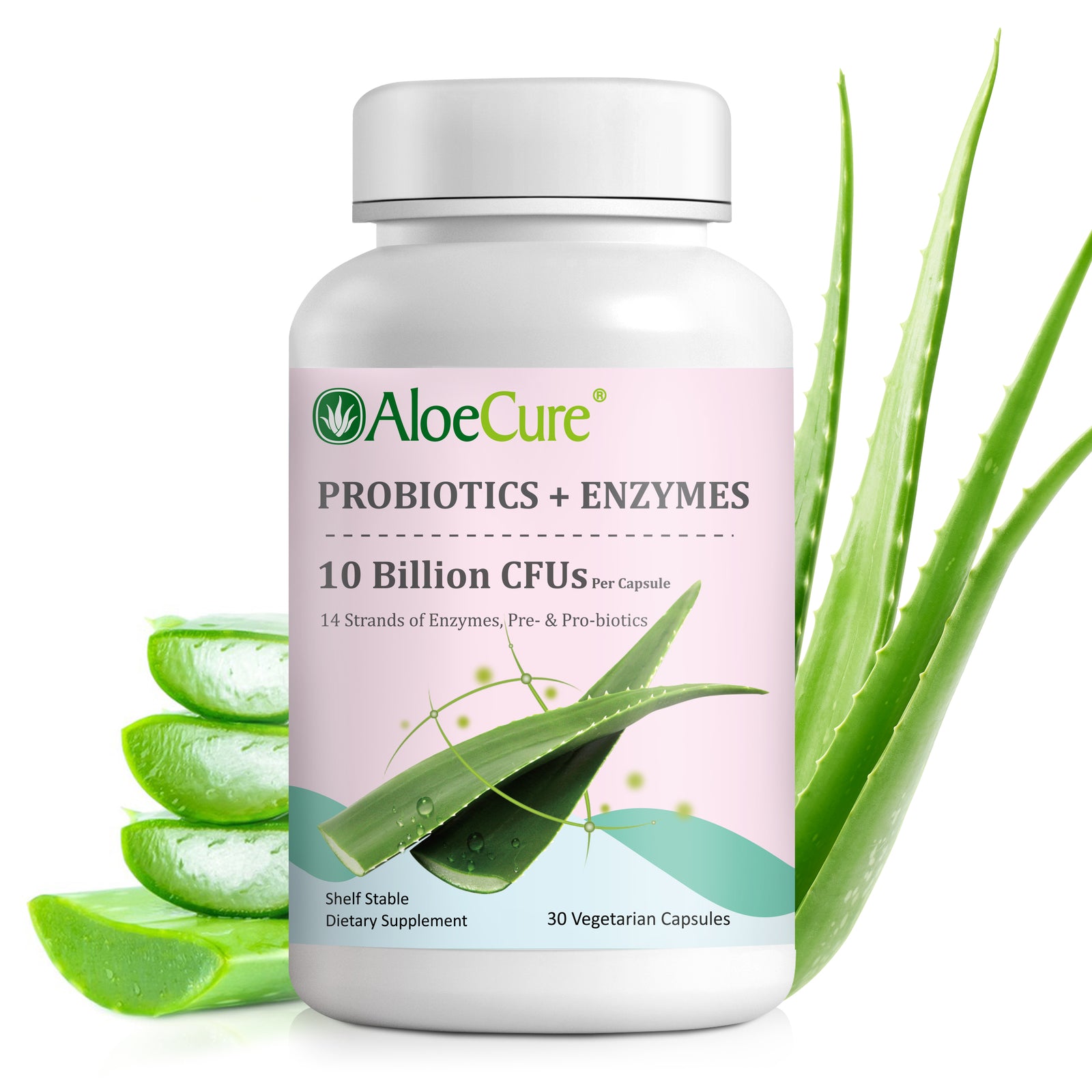
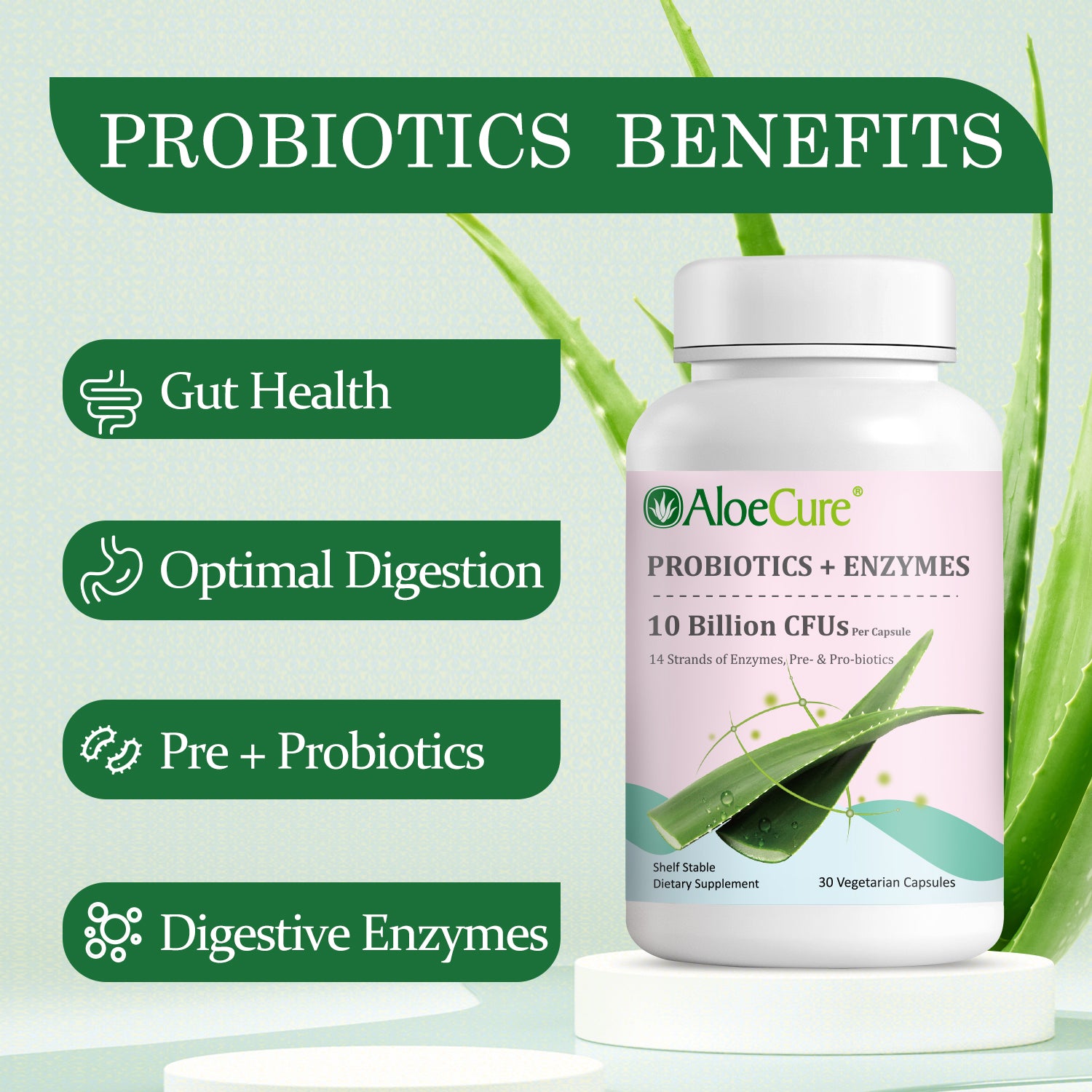
At AloeCure, we designed our Pre+Probiotic & Digestive Enzyme Capsules to deliver this powerful combination in one easy step. By formulating these complementary ingredients together, we take the guesswork out of supporting your digestive wellness. Our farm-to-bottle promise ensures you receive a product of exceptional purity and potency. Because we are fully vertically integrated—from farming our own organic aloe to processing it and producing our supplements—we maintain complete control over quality. This allows us to create a superior product free from the harsh chemicals and processing that competitors often use and deliver a synbiotic formula that provides comprehensive support for your body’s natural harmony.
Navigating the supplement aisle can feel like a maze, but knowing what to look for makes all the difference. When you’re choosing probiotic and prebiotic products, a few key details can empower you to find supplements that actually deliver on their promises. The gap between a generic product and a high-quality one often comes down to potency, purity, and the company’s real commitment to quality control.
For probiotics, one of the most important things to check is the Colony Forming Units (CFUs). This number tells you how many live and active microorganisms are in each serving. While a huge CFU count might seem better, what really matters is that the product guarantees a specific, effective amount of living bacteria through its expiration date.
Another critical piece of the puzzle is the specific bacterial strains used. Look for supplements that list the full strain names on the label—think Lactobacillus acidophilus La-14, not just the species. This level of detail shows the formula uses well-researched strains picked for their particular benefits. Some products even get creative with their ingredients; a great example is Teelixir mushroom-based probiotics, which blends beneficial cultures with other natural compounds for added support.
When you’re sizing up prebiotic supplements, the type and source of the fiber are everything. Not all fibers act as prebiotics, so you want to be selective. High-quality formulas will use specific, recognized prebiotic fibers like Fructo-oligosaccharides (FOS) or inulin, which are well-known for effectively feeding your good bacteria.
The dosage is also a big deal. A product needs to provide a meaningful amount of prebiotic fiber in each serving to properly fuel your internal ecosystem. Transparency is your best friend here, so stick with brands that clearly state the type and amount of prebiotic fibers in their formula.
Choosing a supplement isn't just about the ingredients on the label; it’s about the entire process behind the product. A company's commitment to sourcing, processing, and transparency is a direct reflection of the quality you receive.
This is where AloeCure really stands apart. We are fully vertically integrated, a distinction that fundamentally changes the quality of our supplements. We don't just buy ingredients; we grow them ourselves on our own USDA-certified organic farms. We manage every single step, from hand-harvesting our aloe to using our proprietary, all-natural processing methods within 12 hours of picking it.
This complete control means our products are free from the harsh chemicals, charcoal filtration, and high-heat processing that so many competitors use. Those shortcuts can seriously diminish the bioactivity of the final product. Instead, our gentle methods preserve the powerful compounds in our aloe, delivering the purity and potency you deserve.
Here’s a simple checklist to help you evaluate and compare supplements, ensuring you pick a high-quality product that works for you.
| Quality Factor | What to Look For | The AloeCure Advantage |
|---|---|---|
| Sourcing | Transparent sourcing of raw ingredients. | We are fully vertically integrated, farming our own USDA-certified organic aloe. |
| Processing | Gentle, low-heat methods that preserve bioactivity. | Our proprietary, all-natural process avoids harsh chemicals and high heat. |
| Potency | Clear labeling of CFUs (probiotics) and fiber types (prebiotics). | Formulated for effective support with full transparency on our labels. |
| Traceability | A clear path from raw ingredient to finished product. | Our 8-step traceability process guarantees quality and purity from farm to bottle. |
| Confidence | A strong satisfaction guarantee from the company. | We stand behind our products with a 90-day money-back guarantee. |
Our unwavering commitment to quality is backed by our traceability promise and our satisfaction guarantee. We believe in our products because we control their quality right from the very start, ensuring you get a supplement designed for superior support.
Now you know the difference between probiotics and prebiotics, and you can see why both are so important for your digestive wellness. Probiotics are the good guys you introduce to your system, and prebiotics are the food they need to really thrive. To keep your body's internal ecosystem in harmony, you really need both working together. That synergy is the most effective path to long-term balance.
Taking this two-pronged approach is easier than you might think. At AloeCure, we’ve taken the guesswork out of the equation by putting these powerful components into a single, convenient formula.
Our Pre+Probiotic & Digestive Enzyme Capsules are formulated to give you that comprehensive support in one go. This blend takes full advantage of the relationship between beneficial bacteria and their fuel, helping you maintain digestive comfort and balance day in and day out. We've also included digestive enzymes to give your body's natural processes an extra helping hand. If you're curious about how aloe vera fits into this picture, you can learn more about the link between aloe vera juice and probiotics.
What truly sets AloeCure apart is our farm-to-bottle promise. We are what’s known as vertically integrated, which is just a fancy way of saying we handle every single step ourselves. We grow our own USDA-certified organic aloe vera, harvest it by hand, and use a unique, all-natural process to make sure its bioactivity is at its peak. A lot of competitors use harsh chemicals or high heat, but we guarantee a pure, potent product you can trust.
Take control of your digestive wellness today. By choosing a high-quality, synergistic formula, you are investing in your body’s natural ability to maintain balance and harmony from the inside out.
Ready to see what the AloeCure difference is all about? Check out our Pre+Probiotic & Digestive Enzyme Capsules and discover a new level of digestive support. You can make a one-time purchase or join our Subscribe & Save program to get 20% off every order with a flexible delivery schedule that works for you.
[Shop Pre+Probiotic & Digestive Enzyme Capsules Now]
These statements have not been evaluated by the Food and Drug Administration. This product is not intended to diagnose, treat, cure, or prevent any disease.
Venturing into the world of digestive wellness can bring up a lot of questions. Getting clear on the differences between probiotics and prebiotics is a huge first step, so let's tackle some of the most common things people ask.
A diet packed with diverse, plant-based foods is always the best place to start. Things like yogurt, kimchi, garlic, and onions are fantastic natural sources of both beneficial microbes and the fibers they need to thrive.
But for a more targeted and concentrated approach, supplements can be a big help. While food is perfect for general upkeep, a high-quality supplement delivers specific, well-researched probiotic strains and precise amounts of prebiotic fibers. This guarantees you get a consistent, reliable dose every single time.
Think of it this way: a healthy diet is like tending to your garden regularly. A quality supplement is like bringing in a specialist to give specific plants the exact nutrients they need to truly flourish.
Timing can definitely play a role. As a general rule of thumb, many people find taking their probiotic or prebiotic supplement with a meal works best.
Taking them with food can help the live probiotic organisms get past the harsh stomach acid, giving them a better chance of making it to your digestive system intact. That said, the single most important rule is to always follow the specific instructions on the product label. Different formulas can have unique recommendations for the best results.
Supplements are a tool, and they're particularly useful for maintaining digestive balance and regularity. If you're looking to be proactive about your wellness or just want to ensure your system has all the resources it needs to stay in harmony, a supplement can be a really valuable addition.
The whole point is to support your body's natural processes. By providing both the good bacteria and their favorite fuel, you're helping maintain a healthy, balanced internal environment. It's about empowering your system to function at its best, day in and day out, as part of a complete approach to your well-being.
Ready to bring digestive harmony into your routine with a high-quality, synergistic formula? AloeCure’s Pre+Probiotic & Digestive Enzyme Capsules are designed with our farm-to-bottle promise, ensuring purity and potency you can actually feel.
Explore AloeCure’s full range of products and sign up for 20% off your subscription today!
Comments will be approved before showing up.