Your Cart is Empty

You bought the cheaper bottle, followed the directions, and felt nothing obvious. Now you're reading aloe vera supplement reviews, trying to work out whether the next bottle will be different or just have better packaging. My advice is to stop comparing stars and start comparing what the seller can document.
A useful review tells you which part of the leaf you're buying, how it was processed, and what independent testing found. Taste and convenience matter after that, not before.
A reviewer can describe flavor immediately. They can photograph a bottle, comment on capsule size, and explain whether shipping went smoothly. None of that tells you whether the manufacturer clearly identified the aloe ingredient or checked the finished product for aloin.
That's why I wouldn't buy another bottle based on customer enthusiasm alone. A detailed experience can help you judge usability, but it can't establish composition, safety, or effectiveness.
| Review detail | What it helps you judge | What it doesn't establish |
|---|---|---|
| Taste and texture | Whether you'll enjoy using a liquid | Ingredient quality |
| Capsule size | Whether the format fits your routine | Aloe composition |
| Customer satisfaction | How someone felt about their purchase | Clinical effectiveness |
| Plant fraction and processing | What the manufacturer says it uses | Whether the batch meets that description |
| Independent batch results | Whether tested specifications were met | Guaranteed personal results |
My buying order is simple: identity, processing, testing, then convenience. If a review skips the first categories and jumps straight to a recommendation, keep looking.
A credible reviewer should identify the exact product and serving directions. They should also distinguish information copied from the manufacturer from information supported by a laboratory report. A marketing description and an independently verified result aren't interchangeable.
A disappointing purchase doesn't automatically mean you need a stronger product or a larger serving. It may mean the product wasn't well documented, your expectations weren't realistic, or aloe didn't provide a noticeable benefit for you.
Practical rule: A review earns your trust by showing its limits, not by sounding certain.
I'd rather read a cautious review with a readable batch report than an enthusiastic recommendation with no specifications. A higher price needs a better explanation, not a more dramatic testimonial. The strongest aloe vera supplement reviews give you enough information to reject an unsuitable bottle, even when the reviewer liked it.
The word aloe doesn't identify a single interchangeable ingredient. Inner-leaf gel, decolorized whole-leaf extract, and aloe latex have different safety considerations, which is why the plant fraction belongs near the beginning of any serious review.
This diagram provides a useful starting vocabulary.
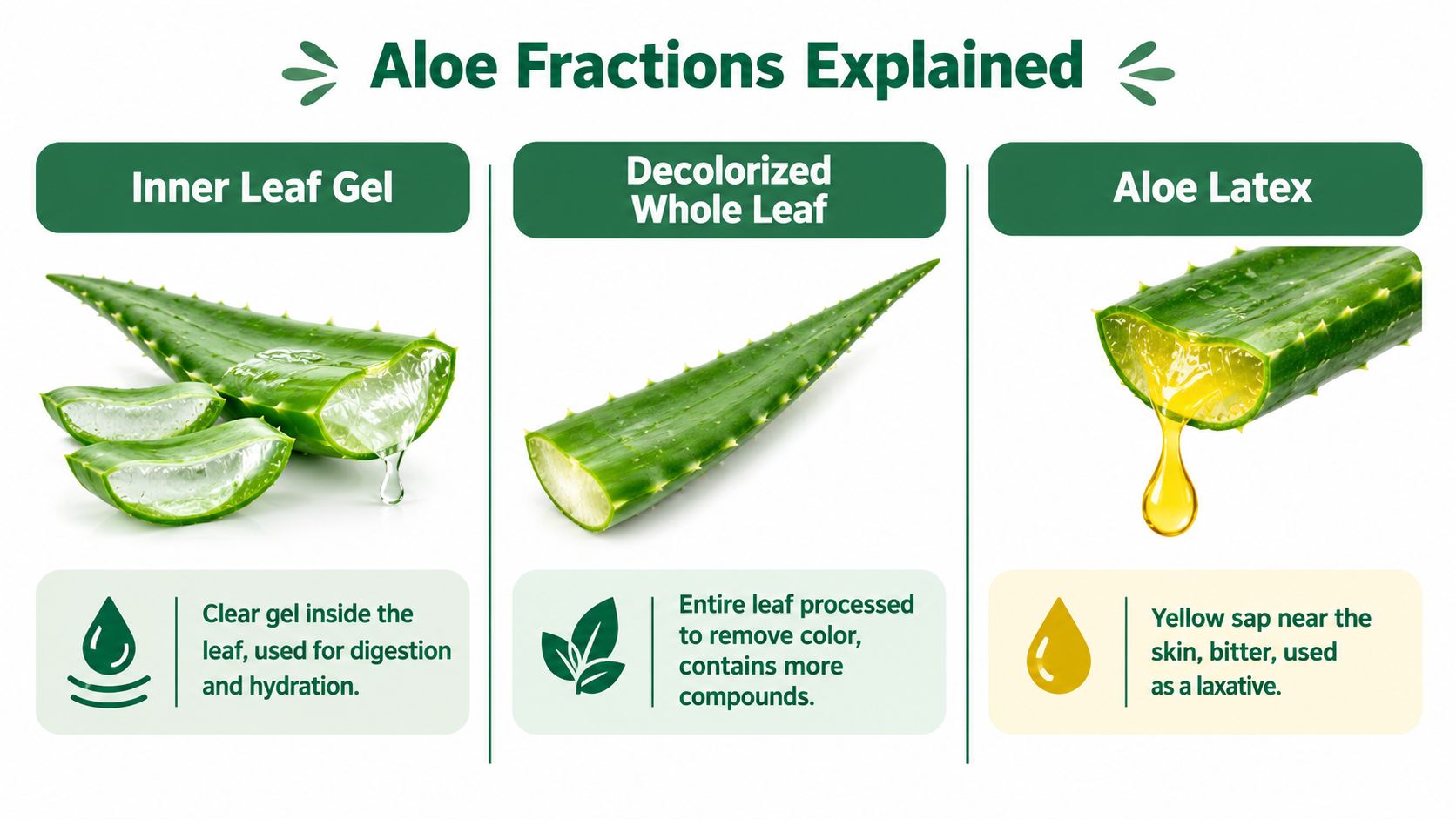
Inner-leaf gel identifies the gel fraction inside the leaf. Labels may use wording such as inner fillet. I want that description to be clear rather than having to infer it from a picture of a cut leaf.
Decolorized whole-leaf extract identifies a whole-leaf preparation that has undergone processing. It shouldn't be confused with non-decolorized whole-leaf extract, and the word decolorized doesn't replace a finished-product test.
Aloe latex contains anthraquinones, including aloin, associated with laxative effects. Oral latex can cause abdominal pain, cramps, and diarrhea, according to the National Center for Complementary and Integrative Health's aloe safety guidance.
| Label wording | My next question |
|---|---|
| Inner leaf or inner fillet | Does the ingredient specification match this description? |
| Decolorized whole leaf | What does the finished-product aloin test show? |
| Purified | Which substances were measured after processing? |
| Pure gel | Where is the supporting composition and testing information? |
On May 9, 2002, the FDA determined that aloe ingredients used in over-the-counter stimulant laxative products were not generally recognized as safe and effective, as summarized in the NCCIH guidance linked above. That decision concerned a particular regulatory use, not a blanket judgment that every aloe preparation is identical.
The distinction matters for everyday buyers. A pronounced bathroom effect isn't evidence that a supplement provides better digestive support.
For a closer label comparison, use the explanation of whole-leaf aloe versus inner aloe gel. Then return to the actual bottle: if the seller can't tell you which fraction it contains, I'd choose a product with clearer documentation.
Processing deserves scrutiny, but it also attracts confident claims that buyers can't easily check. I wouldn't accept “patented,” “natural,” or “advanced” as proof that a bottle will produce a noticeable benefit.
The useful question is more specific: What did the manufacturer do, what did it measure afterward, and can it show the results? A process description tells you how a product was made. It doesn't, by itself, prove the finished product performs better.
| Method | What It Does | Effect on Bioactivity | Typical Label Language |
|---|---|---|---|
| Chemical processing | Describes processing involving chemical inputs | Requires product-specific evidence; the label alone cannot establish the effect | Purified, processed |
| Activated charcoal filtration | Identifies a filtration approach | Ask for before-and-after composition and finished-product results | Filtered, decolorized |
| Enzyme-based processing | Identifies the use of enzymes during manufacturing | Requires evidence about the resulting composition | Enzyme-processed |
| Chemical-free patented approach | Describes a claimed proprietary process without chemical inputs | A patent doesn't establish superior consumer outcomes | Patented, naturally processed |
These are questions to investigate, not a ranking of proven performance. Without comparable finished-product testing, declaring one method universally superior would go beyond the evidence available.
If a reviewer discusses acemannan or other polysaccharides, ask for the analytical basis behind the claim. A named compound sounds impressive, but the review should explain whether the manufacturer measured it in the finished product.
The same standard applies to powders, concentrates, and liquids. Don't assume a capsule is weak because it contains powder, or that a liquid is potent because it tastes fresh. The discussion of freeze-dried aloe vera offers useful manufacturing context, but the product's own specifications should drive your decision.
Vertical integration gives a company responsibility across farming, processing, and manufacturing. I see that as a useful accountability advantage, provided the company shares records that let buyers assess its work.
A patented process is a reason to ask better questions, not a reason to stop asking them.
If your last bottle felt like flavored water, don't let the next seller explain everything with manufacturing jargon. Ask for evidence that connects its process to its finished product.
The most useful quality document is a certificate of analysis, commonly called a COA. But a document titled “Certificate of Analysis” isn't automatically independent, current, or relevant to the bottle you're holding.
Use this visual as a document-reading checklist, not as a universal pass standard.
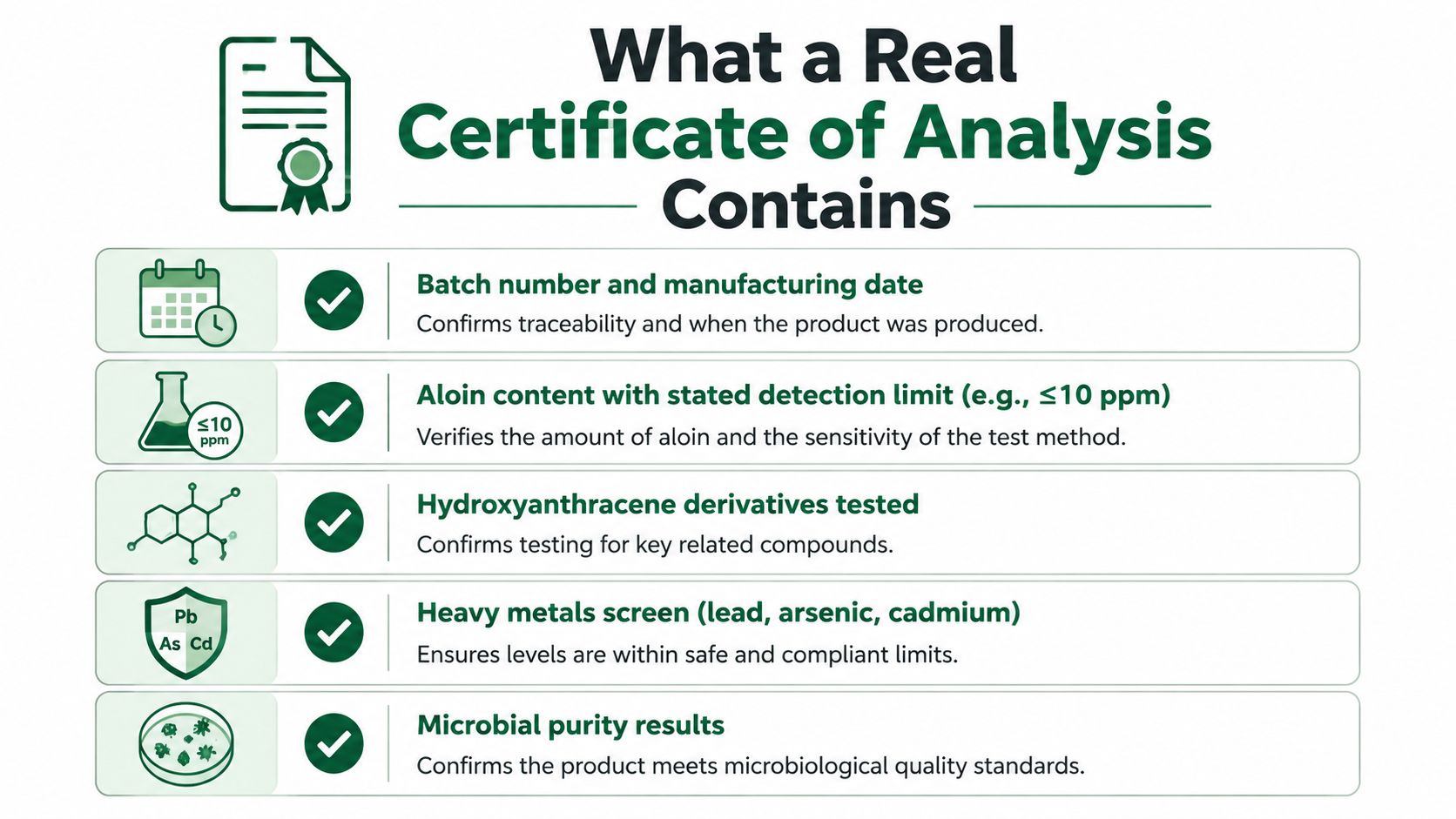
Start with the batch number, testing date, product identity, and laboratory name. If the report describes a different ingredient or an unrelated production batch, it doesn't answer your question about the current bottle.
Then find the aloin result and any reported hydroxyanthracene derivatives. The NCCIH guidance on aloe preparations and anthraquinone exposure supports treating these distinctions as meaningful safety considerations.
“Not detected” needs a stated detection limit. Without that information, you can't interpret the result properly. Likewise, a simple “pass” needs a specification explaining what counted as passing.
A self-issued quality icon isn't the same thing as an independent certification. Ask who issued the seal, what it covers, and whether it applies to the ingredient, manufacturing site, or finished product.
For help interpreting the paperwork, GutRx's explanation of what a COA means for supplements is a useful companion. You can also consult the explanation of what third-party testing means before contacting a seller.
Before buying: Ask for the current batch report with the aloin result, detection limit, testing date, and laboratory identity.
I wouldn't substitute reviews for that request. A helpful customer service response should make the paperwork easier to understand, not redirect you toward more testimonials. If a seller can't connect its quality claims to a specific document, choose a seller that can.
Choose the format around your routine, but don't confuse convenience with proven effectiveness. No format automatically establishes a benefit for digestion, joints, sleep, or skin.
A systematic review included 10 clinical trials involving 803 participants and concluded that aloe's overall clinical effectiveness hadn't been sufficiently established, according to the systematic review of aloe vera's clinical evidence. That's the right context for reading personal success stories: useful experiences, not clinical proof.
This chart introduces common shopping categories, but it shouldn't be read as evidence that a particular fraction is superior for a specific goal.
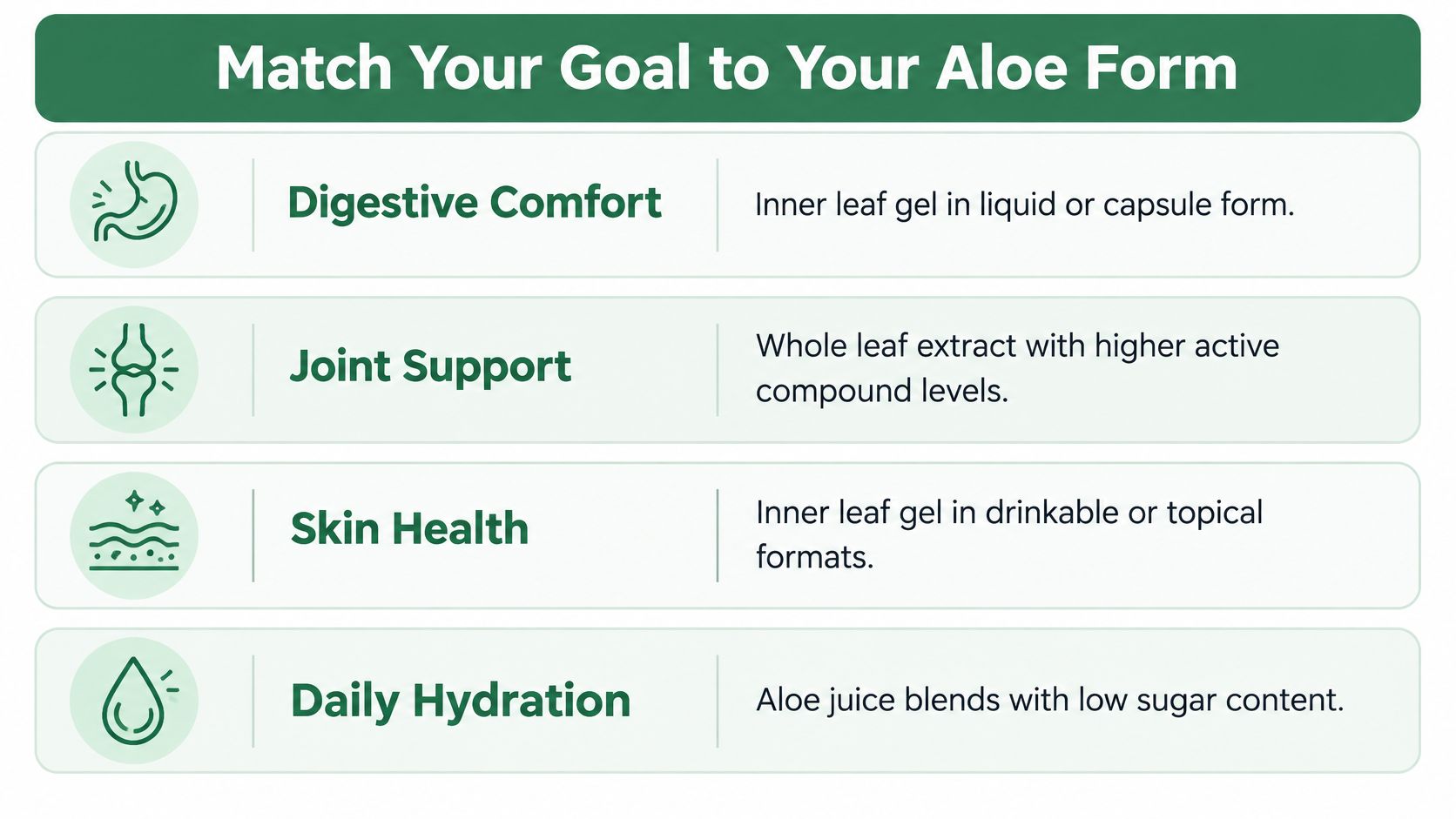
For digestive comfort, a clearly specified inner-leaf liquid or capsule is a practical starting point for comparison. Choose the liquid if you prefer a measured pour and the capsule if portability matters more.
“Supports healthy digestive function” describes a normal-function benefit, but a company still needs evidence for its specific claim. The FDA's dietary supplement labeling guidance on claims makes that substantiation responsibility clear.
Read the full ingredient list rather than judging aloe alone. Added ingredients, serving directions, and preparation requirements may determine whether the product suits your routine.
For joint support, I wouldn't choose whole leaf because a chart associates it with more active compounds. Ask for evidence supporting the exact finished formula and its stated normal-function benefit.
For sleep support, distinguish an aloe-only supplement from a multi-ingredient formula. A positive review of the latter can't establish that aloe caused the reported experience.
A sensible review also explains when to seek professional advice. Oral aloe should be avoided during pregnancy and breastfeeding, and people taking other health products should discuss suitability with a clinician.
Choose one clear wellness goal. Then judge whether the product has relevant substantiation, adequate documentation, and a format you'll use.
These shopper types describe different buying priorities, not documented customer case histories. The right fit depends on how you'll use the product and what information you need before committing.
The formats below show why a useful recommendation shouldn't send every buyer toward the same bottle.
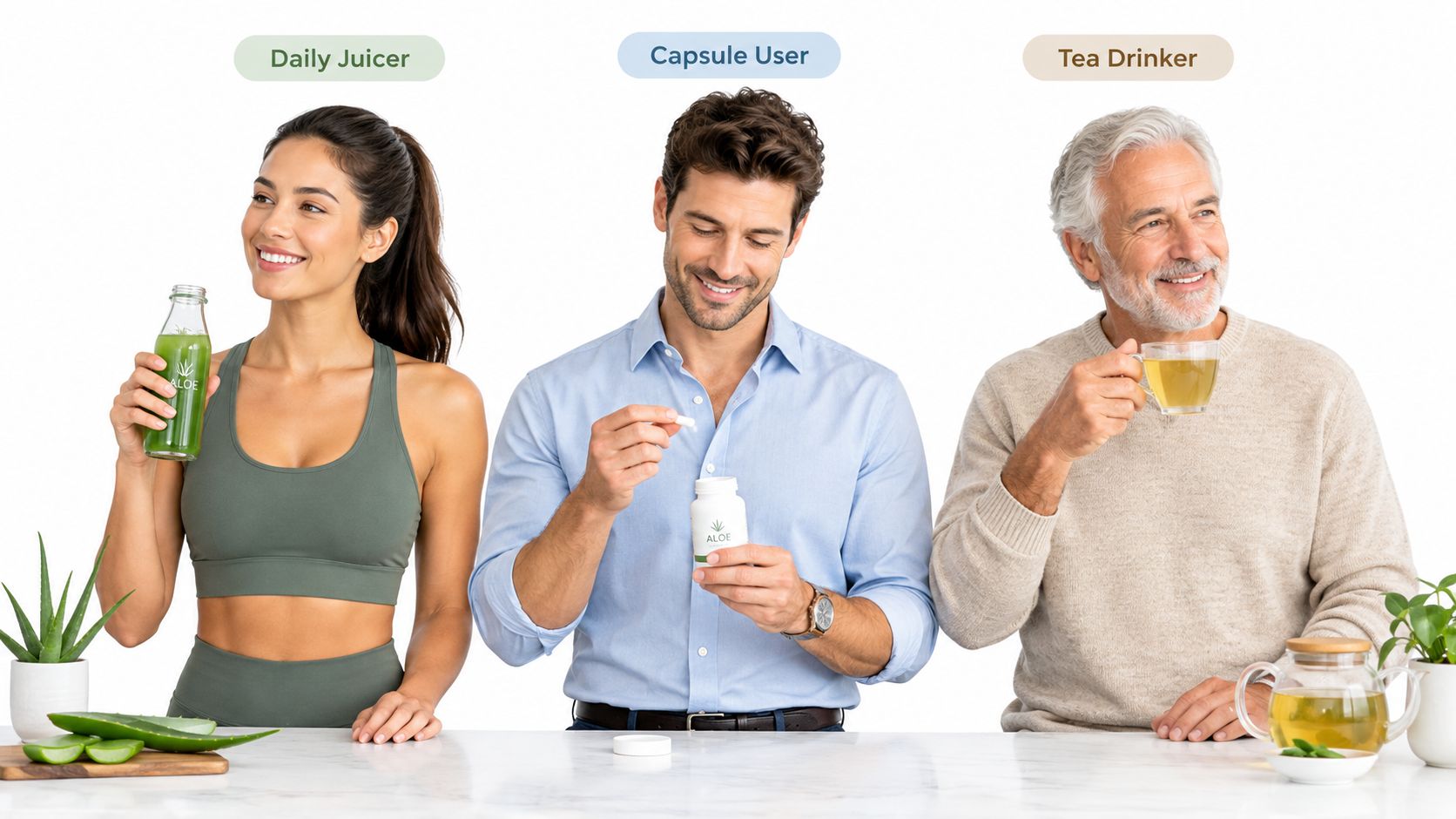
If pouring a serving already fits your morning, start with a liquid. Compare the complete ingredient lists, flavor options, labeled serving, and storage directions before choosing.
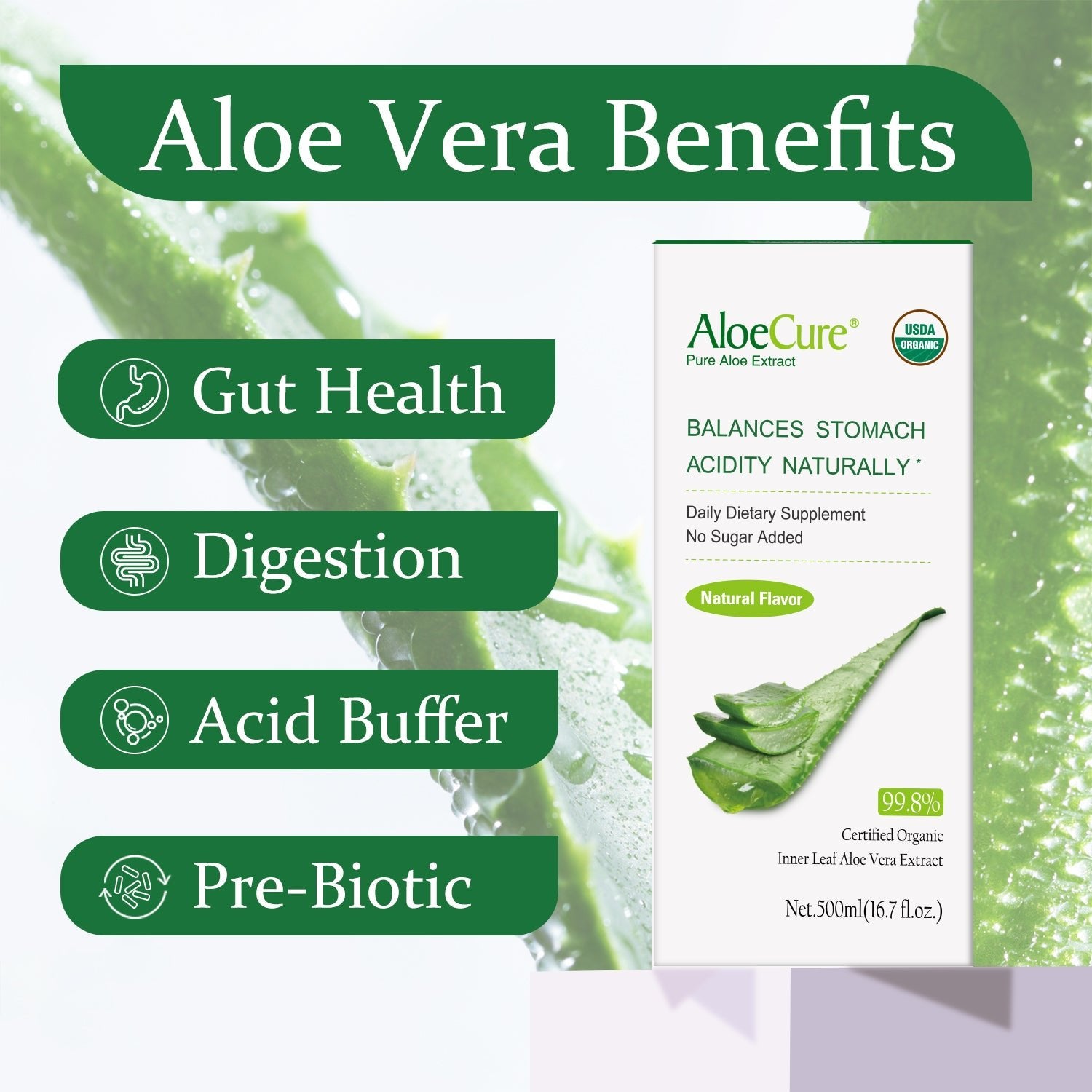
Pure USDA Organic Aloe Vera Juice is a product to examine in this category. Check the specific listing and label rather than assuming every flavor has an identical formulation.
A subscription can make sense once you know how quickly you use the bottle. Before enrolling, check delivery flexibility and cancellation terms, and avoid ordering faster than you consume it.
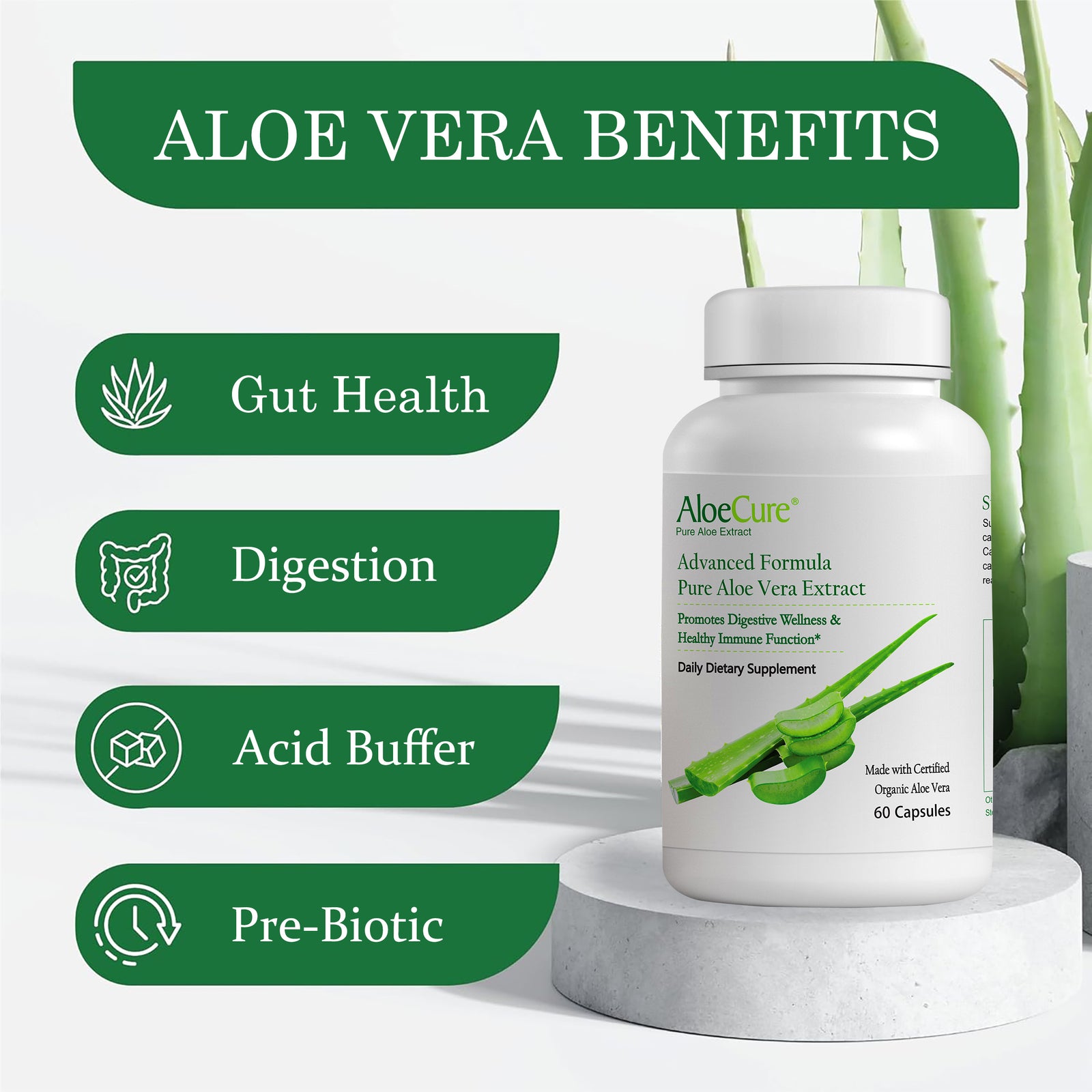
Choose capsules when portability and a simple routine matter most. Advanced Formula Aloe Capsules provides a specific product to compare against those priorities.
Don't assume a capsule has no sugar or no additional ingredients. Read the label, confirm the serving directions, and judge the full formulation rather than the front-panel description.
For a closer look at the brand's presentation, watch the video and compare its statements with the product documentation.
If you already like using aloe but want better accountability, compare the current bottle with the proposed replacement before changing anything. Write down the differences you can verify rather than relying on premium packaging.
Our parent company, AGHG, owns and operates aloe farms, and we farm our aloe, process it, and produce our own products. That integrated model is a meaningful reason to investigate our range, but it shouldn't exempt us from the documentation standards applied to anyone else.
For the switcher, my recommendation is straightforward: upgrade the evidence before upgrading the order size. Start with the format that fits your existing routine, check the terms, and evaluate your own experience without assuming a higher price guarantees a noticeable change.
We position our products as a higher-quality choice through vertical integration, organic sourcing, proprietary processing, and traceability. Those are concrete areas to examine, unlike a broad promise that a supplement will work for everyone.
Our aloe is hand-harvested from USDA- and EU-certified organic farms and processed on-site. We use a proprietary, patented process described as entirely natural, without chemical inputs, enzymes, concentrates, or charcoal filtration.
Owning the path from farm to finished product gives us responsibility for decisions that another company might divide among suppliers. Our traceability program and third-party certifications are therefore relevant purchasing considerations.
They aren't substitutes for product-specific evidence. Organic certification doesn't establish a wellness outcome, and a patented method doesn't prove that every buyer will feel a difference.
I'd use the same standard for our products that I'd use for any other purchase:
We offer a money-back guarantee, priority order processing, and free shipping on qualifying orders. Read the current conditions before purchasing, including eligibility, return requirements, and the difference between order processing and delivery.
Subscribe & Save offers discounted pricing and flexible delivery. Use it when the product already fits your routine, not because a discount makes an unsuitable purchase look attractive.
The strongest reason to choose our range is the opportunity to evaluate sourcing, processing, and product format together. The sensible expectation remains support for normal body function, backed by appropriate product-specific substantiation, not a promise of medical results.
The FDA's guidance on structure/function statements and labeling explains the required disclaimer accompanying these statements.
These statements have not been evaluated by the Food and Drug Administration. This product is not intended to diagnose, treat, cure, or prevent any disease.
AloeCure offers aloe juice and capsule options from a vertically integrated farming, processing, and manufacturing operation. Visit the product pages to compare ingredients, formats, and quality information, then choose a purchase or flexible subscription only after the documentation meets your standards.
Comments will be approved before showing up.