Your Cart is Empty


You've finished a week of takeout, your schedule has been hectic, and a vacation is approaching. A 5-day organic juice cleanse can look like a simple way to regain structure, drink more produce, and feel lighter. It can provide that structure, but it isn't a shortcut to permanent fat loss or a substitute for professional care.
A safe protocol needs more than a stack of bottled juices. It needs a gradual lead-in, a clearly limited juice-only phase, hydration, lighter activity, attention to warning signs, and a deliberate return to solid food. The plan below uses 3 transition days, 3 to 5 active juice days, and 2 to 3 reintroduction days.
An organic juice cleanse is a short-term eating pattern in which most calories come from freshly prepared juice made with certified-organic produce. Water, herbal tea, rest, and carefully selected supportive beverages round out the routine. The practical appeal is simple: replacing heavily processed meals with vegetables, fruit, and fluids can interrupt an unhelpful eating pattern and give you a predictable schedule.
That structure can help you increase vegetable intake, drink more water, and step away from takeout habits. It cannot independently remove unwanted substances from the body, create rapid fat loss, or replace medical care. The National Center for Complementary and Integrative Health's review of cleanse research notes that the available research is limited and low quality, while the early weight change associated with juicing is generally connected to very low calorie intake rather than a proven cleansing effect.
The history also shows how quickly this idea moved from a niche practice into commercial wellness. The Master Cleanse was developed in the 1940s, and the packaged-juice era accelerated in 2007 when BluePrint Cleanse began offering six-juice-a-day programs. By 2013, juicing had become a $5 billion business, according to market background on the organic juice category.
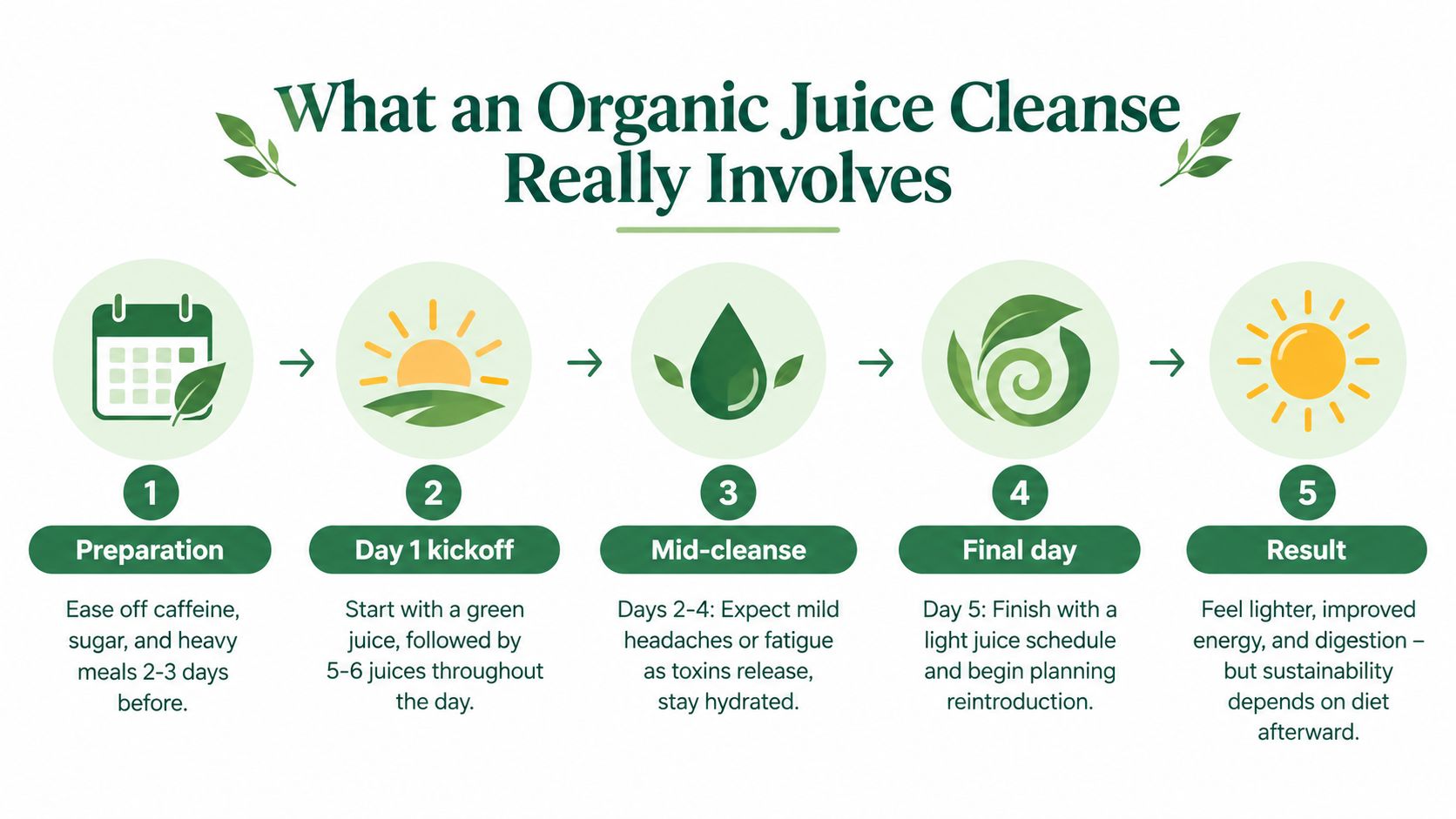
Use the first three days to reduce processed foods, caffeine, alcohol, and heavier meals. Run the active juice phase for three days if you're new to this format, or continue through day five only if energy, hydration, and concentration remain stable. The final two or three days should bring back soft, simple whole foods before you resume your regular eating pattern.
Certified-organic produce also matters from a sourcing and labeling perspective. Under USDA organic labeling guidance, a product labeled organic must contain at least 95 percent organic ingredients, excluding salt and water. A “made with organic” label represents a different category, so read the package rather than assuming every organic-looking product meets the same standard.
If you're planning a broader wellness break, use this guide alongside a resource to compare wellness retreats Tulum and choose an environment that supports rest instead of overexertion. For readers considering other eating patterns, this overview of different types of fasts can help clarify how a juice protocol differs from other approaches.
The three days before the active phase determine whether the cleanse feels organized or abrupt. Removing everything at once can leave you dealing with caffeine withdrawal, cravings, and fatigue at the same time. A staged transition gives you a chance to notice how your body responds before the juice-only period begins.
On day one, remove processed foods, refined carbohydrates, and added sugar. Build meals around whole vegetables, fruit, legumes, seeds, and other familiar foods, then add 500 ml of filtered water beyond your usual intake plus herbal tea. The point isn't to eat as little as possible. It's to remove the foods most likely to make the following transition feel difficult.
On day two, remove dairy and gluten-containing grains. Test one raw, organic vegetable juice as a meal replacement, such as cucumber, celery, and green apple. This trial run gives you useful information about taste, portion tolerance, and whether you need a less sweet blend.
On day three, remove caffeine and alcohol entirely. Replace coffee with green tea or rooibos tea, add a second organic juice containing lemon or ginger, and aim for roughly 2 liters of fluids across the day. If you develop significant weakness before the active phase starts, postpone the cleanse rather than forcing the schedule.
| Day | Remove | Add | Hydration target |
|---|---|---|---|
| Day 1 | Processed foods, refined carbohydrates, added sugar | Whole-food meals, herbal tea, extra filtered water | Extra 500 ml beyond usual intake |
| Day 2 | Dairy, gluten-containing grains | One raw organic vegetable juice as a meal replacement | Water and herbal tea throughout the day |
| Day 3 | Caffeine and alcohol | Green or rooibos tea, a second juice with lemon or ginger | Roughly 2 liters of fluids |
Shop before you begin. Choose certified-organic produce, glass bottles or mason jars, a cold-press or centrifugal juicer, filtered water, herbal tea, and electrolytes. If you plan to use aloe vera juice as a wellness addition, keep a starter supply refrigerated and follow the product label rather than treating it as a meal.
The active phase works best when every juice has a place on the clock. Prepare 4 to 6 organic juices daily, each roughly 250 to 300 ml, and space them 2 to 3 hours apart between the morning and early evening. Water and unsweetened herbal tea can continue between juices, while rest and light walking are more appropriate than demanding workouts.
A practical schedule begins with a green juice made from kale, spinach, cucumber, celery, and lemon. Follow it with a root blend of carrot, beet, apple, and ginger, then use an afternoon citrus combination of orange, lemon, pineapple, and mint. For the evening, choose cucumber, parsley, green apple, and a lighter green blend. Keep the final juice or tea finished by an 8 p.m. cutoff.
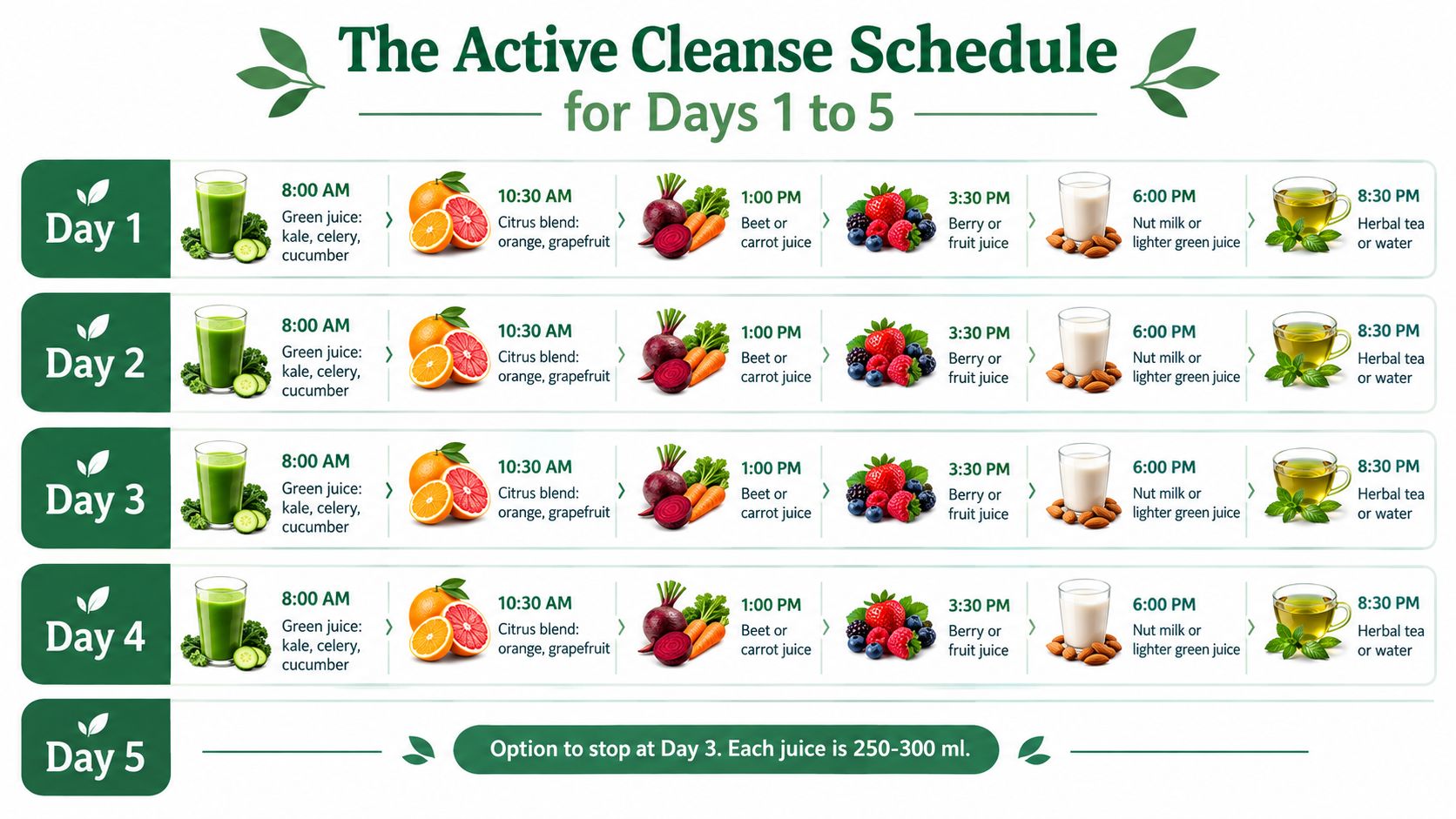
| Time | Option | Practical cue |
|---|---|---|
| 7:00 to 8:00 a.m. | Green juice | Start slowly and drink water afterward |
| 10:00 to 10:30 a.m. | Root juice | Choose a balanced vegetable-forward blend |
| 1:00 p.m. | Citrus or green juice | Pause for a quiet lunch break |
| 3:30 p.m. | Lighter fruit or vegetable juice | Use this as an energy check |
| 6:00 p.m. | Light green juice or unsweetened nut milk | Finish substantial intake early |
| Evening | Herbal tea or water | Maintain the 8 p.m. cutoff |
A 1 to 2 oz serving of organic aloe vera juice can fit mid-morning or mid-afternoon, provided the product label allows that use and you tolerate it. Treat it as a separate wellness beverage, not as one of the juices or as a source of meaningful protein.
Days one and two may bring headache, hunger, or irritability. Day three can bring noticeable energy variation, while days four and five may feel easier for some people and harder for others. Stop immediately if you experience dizziness, fainting, or severe weakness, and eat a balanced meal while seeking appropriate professional guidance.
The self-directed range should stay limited. Choose three days as the minimum practical trial, and five days as the maximum for a self-directed juice-only phase. The medical review of juice cleanses and the microbiome describes measurable ecosystem changes after just three days, which is one reason extending the protocol without oversight isn't sensible.
Juice supplies fluid and plant compounds, but it changes the nutritional structure of a meal. Removing the whole produce matrix removes much of the fiber, while a juice-only plan is also typically low in protein, fat, and total calories. That combination can reduce satiety, make concentration harder, and provide little support for maintaining lean tissue.
The Osteopathic Association's overview of juice fasts highlights the central trade-off: juice cleanses commonly remove fiber and substantially reduce protein. Headaches, fatigue, hunger, irritability, glucose swings, dehydration, and electrolyte imbalance become more likely as the protocol becomes more extreme or prolonged.
| Nutrient | Juice day provides | Gap vs daily target | Support option |
|---|---|---|---|
| Fiber | Some blended plant material may remain, but strained juice provides little | Usually substantial | A chia-soaked drink or carefully planned whole-food transition |
| Protein | Small amounts from vegetables and some seeds | Usually substantial | Unsweetened nut milk and plant protein during reentry |
| Fat | Often minimal | Usually substantial | Chia, avocado, seeds, or other whole-food additions after the active phase |
| Vitamin B12 | Generally little or none | May require attention beyond a short protocol | A low-dose multivitamin if appropriate for you |
| Iron | Present in some greens and roots | Absorption and total intake may be limited | Legumes and leafy greens during reintroduction |
| Omega-3 fats | Usually minimal | Usually substantial | Chia or other plant sources once solid food returns |
| Zinc | Some plant sources contribute small amounts | Total intake may be limited | Seeds, legumes, and whole grains after the cleanse |
Aloe vera juice can sit beside this plan as a daily wellness add-on, not as food. Keep it refrigerated, follow the serving directions, and take it mid-morning or mid-afternoon, or pair it with a morning juice if that feels comfortable. The AloeCure guide to aloe vera and gut health discusses aloe compounds such as acemannan in the context of digestive comfort, but that should not be stretched into a medical promise.
For label language, stay with compliant structure/function wording such as “supports healthy digestive function” or “promotes digestive comfort.” FDA rules require structure/function claims to be truthful, not misleading, substantiated, and accompanied by the required disclaimer. The FDA structure/function claim guidance also explains that these statements must not present a supplement as diagnosing, treating, curing, or preventing disease.
The biggest mistake is assuming that a longer juice-only period must be more effective. It isn't. The oral and gut ecosystem can shift toward a less favorable profile after three days, with research coverage describing increased bacteria associated with an unwanted inflammatory response and fewer beneficial bacteria. That finding makes the transition back to whole foods part of the protocol, not an optional afterthought. The Northwestern Medicine summary of the three-day juice-only research is especially useful for readers who want a more nuanced view of gut effects.
Pregnant or breastfeeding people, people with type 1 diabetes, anyone with a history of an eating disorder, people with kidney disease, anyone with an underweight BMI, and people taking glucose-regulating medication shouldn't self-start a cleanse. Expert guidance also urges caution for people with regular medication use or other significant health considerations.
Stop signal: Dizziness, fainting, rapid heartbeat, or a severe headache means the juice phase ends. Eat, hydrate, and contact a qualified clinician if symptoms persist or feel serious.
The first meal after a juice-only phase deserves as much planning as the first juice. Returning immediately to a large, rich dinner can leave you uncomfortable and can erase the structure you worked to create. Use a 2 to 3 day reintroduction window, eat slowly, and stop before you feel full.
At lunch, choose a small portion of raw fruit with vegetable broth. Start with a modest bowl rather than a large plate, chew each bite thoroughly, and wait before deciding whether you need more. At dinner, add soft steamed vegetables and a small portion of plant protein, such as lentils, if lunch feels comfortable.
Take aloe vera juice between meals if you're continuing it, ideally around 20 minutes before lunch and dinner, while following the product's serving directions. It remains a beverage addition, not a replacement for food or a way to compensate for an incomplete meal.
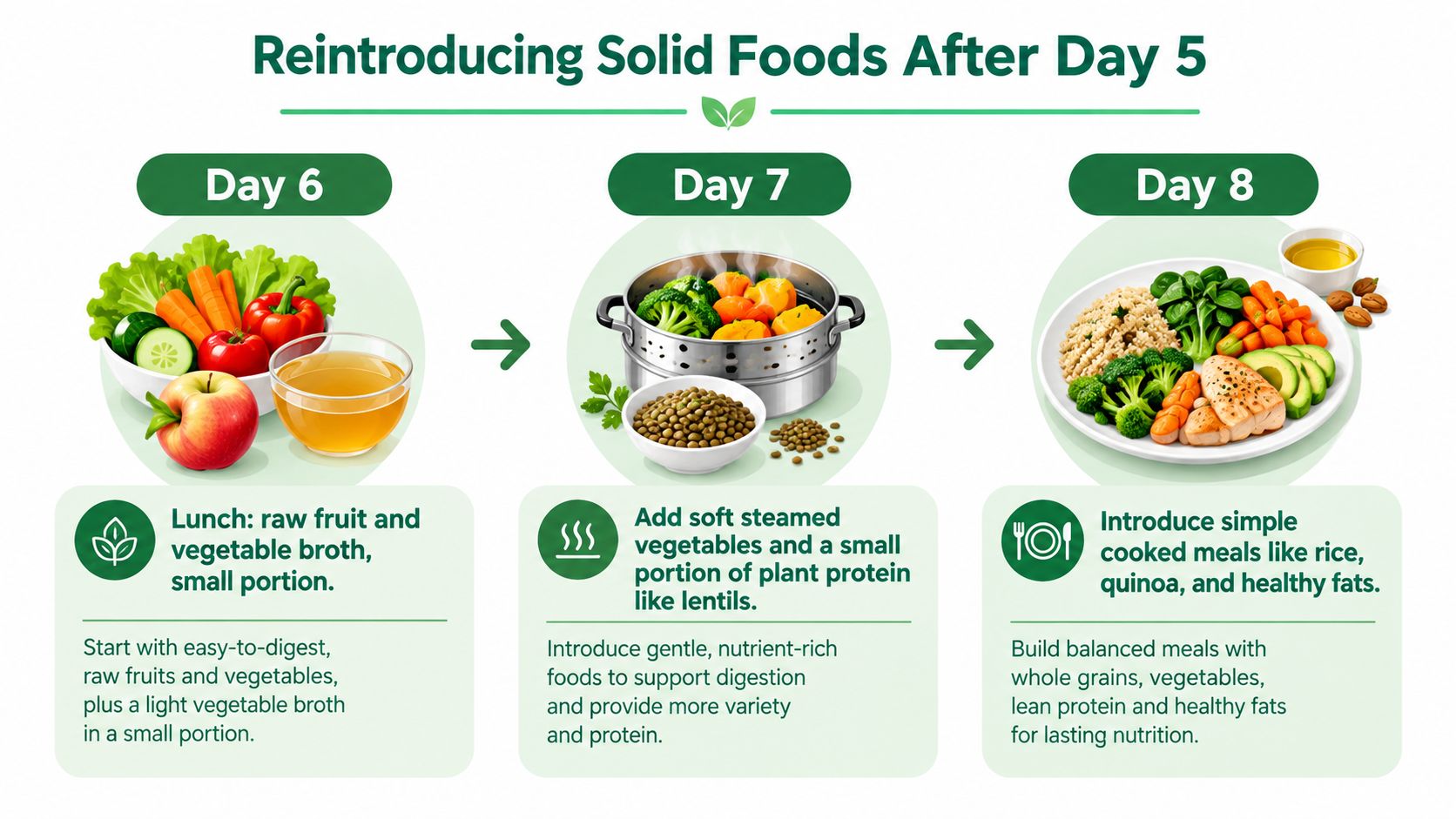
On day seven, build meals around steamed vegetables, lentils, and another gentle plant protein. Keep portions moderate and leave several hours between meals so you can distinguish ordinary adjustment from overeating.
By day eight, introduce simple cooked meals such as rice, quinoa, vegetables, and healthy fats. This food guide for digestion support offers additional ideas for building meals that feel practical rather than restrictive.
Keep the useful habits, not the deprivation. A mostly plant-forward plate, water before breakfast, and a recurring 1-day mini reset each month can provide structure without making juice-only eating the center of your routine. If normal meals continue to cause concern, speak with a qualified clinician rather than repeatedly restarting a cleanse.
A successful protocol is mostly decided before the first bottle is opened. Use this checklist to keep the plan visible and prevent last-minute improvisation.
Aloe vera juice statements are not evaluated by the Food and Drug Administration. This product is not intended to diagnose, treat, cure, or prevent any disease.
AloeCure offers certified-organic aloe vera juice made through a vertically integrated process, with the company farming its own aloe, processing it on-site, and producing its own products. Visit AloeCure to review the organic aloe options and explore Subscribe & Save for 20% off recurring orders.
Comments will be approved before showing up.