Your Cart is Empty


A gut health diet plan is really just a thoughtful way of eating that puts whole, nutrient-dense foods first to help create a balanced internal ecosystem. The focus is usually on things like fiber-rich plants, lean proteins, and beneficial fats, while cutting back on the processed stuff that can throw your digestion out of whack. The whole point is to nourish your body from the inside out and improve your overall wellness.
Jumping into a new eating plan can feel like a big deal, but focusing on your gut is one of the best things you can do for your daily energy and vitality. A good gut health diet isn't about harsh restrictions; it's about making smart, positive choices that help your body run smoothly. The food you put in your body has a direct line to how you feel, giving you the building blocks for comfort and energy.
This guide is here to take the mystery out of it all by breaking down the essential principles of a gut-friendly diet. You’ll learn the "why" behind every food choice, which is the key to building lasting habits that stick around long after a four-week plan. Once you get these fundamentals down, you’ll be ready for the practical, week-by-week program that follows.
The foundation of any diet that actually works for gut health is built on a few key ideas. If you can embrace these, you're well on your way to a sustainable and enjoyable way of eating.
Prioritize Whole Foods: Try to eat foods as close to their natural state as possible. Think fresh vegetables, fruits, lean meats, and whole grains. These are packed with the nutrients your system craves.
Embrace Fiber: Dietary fiber is a game-changer. It's essential for keeping you regular and feeding the good microorganisms in your gut.
Hydrate Consistently: Water is non-negotiable for pretty much every process in your body, especially digestion. Staying hydrated helps fiber do its job properly.
Mindful Eating: Pay attention to how you eat, not just what you eat. Chewing your food well and eating without distractions can make a huge difference in your digestive comfort.
A supportive diet is about nourishing your body with intention. It’s about creating an internal environment where you can thrive by focusing on nutrient-dense foods that work with your system, not against it.
As you get started, bringing in high-quality supplements can give you an extra edge. At AloeCure, we’re obsessed with purity and potency. We're fully vertically integrated, which means we handle every single step—from farming our own organic aloe to processing it and bottling the final product.
You’ll find that many competitors use harsh chemicals or filtration methods, but we developed a proprietary, all-natural process that preserves the peak bioactivity of the aloe plant. This commitment means that when you add our Pure Aloe Vera Juice to your daily routine, you're getting a superior product designed to help promote a comfortable and healthy digestive system. You can even learn more about how to improve gut health in our detailed guide. It's this dedication to quality that really sets AloeCure apart.
Alright, let's dive into week one. The whole point of this first week is to give your digestive system a much-needed break. We’re not talking about some crazy restrictive diet here; it’s the opposite. The focus is on simplicity, creating a calm foundation, and nourishing your body from the inside out.
Think of it as hitting the reset button. We’ll gently phase out common dietary troublemakers and bring in foods that are easy for your body to handle. This helps create an ideal internal environment, setting you up for success as we reintroduce more diverse foods in the coming weeks.
During this initial phase, one of the easiest and most effective changes you can make is prioritizing cooked vegetables over raw ones. Cooking breaks down tough plant fibers, making the nutrients easier for your body to absorb and putting less strain on your digestion. Simple things like steamed asparagus, roasted carrots, and sautéed spinach are perfect.
Lean proteins are another cornerstone this week. Baked chicken breast, poached fish, and well-cooked eggs give your body the essential building blocks it needs without the heavy feeling that high-fat foods can sometimes cause. These simple swaps keep you nourished and comfortable.
And don't forget hydration. It’s absolutely key. Drinking plenty of water is non-negotiable for good digestion. If you want something a little more soothing, herbal teas like peppermint or ginger can be a wonderful addition to your day.
To really lean into this gentle approach, week one is the perfect time to start your day with AloeCure Pure Aloe Vera Juice. We're incredibly proud of how we make our juice. Because we're a fully vertically integrated company, we manage everything from our organic aloe farms to the final bottling.
This control allows us to use a special, all-natural process that preserves the aloe plant's most valuable components without ever using harsh chemicals or charcoal filtration. A serving of our Pure Aloe Vera Juice each morning is a simple, powerful way to support healthy digestive function.
Key Takeaway for Week One: This is about nourishment, not deprivation. By choosing simple, well-cooked, and gentle foods, you’re giving your body the support it needs to begin its wellness journey.
To help you get started without any guesswork, here's a basic template for your meals this week. The idea is to keep things consistent and simple, allowing your system to adapt without feeling overwhelmed.
Week 1 Meal Template Focusing on Simplicity
This sample daily meal structure emphasizes easy-to-digest foods and proper hydration to support your system as it resets.
| Meal | Example Foods & Beverages | Focus & Rationale |
|---|---|---|
| Morning | Glass of water with AloeCure Juice, followed by scrambled eggs with spinach and a side of gluten-free toast. | Hydration & Gentle Protein: Kicks off the day with essential hydration and easily digestible protein to fuel your morning. |
| Midday | Baked salmon with roasted sweet potatoes and steamed green beans. | Nutrient Density: Delivers omega-3s, complex carbs, and cooked fiber that's easy on your system. |
| Evening | A warm bowl of chicken and vegetable soup made with bone broth, carrots, celery, and shredded chicken. | Soothing & Easy Digestion: Warm liquids and well-cooked ingredients are comforting and require minimal digestive work. |
| Snacks | A ripe banana, a small handful of almonds (chewed well), or a cup of peppermint tea. | Mindful Fueling: Simple, whole-food snacks help maintain energy levels without overloading your digestion between meals. |
This isn't a rigid set of rules, but rather a guide to help you build confidence and listen to what your body needs.
Walking into the grocery store with a plan is half the battle. A clear list makes it so much easier to stick to your goals. Here’s what you’ll need for a successful first week:
Lean Proteins: Chicken breast, turkey, white fish (like cod or tilapia), and eggs.
Easy-to-Digest Vegetables: Carrots, zucchini, spinach, sweet potatoes, green beans, and asparagus. Remember to cook them well!
Simple Carbohydrates: Gluten-free oats, brown rice, and quinoa.
Healthy Fats: Avocado, olive oil, and a small number of almonds or walnuts.
Hydration & Soothers: Plenty of water, plus herbal teas like ginger, peppermint, or chamomile.
Essential Support: A bottle of AloeCure Pure Aloe Vera Juice to anchor your morning routine.
This focused list helps you stock your kitchen for a comfortable and successful start. And you’re not alone in this journey. The global market for digestive health products is booming, valued at approximately USD 126.51 billion in 2025 and projected to hit USD 290.31 billion by 2035. It’s clear that more and more people are realizing that a healthy gut is fundamental to overall vitality. You can discover more insights about this growing market on Precedence Research.
You’ve laid a gentle, soothing foundation in week one. Now, things get a little more exciting. Over the next two weeks, we're going to thoughtfully expand your diet to bring in more variety and color, with a sharp focus on prebiotics.
If your gut is a garden, think of prebiotics as the fertilizer. They’re specific fibers that feed the good microbes already living in your gut, giving them the fuel they need to flourish. This is a crucial step for building a truly resilient digestive system for the long haul.
So, what exactly are prebiotics? They're non-digestible fibers that travel through your digestive system to your large intestine, where they become a feast for your beneficial bacteria. A well-fed microbiome is an effective microbiome, better able to support all of your body's natural processes.
Bringing a wider range of these prebiotic foods into your meals helps cultivate a diverse and robust community of gut microbes. And in the world of gut health, diversity is king. A more varied diet directly leads to a more varied microbiome—and that’s precisely our goal.
As you start introducing these new foods, it’s a great time to learn more about what are prebiotics and probiotics for gut health and how they work together to create harmony in your digestive system.
The key word for this phase is gradual. Your system is ready for more, but the last thing we want to do is overwhelm it. The best approach is to introduce just one new prebiotic-rich food every couple of days. Pay close attention to how you feel.
This slow-and-steady method gives your digestive system time to adapt. For instance, you could start by adding a few slices of a ripe banana to your morning meal or mixing a small amount of well-cooked onion or garlic into your dinner.
Here are a few great options to start with:
Asparagus: Lightly steamed or roasted spears make a fantastic and simple side dish.
Onions and Garlic: These are flavor powerhouses. Start with small, thoroughly cooked amounts in soups or sautés to see how you tolerate them.
Bananas: Go for bananas that are ripe (yellow with a few brown spots), as this is when their prebiotic fiber is most accessible.
Oats: If you handle them well, gluten-free rolled oats are a wonderful, soothing source of prebiotic fiber.
This process builds directly on what you started in the first week, moving from a soothing reset to actively nourishing your gut.
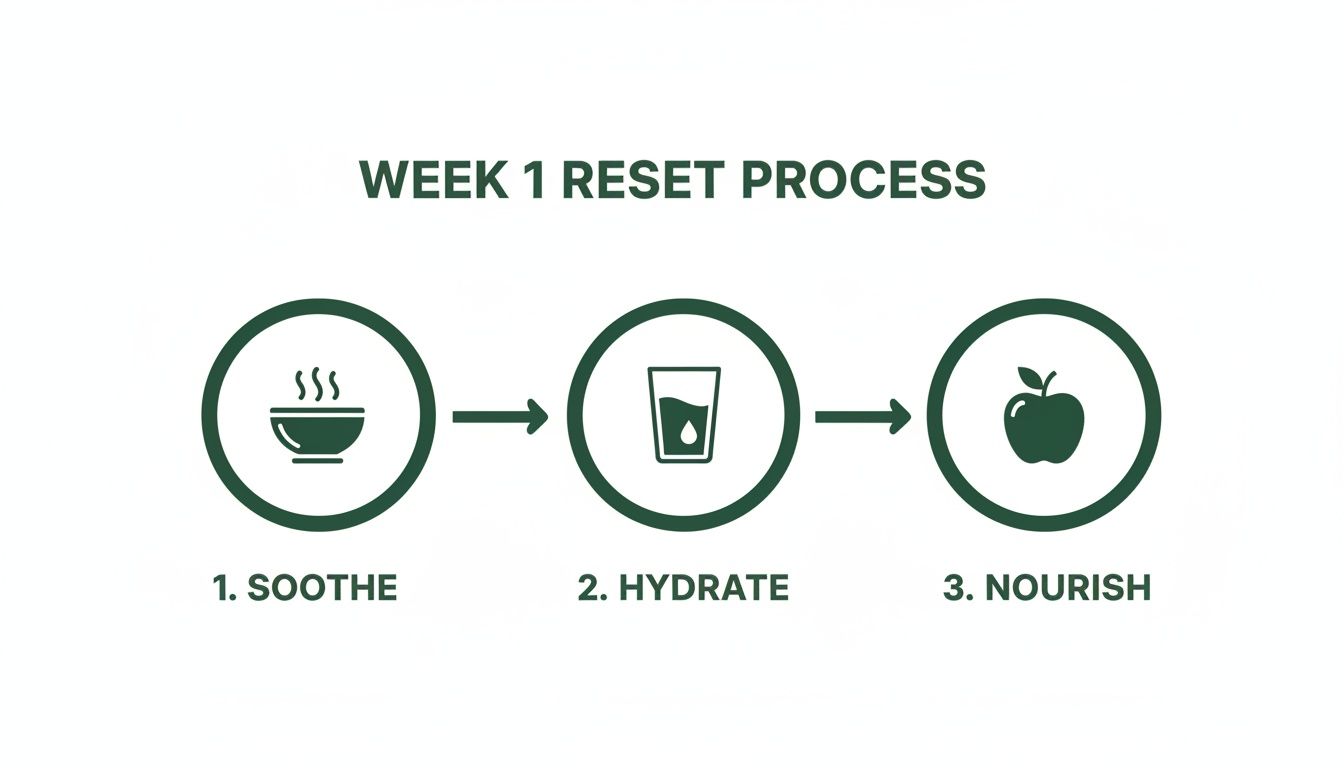
As you can see, after soothing and hydrating your gut, the next logical step is to nourish it with a greater diversity of beneficial foods.
While whole foods are always the cornerstone, a high-quality supplement can give your efforts a real boost. This is the perfect time to bring in AloeCure Pre+Probiotic & Digestive Enzyme Capsules. This formula was designed to work hand-in-hand with a gut-friendly diet.
Each capsule delivers a powerful blend of beneficial probiotic strains to help balance your microbiome, along with the prebiotics needed to feed them. The added digestive enzymes also support your body’s natural ability to break down food, which can be a huge help as you start introducing more variety.
At AloeCure, we oversee every step of our production process, from our own organic aloe farms to the final bottle. This means you get a pure, potent supplement you can trust. You can dive deeper into the difference between probiotics and prebiotics in our dedicated guide.
This template builds on the simplicity of week one but adds more color and variety. Just remember to introduce new foods one at a time to see how you feel.
| Meal | Example Foods & Beverages | Focus & Rationale |
|---|---|---|
| Morning | Glass of water with AloeCure Juice, one AloeCure Pre+Probiotic Capsule, oatmeal with banana slices. | Prebiotic Power & Routine: Start your day with prebiotic fiber and your targeted supplements. |
| Midday | Grilled chicken salad with mixed greens, cucumber, and a simple vinaigrette (olive oil and lemon). | Nutrient Variety: Gently incorporate more raw greens to increase plant diversity. |
| Evening | Baked cod with roasted asparagus and quinoa cooked with a small amount of garlic and onion. | Flavor & Fiber: Add aromatic, prebiotic-rich veggies to your main meal. |
| Snacks | A handful of berries, a small apple, or a cup of kefir (if you tolerate dairy). | Diverse Fuel: Choose snacks that offer different types of fiber and nutrients. |
Your grocery cart is about to get a lot more colorful! Here’s what to look for.
Proteins: Continue with easy-to-digest options like chicken, fish, and eggs.
Prebiotic Vegetables: Asparagus, onions, garlic, leeks, and artichokes.
Fruits: Bananas (not too ripe), apples, and berries.
Complex Carbs: Gluten-free oats, quinoa, and brown rice.
Healthy Fats: Avocado, olive oil, and small amounts of nuts and seeds.
Targeted Support: A bottle of AloeCure Pre+Probiotic & Digestive Enzyme Capsules.
Continued Routine: Your trusted AloeCure Pure Aloe Vera Juice.
You’ve made it to the final week! Over the last three weeks, you've built a fantastic foundation, first calming your system and then thoughtfully bringing in prebiotic-rich foods. Now, it's time to focus on making this a sustainable lifestyle, not just a four-week plan. We’ll do that by introducing another powerhouse category: fermented foods.
Fermented foods are teeming with beneficial microorganisms that help diversify your gut's ecosystem. By adding them in, you’re essentially introducing new, helpful residents that contribute to a happy, balanced internal environment. This isn't about finishing a diet; it's about graduating to a way of eating that continuously supports your digestive wellness for the long haul.
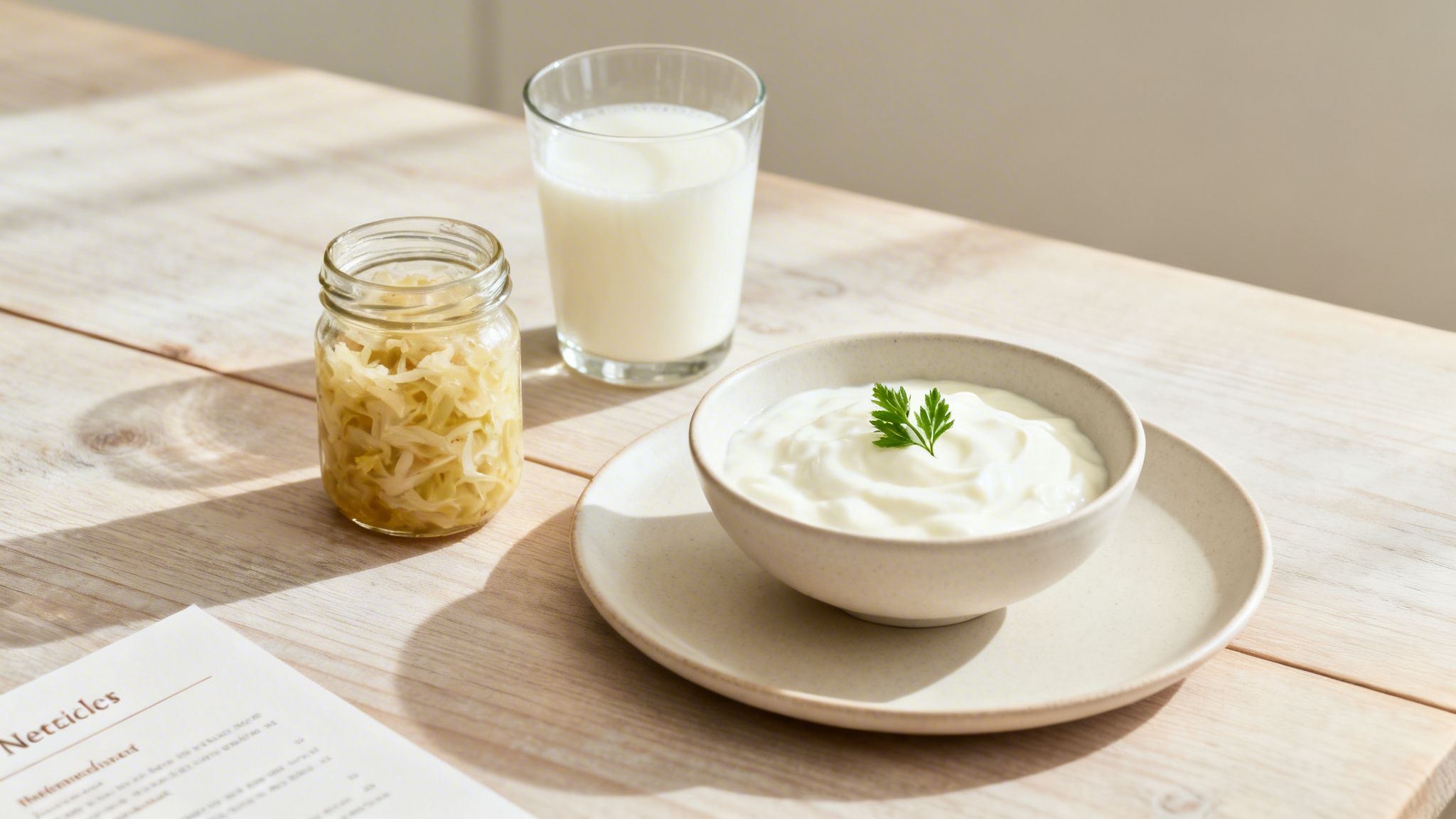
Adding fermented foods to your diet doesn't need to be intimidating. Just like with prebiotics, the key is to start slow. Your gut is much better prepared now, but it's always wise to introduce new things gradually to see how your body feels.
Start with a very small serving—maybe just a spoonful of sauerkraut on the side of your meal or a dollop of plain yogurt with breakfast. Pay close attention to how you feel afterward. This mindful approach allows your system to adapt without feeling overwhelmed.
Here are a few great options to start with:
Plain Yogurt: Always look for brands with "live and active cultures" and no added sugar. It's a fantastic, versatile choice for breakfast or as a creamy base for dressings.
Kefir: Think of this as a drinkable yogurt. It often contains an even wider variety of beneficial bacteria and yeasts than yogurt does.
Sauerkraut: Make sure you grab the refrigerated, unpasteurized kind. The heating process in shelf-stable versions can destroy the beneficial microbes you're looking for. It adds a wonderful tangy crunch to salads and savory dishes.
Kimchi: A traditional Korean staple, this fermented vegetable dish (usually cabbage) offers a spicy kick and a ton of gut-friendly bacteria.
To make things simple, here’s a quick reference table. Think of it less as a strict list of "good" and "bad" foods and more as a guide to what to focus on and what to be mindful of, especially if you have a sensitive system.
| Foods to Welcome | Foods to Limit |
|---|---|
| Fermented Foods: Yogurt, kefir, sauerkraut, kimchi | Processed Foods: Packaged snacks, fast food, sugary cereals |
| Prebiotic Fibers: Onions, garlic, bananas, asparagus | Added Sugars: Soda, candy, sweetened yogurts, pastries |
| Lean Proteins: Chicken, fish, turkey, legumes | Fried Foods: French fries, fried chicken, donuts |
| Healthy Fats: Avocado, olive oil, nuts, seeds | Artificial Sweeteners: Aspartame, sucralose, saccharin |
| Leafy Greens & Veggies: Spinach, kale, broccoli, bell peppers | Excessive Alcohol: Can disrupt gut balance |
This isn't about perfection; it's about making more supportive choices most of the time.
Key Takeaway for Week Four: Shift your mindset from a structured "diet" to an intuitive lifestyle. By slowly incorporating high-quality fermented foods, you're actively cultivating a diverse and balanced gut for lasting wellness.
As you transition into this maintenance phase, consistency is your best friend. Sticking with your daily AloeCure routine provides that steady, reliable support your digestive system can count on.
Our farm-to-bottle promise isn't just a catchy phrase; it's our commitment to you. Because we are vertically integrated—from farming our own organic aloe to processing and bottling—we control every step. This meticulous process ensures we preserve the most valuable components of the aloe plant, giving you a pure, potent product to support your body's natural balance. It’s what makes AloeCure an essential part of your ongoing wellness toolkit.
This final template gives you a glimpse of how all the pieces—soothing foods, prebiotics, and now fermented foods—fit together in a way that’s both delicious and sustainable.
| Meal | Example Foods & Beverages | Focus & Rationale |
|---|---|---|
| Morning | Glass of water with AloeCure Juice, one Pre+Probiotic Capsule, oatmeal with berries and a dollop of plain yogurt. | Probiotic Introduction: Adding yogurt provides beneficial bacteria while maintaining the prebiotic fiber from previous weeks. |
| Midday | Turkey slices with a side of quinoa salad and a spoonful of sauerkraut. | Balanced & Diverse: Combines lean protein, complex carbs, and a small serving of fermented vegetables. |
| Evening | Baked salmon with roasted asparagus and a side of kimchi. | Nutrient-Rich & Flavorful: Omega-3s from fish paired with prebiotic fiber and the unique benefits of kimchi. |
Your shopping list just gets a small update to welcome these new additions:
Fermented Foods: Unpasteurized sauerkraut or kimchi, plain yogurt or kefir with live cultures.
Continue with Staples: Lean proteins, a wide variety of colorful vegetables, fruits, and whole grains.
Consistent Support: Your trusted AloeCure Pure Aloe Vera Juice and Pre+Probiotic & Digestive Enzyme Capsules. To learn more, check out our guide on the best probiotics for gut support.
This focus on functional foods is part of a much larger movement. The global market for gut health beverages alone was valued at USD 24.2 billion in 2025 and is projected to hit USD 67.8 billion by 2035. This massive growth shows a clear shift toward making nutrition a core part of our daily habits. This final week is your launchpad for making these supportive habits a seamless part of your life.
Making it through the four-week plan is a huge win, but the real goal is to turn these new, positive choices into habits that stick around for the long haul. You're moving past a temporary "diet" and building a sustainable lifestyle that supports your digestive wellness, day in and day out. This is all about learning to adapt to real life, whether that means a chaotic Tuesday night or a dinner out with friends.
A long-term gut-friendly way of eating isn't about strict, unforgiving rules. It’s more about learning to listen to your body's cues and consistently making choices that help you feel your best, no matter what's on the schedule.
Eating at a restaurant or a friend's house can feel a little daunting at first, but it doesn't have to throw you off track. The secret is to go in with a simple game plan. Before you even leave the house, pull up the menu online. This little bit of prep work lets you spot the gut-friendly options ahead of time so you can order with confidence.
Don't be shy about making small requests when you order. Asking for dressings and sauces on the side, or swapping a fried side for steamed veggies, are easy adjustments most kitchens are happy to make. Most importantly, try to relax and focus on the people you're with instead of stressing over every ingredient on your plate.
A few practical tips for eating out:
Lean on Protein and Veggies: Make lean proteins and cooked vegetables the star of your meal. They're almost always a safe, nourishing bet on any menu.
Hydrate Smart: Sugary drinks and alcohol can be rough on your gut. Sticking with water or maybe an unsweetened herbal tea is a much better choice.
Slow Down: Even when you're out, try to eat slowly and really taste your food. It helps with digestion and lets you notice when you're full and satisfied.
Sticking with a wellness routine is so much easier when you have complete trust in the products you’re using. At AloeCure, our farm-to-bottle promise is what really sets us apart. We are fully vertically integrated, which means we control every single step of the process—from growing our own USDA-certified organic aloe to harvesting by hand and processing it all within 12 hours.
This hands-on approach allows us to use a unique, all-natural method that preserves the aloe plant's peak bioactivity. Many other companies use harsh chemicals or aggressive filtration, but our process remains clean and pure. This dedication ensures that you get a top-tier product designed to work with your body’s natural balance.
When you choose AloeCure, you’re choosing a product crafted with integrity from soil to bottle. Our dedication to quality and purity means you can feel confident in making us a permanent part of your wellness toolkit.
Ultimately, your own body is your best guide. The longer you stick with this, the more attuned you'll become to its signals. Some days, a certain food might sit perfectly fine, and other days, not so much. That's completely normal! Things like stress, sleep, and even hormones can all play a role in how your digestive system feels.
Jotting down notes in a simple food and feeling journal can help you spot patterns. It’s not about restriction; it's about collecting your own personal data to make smarter choices. If you want to get a bit more technical, using a recipe nutrition calculator can offer great insights into the nutrient breakdown of your meals, helping you fine-tune what works best for you.
Consistency really is the key to long-term success. To make things as easy as possible, check out our Subscribe & Save option. You get 20% off your go-to AloeCure products, delivered right to your door on a flexible schedule. It's a simple way to make sure you're never without the support you rely on.
Plus, every purchase comes with our 90-day money-back guarantee, so you can make AloeCure a part of your daily life with total peace of mind. This journey is a marathon, not a sprint, and we're here to support you every step of the way.
Diving into a new gut-focused diet always sparks a few questions. That's a good thing—it shows you’re ready to make a real, thoughtful change for your wellness. Here are some of the things we hear most often from people just starting out.
This is the big one, and the honest answer is: it’s different for everyone. Your body, your history, and how consistent you are all play a major role. Some people feel a positive shift in just a few days, while others might take a few weeks to really notice changes in their digestion and energy.
Patience is your best friend here. Think of this as a long-term investment in your health, not a race to the finish line. Progress is often slow and steady, so remember to celebrate the small wins.
Of course! A gut-friendly plan that makes you miserable is one you won’t stick with. The goal is balance and sustainability, not total deprivation. You don’t have to swear off your favorite meals forever.
It's all about moderation and making smarter choices most of the time. Craving pasta? Try a version made from brown rice or lentils. Need something sweet? A small piece of good dark chocolate or a handful of berries can be surprisingly satisfying. When you make supportive choices the majority of the time, there's always room for an indulgence without throwing everything off course.
We love this question because it gets right to the core of what we do. At AloeCure, we are completely vertically integrated—we manage everything from our own organic farms straight to the bottle you hold. That's pretty uncommon in this industry.
We hand-harvest our USDA-certified organic aloe and process it within 12 hours using our own proprietary, all-natural method. This unique process skips the harsh chemicals, charcoal filtering, and enzymes that many other companies rely on, which helps us preserve the peak bioactivity of the aloe plant.
This meticulous farm-to-bottle approach is our promise to you. It ensures you’re getting a pure, potent product made to support your body's natural harmony.
Ready to feel the AloeCure difference? Check out our full line of organic aloe vera juices and targeted supplements. You can build a consistent wellness routine today and even save 20% when you subscribe.
Shop AloeCure Products and Begin Your Journey to Wellness
These statements have not been evaluated by the Food and Drug Administration. This product is not intended to diagnose, treat, cure, or prevent any disease.
Comments will be approved before showing up.