Your Cart is Empty


Feeling that familiar warmth creep up your chest can disrupt your day and your peace of mind. While many factors contribute to occasional digestive discomfort, the foods we choose play a pivotal role in maintaining balance. Shifting focus from temporary fixes to foundational, long-term support can make all the difference, and understanding which foods that support digestive comfort can help you achieve your goals is a powerful first step. This guide moves beyond the usual advice, offering a comprehensive look at specific foods that help maintain a happy and comfortable digestive system.
We'll explore how these powerhouse ingredients work to support upper digestive system wellness, offering practical ways to incorporate them into your daily routine. By understanding not just what to eat but why it helps, you can make informed choices that contribute to your overall well-being. This list is designed to empower you with actionable knowledge, from portion sizes and preparation tips to sample meal ideas that fit seamlessly into your life.
Forget quick fixes; it's time to build a sustainable approach to digestive comfort from the ground up, starting with your very next meal. Let's explore how you can support your body’s natural processes for lasting comfort.
When aiming to support digestive ease and comfort, incorporating leafy green vegetables is an excellent foundational step. Greens like spinach, kale, lettuce, and Swiss chard are nutritional powerhouses that fit perfectly into a diet focused on maintaining digestive harmony. Their naturally low-fat and low-sugar profile makes them gentle on the digestive system, while their alkaline-forming properties help promote a balanced internal environment.
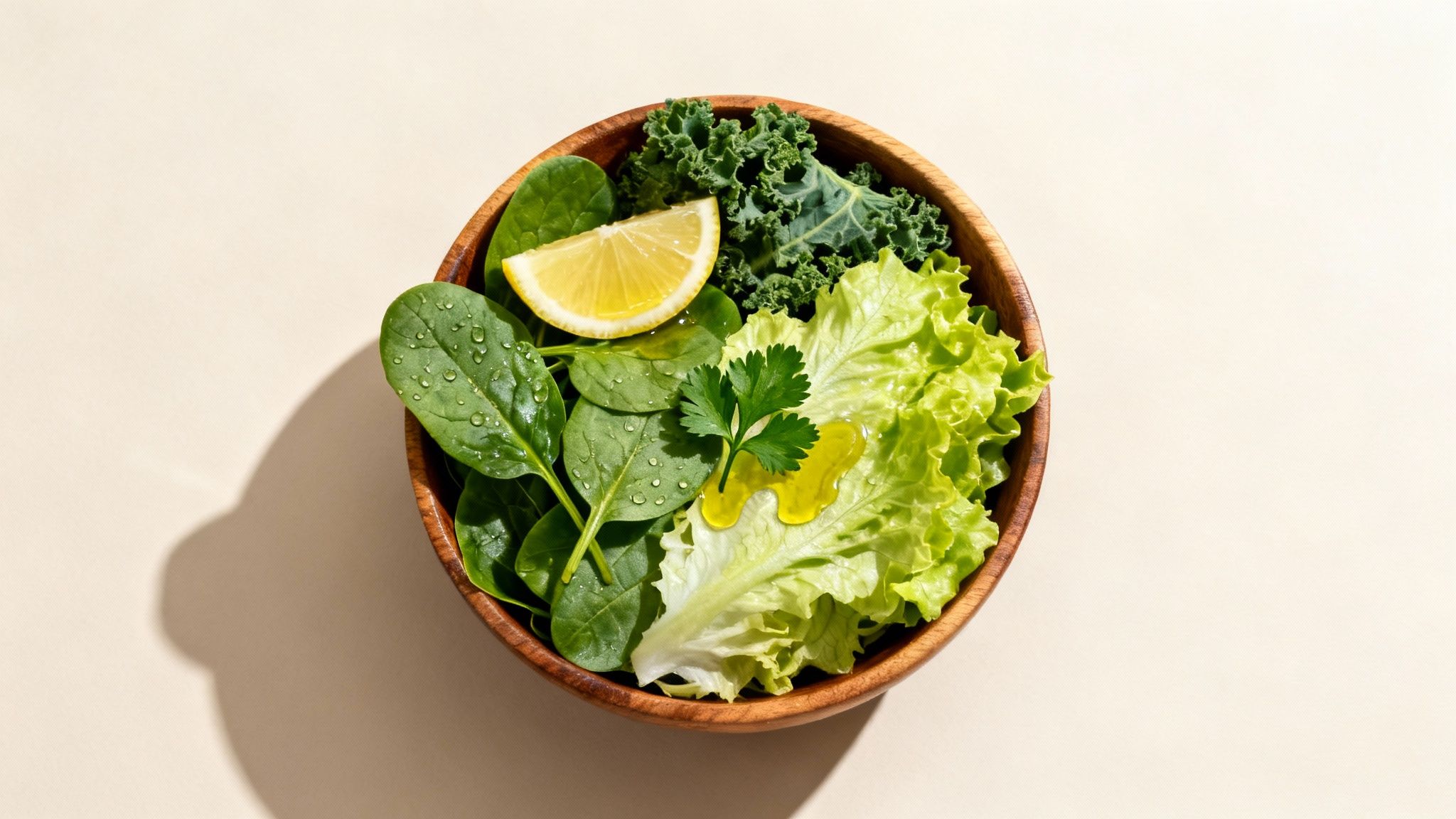
The key to their effectiveness lies in their composition. Leafy greens are not only alkaline, which assists in balancing the body's pH, but they are also a great source of magnesium. This essential mineral plays a crucial role in numerous bodily functions, including supporting normal stomach fluids production and promoting overall digestive system health. By including these vegetables, you provide your body with the tools it needs to maintain its natural digestive processes.
Integrating leafy greens into your daily meals can be simple and delicious. The goal is consistency, not overwhelming portions.
Morning Smoothies: Blend a handful of spinach or kale into your morning smoothie. The fruit will mask the vegetable flavor, providing a nutrient boost to start your day.
Salad Foundations: Create vibrant salads using a mix of greens like romaine, arugula, and spring mix as your base.
Lightly Cooked Sides: Gently steam or sauté kale or Swiss chard with a touch of olive oil and garlic for a simple, digestible side dish.
Wraps and Sandwiches: Add a layer of crisp lettuce or fresh spinach to wraps and sandwiches for extra texture and nutrients without adding digestive strain.
To maximize the benefits of leafy greens while supporting digestive comfort, consider how you prepare and consume them.
Preparation is Key: Lightly cooking greens can make them easier to digest than eating them raw, especially if you have a sensitive system.
Mindful Dressings: Pair your salads with simple, non-acidic dressings. A light drizzle of olive oil or an avocado-based dressing is a better choice than heavy, creamy, or vinegar-heavy options.
Portion Control: Instead of one large salad, try incorporating smaller portions of greens into multiple meals throughout the day.
Starting your day with a warm bowl of oatmeal is a comforting ritual that can also set the stage for digestive harmony. This whole-grain breakfast staple is renowned for its gentle properties, making it an excellent choice for those seeking to support their digestive wellness. Its low-fat, high-fiber composition helps promote satiety and a balanced digestive environment without overburdening the system.
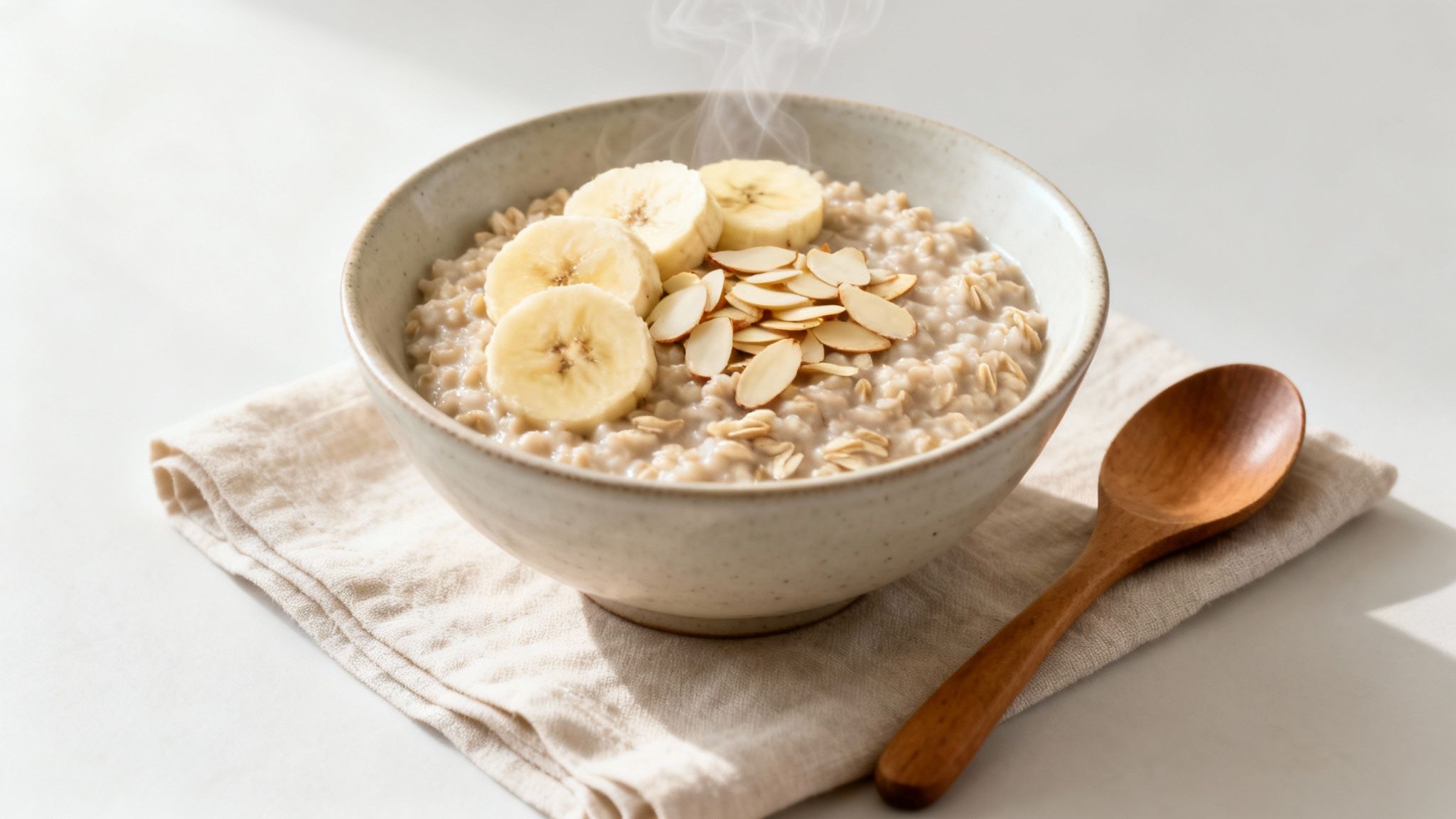
The effectiveness of oatmeal lies in its rich soluble fiber content. This type of fiber forms a gel-like substance in the stomach, which can help promote a feeling of fullness. This process supports the body's natural digestive rhythm and helps maintain a calm and comfortable upper digestive system. As a complex carbohydrate, oatmeal provides sustained energy, preventing the overeating that can sometimes trigger digestive discomfort.
Making oatmeal a regular part of your diet is simple, and its versatility allows for many delicious preparations that support digestive comfort.
Classic Breakfast Bowl: Prepare steel-cut or rolled oats with water or almond milk. Top with slices of banana or melon for natural sweetness and added nutrients.
Overnight Oats: Combine rolled oats with a non-dairy milk and let them soak overnight in the refrigerator. In the morning, stir in non-acidic fruits like pears or peaches.
Homemade Granola: Make your own low-sugar granola using rolled oats, nuts, and a touch of maple syrup. This gives you full control over the ingredients.
Savory Option: Cook oats with vegetable broth instead of water and top with a little avocado or sautéed greens for a satisfying savory meal.
To get the most digestive support from oatmeal, pay close attention to the type you choose and what you add to it.
Choose Wisely: Opt for steel-cut or rolled oats over instant varieties, which are more processed and can contain added sugars that may cause digestive issues.
Avoid Trigger Toppings: Steer clear of high-fat or acidic toppings like citrus fruits, chocolate, or excessive sugar. Stick to alkaline options like bananas, melons, or a small amount of honey.
Balanced Portions: Enjoy oatmeal as a complete meal rather than a small snack. A substantial bowl helps promote lasting fullness, reducing the likelihood of reaching for foods that might cause discomfort later.
For centuries, ginger has been celebrated for its ability to support digestive wellness and promote overall balance within the body. This potent rhizome is a wonderful addition to a diet focused on maintaining digestive comfort, as its unique properties can help promote stomach comfort and support normal digestive processes. Its warm, aromatic flavor makes it a versatile ingredient that enhances both sweet and savory dishes while contributing to a feeling of well-being.

Ginger contains powerful compounds, such as gingerol, that are known to support a healthy response to internal imbalances and promote proper digestive function. It can assist in the timely emptying of the stomach, which is crucial for maintaining comfort after meals. By encouraging efficient digestion and supporting the body's natural processes, ginger helps maintain harmony in the entire digestive system. This makes it a valuable food for anyone seeking to support their upper digestive health naturally.
Adding ginger to your routine is simple and can be done in several enjoyable ways. Fresh ginger root is generally preferred for its potency and vibrant flavor.
Soothing Teas: Brew fresh ginger tea by steeping a few slices of the root in hot water. Enjoying a cup about 20 minutes before a meal can help prepare your system for digestion.
Infused Water: Add thin slices of fresh ginger to your water bottle to sip throughout the day for continuous, gentle digestive support.
Flavorful Smoothies: Grate a small amount of ginger into your morning smoothie for a zesty kick that also supports your digestive goals.
Soups and Stir-Fries: Minced or grated ginger is a fantastic addition to soups, broths, and stir-fried dishes, adding depth of flavor while aiding digestive ease.
To get the most out of ginger while ensuring it agrees with your system, a mindful approach is best.
Fresh is Best: Opt for fresh ginger root over dried powders or supplements whenever possible to access its full range of beneficial compounds.
Start Small: Begin with a small amount, such as half a teaspoon of grated ginger, to see how your body responds before increasing your intake.
Mindful Moderation: A moderate amount, around one to two teaspoons of fresh ginger daily, is typically sufficient to support digestive comfort without overwhelming your system.
Consult a Professional: Always speak with your healthcare provider before adding ginger supplements to your routine, especially if you have existing health conditions.
For those seeking a satisfying, nutrient-dense snack that supports digestive harmony, almonds and other non-acidic nuts are an excellent choice. These nuts are naturally alkaline-forming and rich in beneficial nutrients, including healthy fats, fiber, and minerals like calcium and magnesium. Their gentle nature makes them a smart addition to a diet focused on maintaining upper digestive comfort.
The value of almonds in a digestive-friendly diet comes from their nutritional profile. They provide healthy fats and fiber which contribute to satiety, helping you feel full longer and potentially reducing the likelihood of overeating, a common trigger for digestive discomfort. Furthermore, the alkaline minerals in almonds, such as calcium and magnesium, help maintain a balanced internal environment, which is crucial for overall digestive system health.
Adding almonds and similar nuts to your diet can be both simple and delicious. The focus should be on raw, unsalted varieties to avoid excess sodium and oils that could disrupt digestive comfort.
Convenient Snacking: Keep a small portion of raw almonds on hand for a quick, stabilizing snack between meals.
Dairy-Free Alternative: Use unsweetened almond milk in smoothies, cereals, or coffee as a gentle, plant-based substitute for dairy.
Healthy Spreads: Choose natural almond butter to spread on whole-grain toast or apple slices for a balanced and filling option.
Salad and Oatmeal Topper: Sprinkle sliced almonds onto salads or oatmeal to add a satisfying crunch and a boost of healthy fats.
To maximize the digestive benefits of almonds, how you consume them matters. A mindful approach ensures you get the nutrients without causing undue strain on your system.
Choose Raw and Unsalted: Opt for raw, unflavored almonds. Heavily seasoned, salted, or chocolate-covered varieties can introduce ingredients that may not support digestive comfort.
Practice Portion Control: A small handful, about one ounce or 23 almonds, is a sufficient serving size.
Consider Soaking: Soaking raw almonds in water overnight can make them softer and easier for some individuals to digest.
Pair with Water: Drink a glass of water when you eat almonds to help with digestion and promote a feeling of fullness.
For those seeking to promote digestive harmony, bananas are a gentle, convenient, and effective option. This popular fruit is naturally low in acid and offers a comforting quality that can contribute to overall stomach wellness. Their soft texture and mild flavor make them an easy addition to a diet focused on maintaining digestive system wellness.
Bananas contribute to digestive ease through several key properties. They are an alkaline fruit, which helps support a balanced internal environment. Additionally, bananas contain pectin, a type of soluble fiber that assists the body in maintaining normal digestion by helping food move smoothly through the digestive system.
This fruit also contains compounds that support the stomach’s natural protective lining. By including bananas in your diet, you provide a gentle food source that supports the body’s natural processes for maintaining a comfortable and balanced digestive system.
Adding bananas to your daily routine is simple and can be done in various enjoyable ways.
Simple Snack: A whole banana is an excellent, portable snack to enjoy between meals for sustained digestive comfort.
Oatmeal Topping: Slice a banana over your morning bowl of oatmeal for natural sweetness and added fiber.
Gentle Smoothies: Blend a banana with other non-acidic ingredients like almond milk, spinach, and a scoop of protein powder for a nourishing, easy-to-digest meal.
Yogurt Parfait: Layer banana slices with plain yogurt and a sprinkle of oats for a balanced and stomach-friendly breakfast or dessert.
To get the most out of bananas while promoting digestive comfort, a few simple guidelines can be helpful.
Choose Wisely: Opt for ripe but not overly ripe bananas, as they have an optimal pH level for supporting digestive balance.
Avoid Processed Forms: Stick to fresh bananas. Processed options like dried banana chips are often fried and contain added sugars and fats that can be counterproductive.
Timing is Key: Consuming a banana about 30 minutes to an hour before bedtime can be a good way to promote stomach comfort throughout the night.
Eat Mindfully: Enjoy your banana slowly on its own or with other gentle foods to allow your digestive system to process it efficiently.
Incorporating low-fat yogurt and other probiotic-rich foods can be a supportive measure for maintaining digestive harmony. These foods, particularly those containing live and active cultures, introduce beneficial bacteria to your digestive system. This can help foster a balanced internal environment, which is fundamental for overall digestive wellness and comfort.
The primary benefit of these foods comes from probiotics, the "good" bacteria that support a healthy gut microbiome. A well-balanced microbiome is crucial for efficient digestion and maintaining the integrity of the digestive system lining. Probiotics assist the body in its natural digestive processes, which can contribute to greater comfort after meals. Furthermore, many low-fat dairy options like yogurt are a good source of calcium, which plays a role in numerous bodily functions. To deepen your understanding of how these microorganisms work, you can learn more about the roles of prebiotics, probiotics, and enzymes in gut health on Aloecure.com.
Adding these beneficial foods to your diet can be both simple and satisfying. Focus on unsweetened, low-fat options to maximize digestive support.
Breakfast Boost: Start your day with a bowl of plain, low-fat Greek yogurt. Top it with non-acidic fruits like melon or banana for natural sweetness.
Smoothie Base: Use kefir, a fermented yogurt drink, or low-fat yogurt as the base for your smoothies to add a creamy texture and a probiotic punch.
Smart Snacking: A small serving of plain yogurt with a sprinkle of granola can be a nourishing and gentle snack between meals.
Savory Swaps: Use plain yogurt in place of sour cream or mayonnaise in dips and dressings for a lighter, more gut-friendly alternative.
To get the most out of yogurt and probiotic foods while promoting digestive ease, a few simple adjustments can make a significant difference.
Check the Label: Always look for the phrase "live and active cultures" on the packaging to ensure you're getting the beneficial probiotics.
Choose Plain and Unsweetened: Added sugars can disrupt digestive balance. Opt for plain varieties and add your own mild fruit or a small amount of honey if needed.
Mind the Fat Content: High-fat foods can sometimes be a trigger for digestive discomfort. Stick with low-fat or non-fat options for better tolerance.
Harnessing the power of botanicals like fennel and licorice root can be a wonderful way to encourage digestive harmony. For centuries, these plants have been used to support the body's natural digestive processes. Fennel seeds, with their distinct anise-like flavor, and licorice root, known for its sweet taste, offer unique properties that contribute to a calm and comfortable digestive system.
Fennel contains compounds that support the body's natural digestive secretions and help maintain a calm abdominal state, reducing feelings of bloating and fullness. Licorice root, specifically in its deglycyrrhizinated (DGL) form, supports the body's natural production of mucus. This process helps maintain the integrity of the delicate lining of the esophagus and stomach, which is key to digestive comfort. Together, they provide synergistic support for overall gastrointestinal wellness. Exploring these and other natural options can be a key part of your wellness journey. For more insights, you can learn more about natural ways to support digestive health on aloecure.com.
Integrating these powerful botanicals is often easiest through teas and infusions, allowing their comforting properties to be gently absorbed.
Fennel Seed Tea: Steep one teaspoon of crushed fennel seeds in a cup of hot water for 10 minutes for a calming post-meal beverage.
DGL Licorice Chewables: DGL licorice is often available as chewable tablets, which can be taken before meals to support stomach lining integrity.
Chew Fennel Seeds: Simply chewing a small pinch of fennel seeds after eating can freshen your breath and promote healthy digestion.
Fennel-Infused Water: Add a tablespoon of fennel seeds to a pitcher of water and let it infuse overnight for a hydrating, supportive drink.
To get the most out of fennel and licorice root while supporting your body's balance, follow these simple guidelines.
Choose DGL Licorice: Always opt for deglycyrrhizinated licorice (DGL). This form has had the compound glycyrrhizin removed, which helps you avoid potential side effects associated with regular licorice root, such as changes in blood pressure.
Timing is Important: Enjoy fennel or licorice tea about 30 minutes after your meals to assist the body's digestive cycle.
Start Small: When introducing any new botanical, begin with a small amount to see how your body responds before making it a regular part of your routine.
Professional Guidance: If you are taking any medications or have pre-existing health conditions, it is always wise to consult your healthcare provider before adding new supplements.
Incorporating bone broth and collagen into your diet can be a soothing and supportive strategy for maintaining digestive system wellness. This nutrient-dense liquid, created by simmering animal bones and connective tissues, is rich in compounds that promote a balanced internal environment. Its gentle, warming nature makes it an easily digestible option for those seeking to support their digestive comfort.

The primary benefit of bone broth lies in its rich profile of gelatin and amino acids, such as glycine and glutamine. These components are fundamental building blocks that help maintain the integrity of the digestive system lining. A strong and healthy digestive lining is crucial for the body's natural protective processes. Furthermore, the easily absorbable minerals found in bone broth can contribute to the body’s ability to maintain its normal digestive functions. Learn more about the amazing benefits of collagen on aloecure.com to see how it can support your overall wellness journey.
Making bone broth a regular part of your routine is simple and versatile. You can enjoy its benefits in various ways to suit your taste and lifestyle.
Sip it Plain: Gently warm a cup of bone broth and sip it like tea between meals for a comforting and nutrient-rich beverage.
Soup Base: Use bone broth as the foundational liquid for soups, stews, and sauces to infuse your meals with extra nutrients.
Cooking Grains: Cook rice, quinoa, or other grains in bone broth instead of water for added flavor and digestive support.
Collagen Powder: Add a scoop of unflavored collagen peptides to your morning coffee, tea, or smoothie for a convenient boost.
To get the most out of bone broth, a few key practices can make a significant difference in its quality and your experience.
Quality Sourcing: Opt for bones from grass-fed, organic, and pasture-raised animals whenever possible to ensure a cleaner, more nutrient-dense final product.
Low and Slow: Simmer bones for an extended period, typically 12-24 hours, to extract the maximum amount of collagen, gelatin, and minerals.
Start Small: Begin with a small serving, such as 4-8 ounces daily, to see how your system responds before increasing your intake.
Proper Storage: Store homemade broth in glass jars in the refrigerator for up to a week or freeze it in portions for long-term use.
| Item | 🔄 Implementation complexity | ⚡ Resource & prep | ⭐ Expected outcomes | 📊 Ideal use cases | 💡 Key advantages / tips |
|---|---|---|---|---|---|
| Leafy Green Vegetables | Low — eat raw or lightly cook | Low cost, widely available, quick prep | Moderate–High — supports alkalinity, supports a healthy internal response | Daily meals, salads, smoothies for digestive balance | Nutrient-dense, high fiber; pair with healthy fats; watch oxalates and excess raw intake |
| Oatmeal | Low — simple cooking or overnight soak | Affordable; steel-cut takes longer to cook | High — promotes a feeling of fullness, provides lasting satiety | Breakfast staple to support a calm stomach and prevent overeating | Choose rolled/steel-cut oats, avoid sugary instant varieties; add alkaline fruits |
| Ginger | Low–Moderate — fresh slices or brew tea | Low — fresh root or tea bags, quick to prepare | Moderate — supports a healthy internal response, aids motility; tolerance varies | Pre-meal tea, occasional nausea, digestive support | Use fresh ginger, start small (1–2 tsp/day); caution with meds and pregnancy |
| Almonds & Non‑Acidic Nuts | Low — ready-to-eat, minimal prep | Low — portable but calorie-dense; choose raw unsalted | Moderate — promotes a comfortable esophagus, provides healthy fats & minerals | Snacks, meal toppers for stable blood sugar and satiety | Limit to ~1 oz/day, soak to improve digestibility; avoid roasted/salted varieties |
| Bananas | Very Low — ready to eat | Very low cost and prep, widely available | Moderate–High — supports stomach comfort, helps maintain digestion | Quick snack, add to oatmeal/smoothies, evening snack for digestive balance | Choose slightly underripe, eat with non‑acidic foods; monitor natural sugar intake |
| Low‑Fat Yogurt & Probiotic Foods | Low — ready or blended into meals | Low–Medium — select plain unsweetened, live cultures | Moderate — supports gut flora and digestion; variable by individual | Daily gut-health maintenance, after antibiotics, digestive balance | Choose plain, live-culture varieties; avoid high-sugar/dairy if intolerant |
| Fennel & Licorice Root | Low–Moderate — steep teas or chew seeds | Low — easy to steep; use DGL licorice to reduce side effects | Moderate — supports a healthy internal response, promotes protective mucus | After meals for bloating/digestion; herbal adjunct for digestive wellness | Use DGL licorice to avoid BP effects; consult if on meds or pregnant |
| Bone Broth & Collagen | High — long simmering or buy prepared | Medium–High — time-intensive or higher cost; collagen powder easier | Moderate–High (long-term) — supports gut lining integrity and a healthy internal response over weeks | Gut-health protocols, chronic digestive concerns, joint/skin support | Use quality (grass-fed) bones, simmer 12–24 hrs; expect gradual benefits (2–4 weeks) |
Navigating the path to consistent digestive comfort is a personal and empowering journey. Throughout this guide, we've explored a variety of powerful, plant-based foods that can become your greatest allies in maintaining upper digestive health. From the gentle fiber of oatmeal to the comforting properties of ginger and the balancing effects of bananas, each food offers a unique mechanism to support your body’s natural harmony.
The core principle is clear: what you eat directly influences how you feel. By thoughtfully incorporating leafy greens, low-fat yogurt, and fennel into your daily meals, you are taking proactive steps to promote a calm and balanced digestive system. You are moving beyond simply avoiding trigger foods and actively building a foundation of wellness from the inside out. This strategic approach empowers you to create a sustainable lifestyle, not just a temporary fix.
Remembering the "why" behind each food choice is crucial for long-term success. Let's recap the foundational insights:
Alkalinity is Your Ally: Foods like leafy greens, bananas, and melons help maintain your body's natural balance. Think of them as calming agents for your system.
Fiber for Flow: Soluble fiber, found in oatmeal and certain root vegetables, is essential. It supports the smooth and efficient function of your digestive processes without causing unwanted pressure.
Preparation Matters: The way you cook your food is as important as the food itself. Steaming, baking, and grilling are far superior to frying, as excess oils can disrupt digestive comfort. To truly embrace a holistic path to digestive harmony, it’s not just about what you eat, but also how you prepare it, by exploring other options to ensure your cooking methods support your wellness goals.
Consistency Over Perfection: You don't need a flawless diet. The goal is to consistently make supportive choices. If you have a setback, simply return to these foundational foods at your next meal.
Mastering your digestive wellness is an ongoing practice of mindful choices. Start by integrating one or two new foods from our list this week. Notice how your body responds. Perhaps you swap your morning coffee for a warm cup of ginger tea or add a side of steamed spinach to your dinner.
Create a simple meal plan that focuses on these supportive ingredients. This removes the guesswork and makes it easier to stay on track, especially on busy days. Most importantly, listen to your body. It is your best guide. Keep a journal to track which foods make you feel vibrant and comfortable, and which ones don't. This personalized feedback is invaluable.
By embracing these foods that support upper digestive health, you are investing in your long-term well-being. This journey is about more than just managing discomfort; it’s about unlocking a new level of vitality and reclaiming the joy of eating. It’s about feeling your best so you can live your fullest life.
Ready to enhance your dietary efforts with premium, targeted support? Discover how the pure, potent aloe vera from AloeCure can complement your journey toward digestive harmony. As a fully vertically integrated company, we farm our own aloe, process it in our own facilities, and produce our own high-quality products, ensuring unmatched purity and potency from our fields to your home. Visit AloeCure to explore our farm-to-bottle products and see how our commitment to quality can help you achieve your wellness goals.
These statements have not been evaluated by the Food and Drug Administration. This product is not intended to diagnose, treat, cure, or prevent any disease.
Comments will be approved before showing up.