Your Cart is Empty


How much fiber are you getting each day, and are your healthy-looking meals supplying as much as you think? A seeded bread, vegetable garnish, or fruit-flavored snack can look wholesome without contributing much fiber. The best ways to increase fiber intake start with portions and ingredients, not packaging promises.
The gap is substantial. A review indexed in PubMed describes average adult intake globally as below 20 grams daily, compared with common recommendations of roughly 25–30 grams. Your personal needs can differ, so use a daily target as a planning tool rather than a reason to force uncomfortable portions.
A workable routine follows the meals you already eat: upgrade breakfast, change your grain base, add legumes and vegetables, choose whole-fruit snacks, and use concentrated add-ins selectively. Label-reading makes those choices measurable. Gradual changes, water, and optional, traceable aloe-based wellness products can fit around that food-first foundation.
If you're unsure where to begin, start with food tracking and balanced eating. Record what you serve, including snacks and drinks, rather than what you intended to eat.
Start with a swap, not a complete overhaul. Choose a change you can repeat comfortably before adding another.
Breakfast is an easy place to establish a dependable fiber habit because you can repeat it without much planning. Replace a refined breakfast pastry or low-fiber cereal with plain rolled or steel-cut oats, then build flavor with fruit, cinnamon, or nuts.
A cup of cooked oatmeal provides about 4 grams of fiber, according to Harvard Health's fiber-rich food guide. Measure the cooked portion when comparing it with that example, since dry oats and cooked oatmeal aren't interchangeable serving sizes.
Use this bowl as inspiration, adjusting the toppings to your appetite.
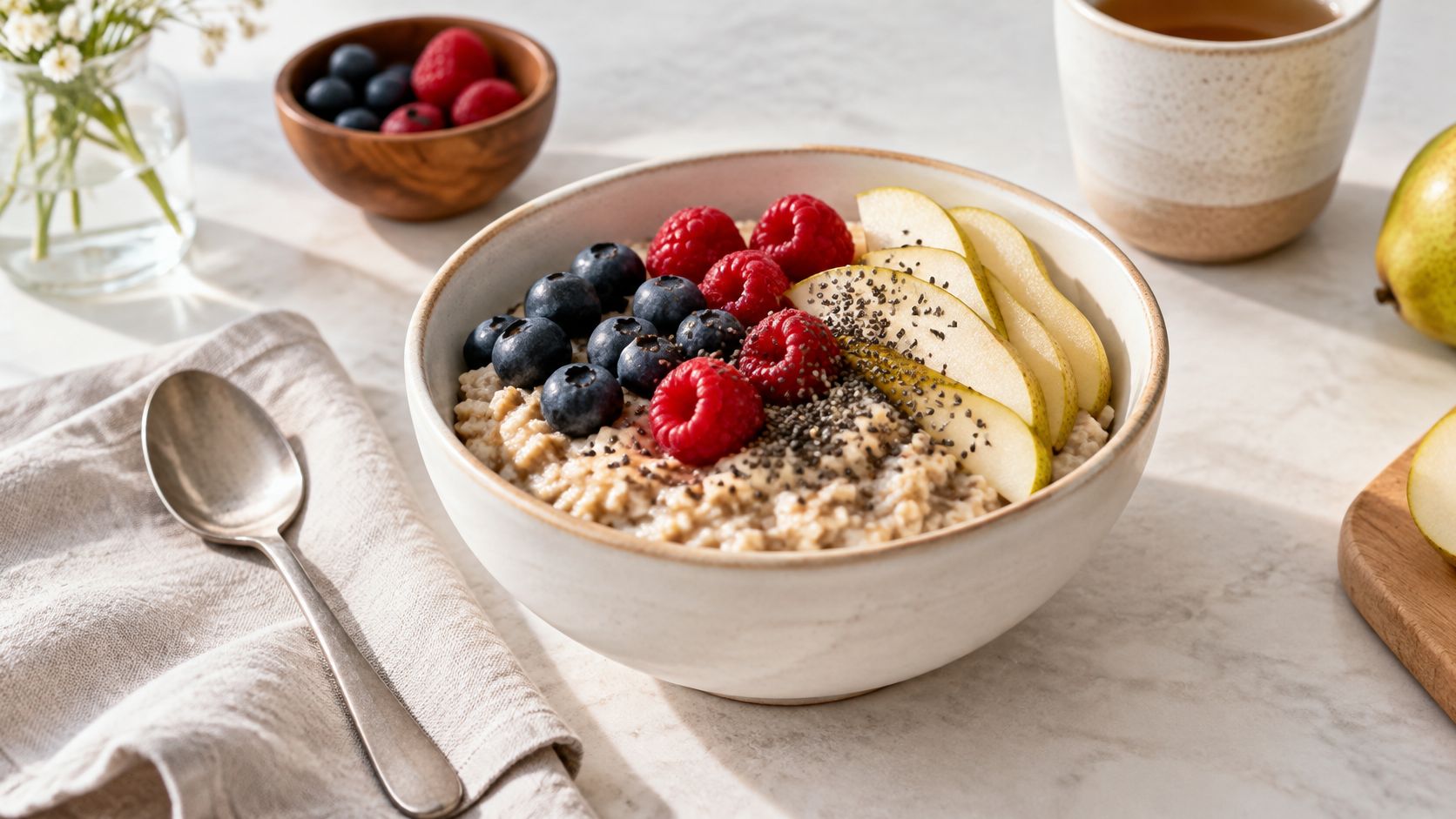
Overnight oats work well when mornings are rushed. Combine rolled oats with your preferred milk, refrigerate, and add berries before eating. If you prefer a warm breakfast, cook steel-cut oats ahead and reheat a portion with extra liquid.
The trade-off is preparation. Steel-cut oats take more attention than instant oats, but plain instant oatmeal can still be a practical choice.
Don't turn your first bowl into a challenge by adding large amounts of seeds, bran, and fruit together. Begin with the oats, notice how you feel, and introduce toppings gradually.
Keep the stir-fry. Change the rice. Keep the lunchtime wrap, but choose a whole-wheat version with a fiber content that improves on your usual product.
This approach works because you're changing an ingredient rather than learning an entirely new meal. The FDA's dietary fiber guide identifies whole grains, including oats, brown rice, popcorn, and quinoa, among naturally occurring fiber sources.
Whole-grain doesn't mean every product supplies the same amount of fiber. Check both the ingredient list and the Nutrition Facts panel, particularly for breads, wraps, crackers, and pasta.
Brown rice works well under stir-fried vegetables. Quinoa is convenient for grain bowls, while barley and farro add a chewy texture to soups and prepared lunches.
If whole-wheat pasta feels too firm, begin by mixing it with your usual pasta. Texture acceptance matters because an unfinished whole-grain meal won't help you build a lasting routine.
Our explanation of enriched wheat flour and whole-grain choices can help you understand the terminology on packaged staples. Enriched and whole-grain aren't interchangeable descriptions, so don't use either front-label wording alone to judge fiber content.
A lunch bowl doesn't need a complete redesign to include legumes. Stir lentils into the grain base, add chickpeas to chopped vegetables, or replace part of a taco filling with black beans.
Make legumes part of the meal, not an extra course. They're especially useful when you want a fiber-containing ingredient that also adds substance and a satisfying texture.
A bowl like this gives legumes a clear role alongside grains and vegetables.
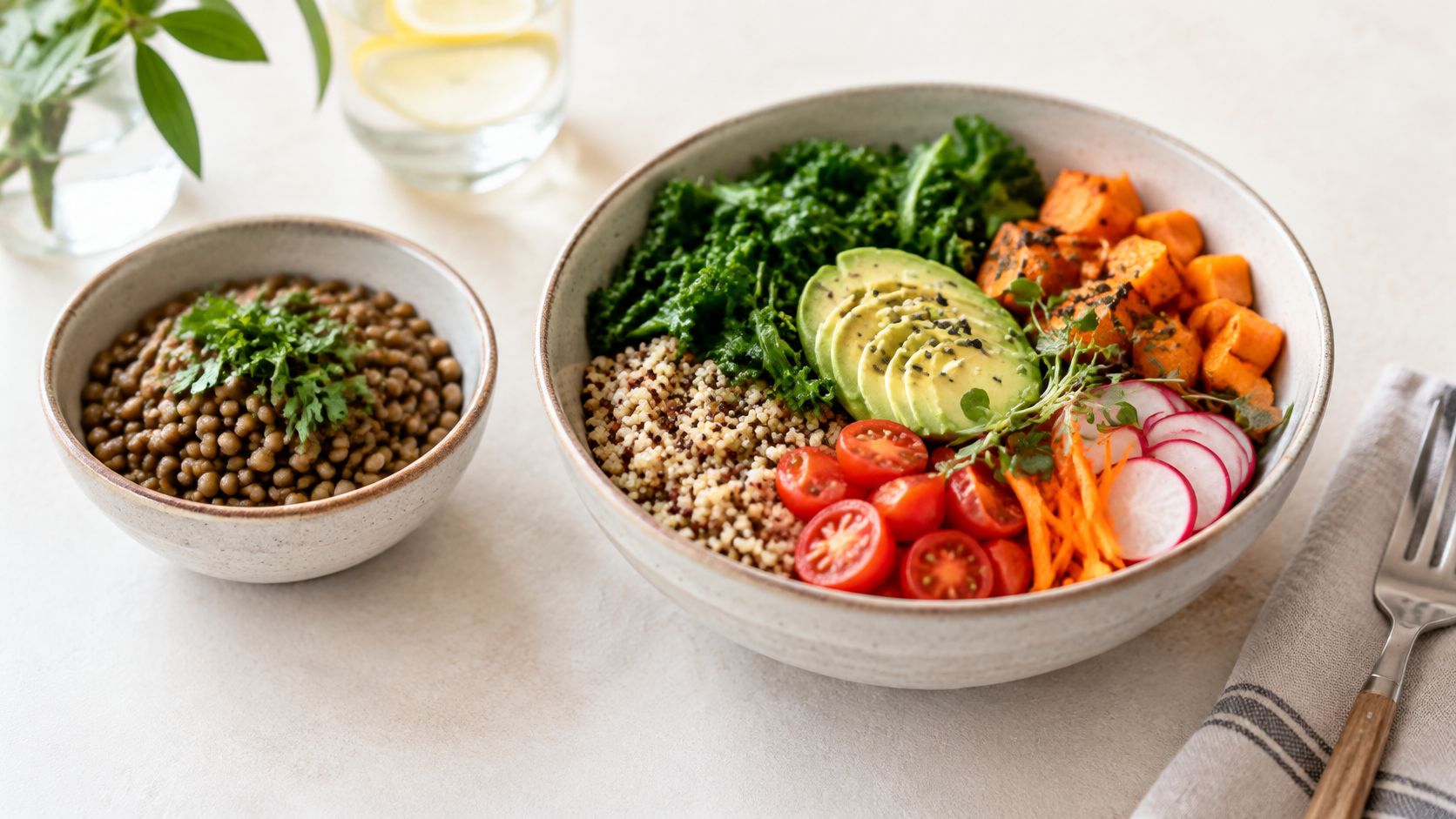
Canned beans remove the soaking and cooking steps. Drain and rinse them, then add them to a soup, salad, or warmed tortilla filling.
Dried lentils are useful for batch cooking because you can season them for different meals. Keep one batch fairly neutral, then add cumin for tacos or herbs for a grain salad.
The main trade-off is tolerance. A large bean-heavy meal can be uncomfortable if legumes rarely appear in your current diet.
Start with a small spoonful mixed into a familiar meal and expand the portion when it feels comfortable. Rinsing, blending, and seasoning help with preparation and enjoyment, but they aren't guarantees that every serving will suit you.
Don't leave vegetables until you've already filled the plate. Decide on the vegetable component while planning the meal, whether that's roasted Brussels sprouts, steamed broccoli, sautéed greens, or peas stirred into pasta.
Convenience matters more than culinary ambition. Frozen vegetables and prewashed greens make it easier to follow through when you're tired, rushed, or cooking for people with different preferences.
A roasted vegetable tray can supply additions for several different meals.
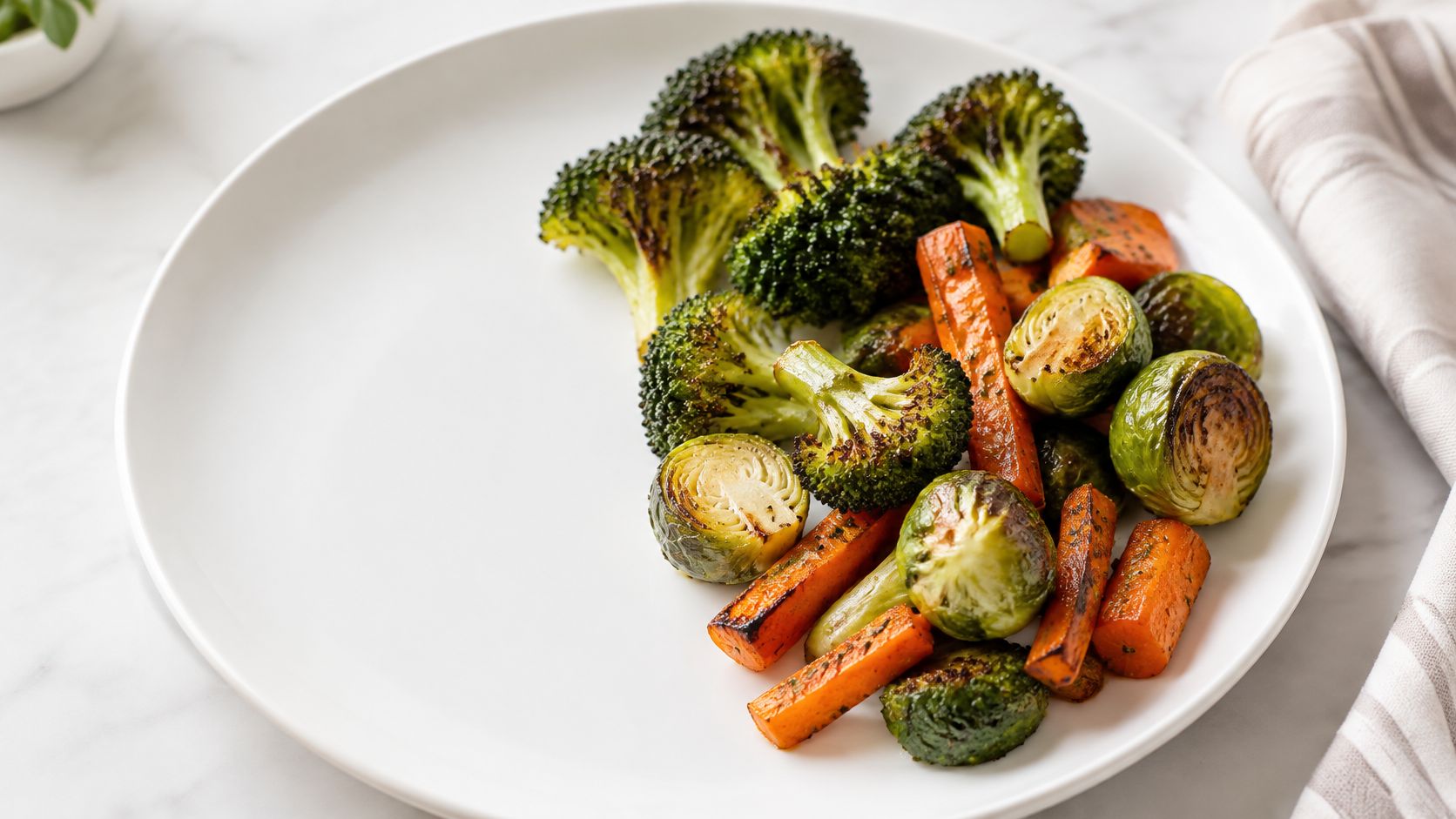
If you dislike raw vegetables, don't force yourself through a large salad. Try cooked carrots, roasted broccoli, or wilted greens, and choose a texture you enjoy.
For dinner, plan a generous vegetable area on the plate before adding the other components. At lunch, add vegetables directly to a wrap, grain bowl, or soup so they don't become an easily forgotten side.
Our guide to tomatoes and everyday digestive wellness offers another way to think about familiar produce within a balanced routine.
A vegetable garnish isn't the same as a vegetable serving. Still, moving straight from very little produce to an oversized plate isn't necessary. Increase the amount gradually, keep seasonings appealing, and vary your choices instead of relying on a single vegetable.
An afternoon snack is a useful opportunity to add fiber without another cooking task. Choose an apple or pear with its edible skin, or spoon berries over plain yogurt.
Whole fruit is the practical default over juice when fiber is the priority. Wash fruit before eating, remove inedible parts, and keep edible skins when you enjoy them.
Make the easiest option the one you want to choose.
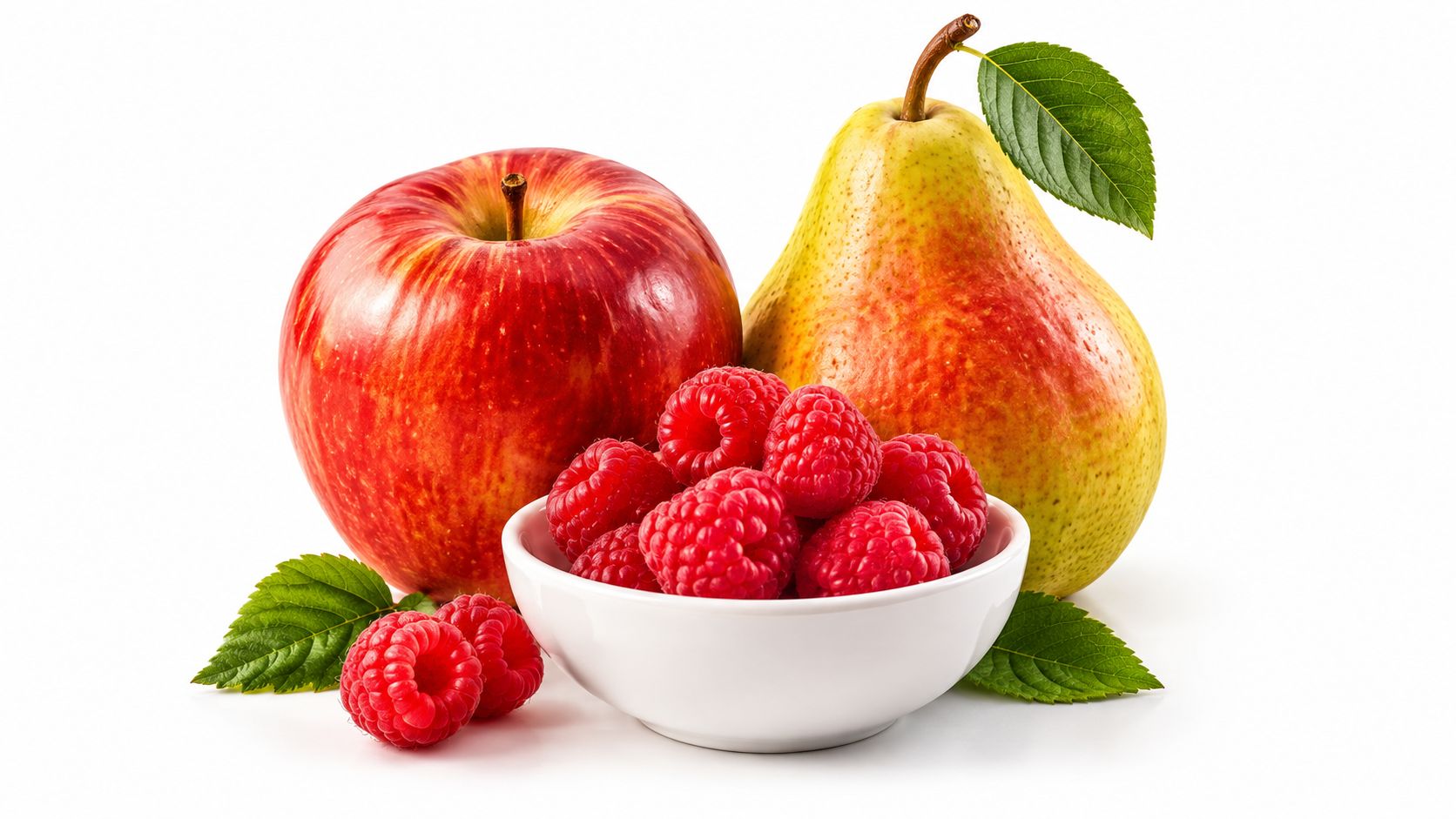
Put washed fruit somewhere visible. Keep frozen berries available for yogurt and blended drinks, and pack sturdy fruit when you know you'll be away from home.
Try an apple with almond butter when you want something more substantial. For a softer option, thaw berries and spoon them over yogurt or oatmeal.
Choose the fruit you'll eat consistently. A pear that stays untouched in the bowl isn't a better choice than an apple you enjoy.
Smoothies can include whole fruit, but the ingredients still matter. Blend the edible fruit rather than using juice as the main ingredient, and avoid straining away the solids if keeping fiber is your aim.
There's no need to insist on skins when you dislike their texture. Use another whole fruit, cook suitable fruit until soft, or pair a smaller portion with a different fiber source.
The useful habit is replacing a routine low-fiber snack with an enjoyable whole-food option. Fruit doesn't have to become a separate dietary project.
Concentrated add-ins are useful when you want to adjust an existing meal rather than increase its volume substantially. Ground flaxseed blends into oatmeal and smoothies, while hydrated chia seeds create a pudding-like texture.
Psyllium deserves more attention to preparation than a casual sprinkle of seeds. Follow the product's mixing and fluid directions, and never swallow the dry powder.
Try ground flaxseed in your usual breakfast before adding chia or a separate fiber supplement. That makes it easier to identify which change suits your digestion and which one needs adjustment.
This video offers additional context for building a practical fiber routine.
More variety doesn't mean adding every concentrated fiber at once. A Purdue report discussed in this evidence summary found promising effects from certain fiber combinations in laboratory work using human fecal samples, but that isn't proof that rapidly combining supplements will improve an individual's comfort.
Keep water available, start conservatively, and hold the amount steady while assessing your response. If a concentrated product causes discomfort, step back rather than assuming a larger amount will work better.
Turn the package around before deciding. Bread color, visible seeds, and wholesome-looking photography don't tell you how much fiber you'll eat.
In a study of Polish adults comparing bread products, 50.8% selected the seeded roll as highest in fiber, although the fiber-enriched roll contained more. The practical lesson is to compare declared amounts rather than appearance.
The FDA Nutrition Facts guide uses a fiber Daily Value of 28 grams, based on a 2,000-calorie diet. That's a general labeling benchmark, not a universal personal prescription.
Start with serving size, then read dietary fiber in grams. A cereal may look impressive until you notice that its listed serving is larger than the portion you normally pour.
In a CDC analysis of U.S. adults, regular Nutrition Facts label users were more likely to meet fiber targets than nonusers, 71.6% versus 56.2%. That association doesn't prove label-reading caused the difference, but it supports making comparison a routine shopping skill.
Shopping rule: Buy for the food you'll eat, the portion you'll serve, and the fiber the label actually declares.
Increasing fiber isn't a race to the largest daily total. Spread additions across meals, drink water throughout the day, and keep the pace comfortable enough that you can continue.
Use our gut-health eating plan to organize meals around repeatable choices. If bloating, urgency, or discomfort increases, pause the next addition and reconsider the portion; persistent or severe changes deserve professional evaluation.
Aloe products aren't substitutes for fiber-rich foods. Our Pure USDA Organic Aloe Vera Juice can sit alongside an oats-and-fruit breakfast, while Advanced Formula Aloe Capsules help support digestive system function and bowel health.
AloeCure is fully vertically integrated: we farm our aloe, process our aloe, and produce our own products. Our parent company, AGHG, has owned and operated its aloe farms for 25 years, hand-harvesting the aloe and processing it on-site within 12 hours.
Our quality approach rests on that direct oversight rather than an unexplained premium label. We avoid chemicals, enzymes, concentrates, and charcoal filtration during processing, and support our products with an 8-step traceability promise, third-party certifications, and rigorous testing.
These statements have not been evaluated by the Food and Drug Administration. This product is not intended to diagnose, treat, cure, or prevent any disease.
| Item | Typical Fiber Per Serving | Best For | Getting Started |
|---|---|---|---|
| Start Your Day with Whole-Grain Oats | About 4 g per cup of cooked oatmeal | A filling, fiber-rich breakfast | Choose plain oats; add fruit or ground flaxseed |
| Swap Refined Grains for Whole Grains | Compare grams of fiber per serving on the package | Easy upgrades to familiar meals | Look for “100% whole grain” or whole-grain flour first |
| Add Beans, Lentils, and Legumes to Meals | Check the package or recipe for fiber per serving | Fiber and plant-based protein | Start with a small portion; rinse canned beans |
| Build Fiber-Rich Vegetables into Every Plate | Check the package or recipe for fiber per serving | Adding volume and fiber to meals | Fill half your plate with vegetables |
| Snack on Whole Fruit with the Skin On | Choose fruit and compare typical serving information | Convenient, naturally sweet snacks | Choose whole fruit rather than juice |
| Use Chia, Flaxseed, and Psyllium as Easy Add-Ins | Compare grams of fiber for the amount you plan to use | Concentrated fiber additions | Start with a small amount and drink plenty of water |
| Read Labels to Choose Higher-Fiber Packaged Foods | Compare grams of fiber per serving across products | Comparing breads, cereals, and other packaged foods | Check fiber per serving, ingredients, sugar, and sodium |
| Pair a Gradual Fiber Plan with Clean, Traceable Aloe Products | Aloe products do not provide dietary fiber | A wellness routine alongside a fiber-rich diet | Increase fiber gradually, drink water, and check product details |
Which fiber habit can you maintain on a busy day? Build your routine around that answer, then add one change at a time. Use this four-week schedule as a flexible guide, and stay at any stage longer if needed.
Start by noting your usual meals and choosing the easiest adjustment. A brief record of foods, portions, water, and digestive comfort can help you spot which changes suit your routine.
If several changes leave you uncomfortable, return to the last comfortable pattern and reintroduce foods separately. A slower pace still builds a routine.
Judge progress by consistency, variety, and comfort, not by identical meals every day. Keep a shortlist of breakfasts, lunches, dinners, and snacks you enjoy, then rotate those choices to make planning simpler.
AloeCure's organic aloe vera juice and digestive support capsules can complement a food-first routine. Choose the format that fits your day and follow its product directions. Aloe products are optional digestive wellness support, not a source of dietary fiber or a replacement for food and water.
Subscribe & Save offers 20% off every order, and AloeCure offers a 90-day money-back guarantee. Start with a food habit you can maintain, then decide deliberately whether a supplement fits your routine.
These statements have not been evaluated by the Food and Drug Administration. This product is not intended to diagnose, treat, cure, or prevent any disease.
AloeCure offers organic aloe vera juice and digestive support capsules to complement a food-first wellness routine. Visit AloeCure to review product formats and traceability details, and choose a one-time purchase or Subscribe & Save for 20% off every order.
Comments will be approved before showing up.